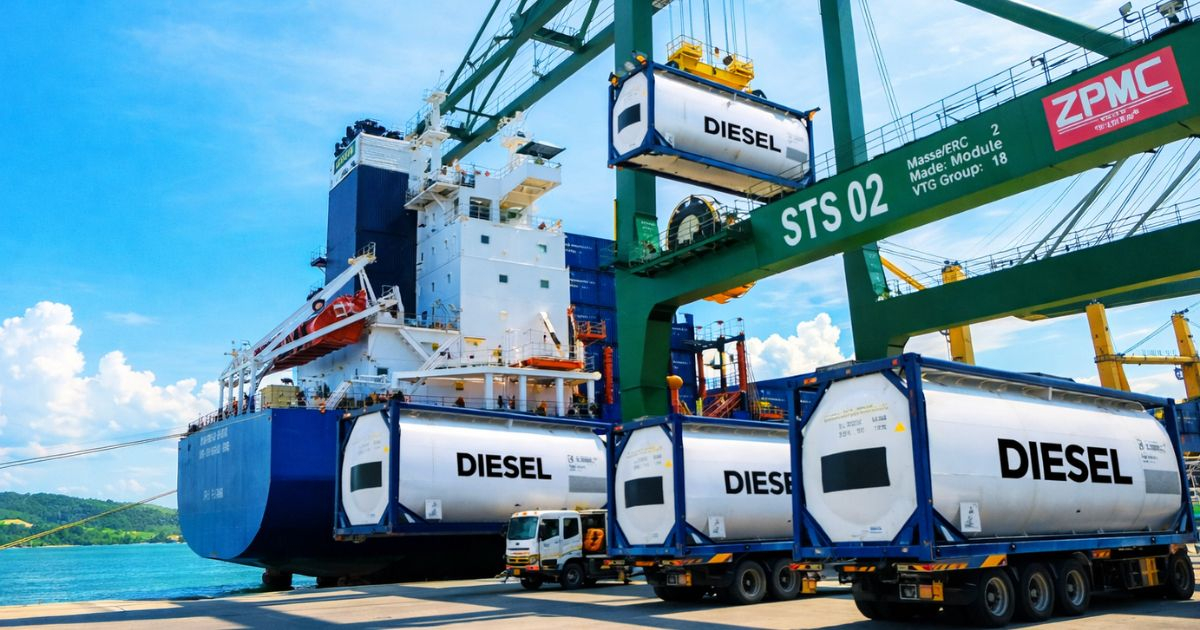
The United States has delivered around 30,000 barrels of fuel to Cuba's private sector since early February. This figure, confirmed by Reuters, has sparked a debate intertwining two entirely different issues that need to be addressed separately.
The Impact of Fuel on Cuba's Private Sector
Cuba's private sector has emerged as the de facto food distribution network within the country. With the state unable to reliably supply basic staples like flour and bread, private enterprises, including bakeries, wholesalers supplying small markets, and transport and refrigeration companies, have become essential. Ensuring these businesses have the diesel needed to operate is not merely a political matter—it's a crucial humanitarian issue.
The ongoing energy crisis impacts 96.4% of the 8,904 registered micro, small, and medium-sized enterprises (MSMEs) in Cuba. Any relief in this area directly affects the food supply chain for millions of Cubans. While there is valid criticism regarding whether "the regime takes its share," it should not overshadow the fact that these businesses are functioning, producing, and reaching families who otherwise would lack basic necessities.
What Fuel Cannot Solve
The national electrical system is an entirely different challenge. Aging Soviet-era thermal power plants, operating at just 34% capacity, cannot be fueled by diesel tankers arriving in shipping containers. These facilities require substantial quantities of heavy fuel oil, large-scale port infrastructure, and investments ranging from 6.6 to 10 billion dollars for rehabilitation or replacement. Cuba has suffered six complete power grid collapses in the past year and a half. Private fuel exports cannot address this scale of a problem.
The numbers put things into perspective: 30,000 barrels over nearly two months equate to about 500 barrels per day, while historically, Cuba needed 100,000. Fuel for the private sector meets only 0.5% of that demand. It provides essential oxygen for the informal economy to survive but does not solve the blackout crisis.
The Critical Distinction
The public debate falters by treating these issues as one and the same. Critics of Washington's policy have legitimate concerns about the potential for regime exploitation. However, supporters rightly point out that MSMEs now form the backbone of Cuba's food supply and require fuel to operate.
Yet neither side should mislead readers: the 20-hour daily blackouts ravaging Cuban daily life demand solutions of a political, financial, and structural magnitude far beyond what any private export scheme can deliver.
For decades, the regime has built an electrical system that is centralized, dependent, and irreparable without massive investment. Thirty thousand barrels cannot fix that. What they can do is keep alive the MSMEs that, in the absence of state support, put food on the table for many Cubans. In the current Cuban context, that is no small achievement.
Understanding Cuba's Energy and Economic Challenges
How does fuel aid benefit Cuba's private sector?
Fuel aid helps sustain private enterprises, which have become crucial in distributing food and other essentials across Cuba, compensating for the state's shortcomings.
Why can't private fuel shipments solve Cuba's power outages?
Cuba's outdated power plants require massive investments and infrastructure beyond what private fuel shipments can provide, addressing only a small fraction of the nation's energy needs.