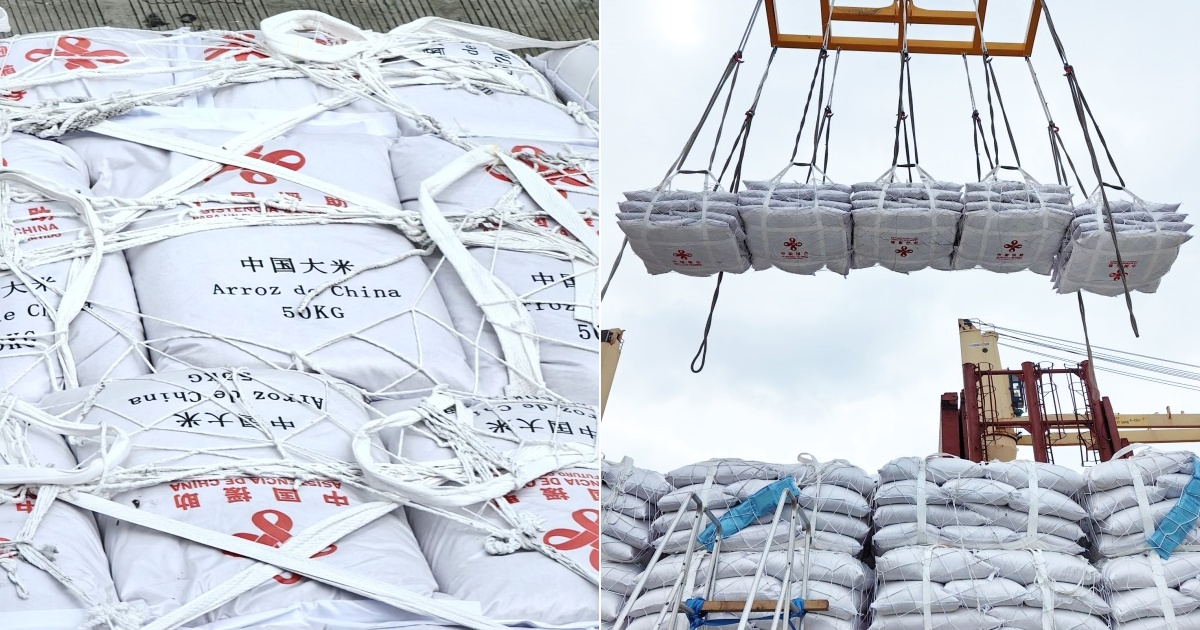
A fresh shipment of rice, gifted by the Chinese government, has docked at Havana's port amid Cuba's severe supply crisis.
Transported by the vessel Loyalty Hong, the shipment includes 15,600 tons of rice, fulfilling a significant portion of the food aid pledged by Beijing.
This donation comes at a time when the island faces a shortage of basic necessities. Rice, a staple in the Cuban diet, has become increasingly scarce or exorbitantly priced, making it inaccessible to a large segment of the population.
Official reports indicate that this shipment is part of a larger 30,000-ton donation announced in January, as part of cooperation agreements between the two nations.
From an institutional perspective, authorities have framed this aid as a demonstration of political and economic support.
Additionally, confirmation has been given of an extra shipment of up to 60,000 tons as part of an assistance package approved by Chinese President Xi Jinping.
The Cuban Embassy in China emphasized that the initial shipment "sets sail for Cuba" as a gesture of "solidarity," underscoring that "Cuba is not alone."
However, beyond official rhetoric, the arrival of these shipments underscores the island's growing reliance on foreign donations to meet basic consumption needs.
In recent years, Cuba has received multiple food shipments in an attempt to alleviate a deepening economic crisis.
The Cuban economy has contracted by nearly 15% over the past five years, according to official data, while the population grapples with chronic shortages of food, medicine, and fuel, along with prolonged power outages and high inflation.
The Chinese government has framed its support within a broader geopolitical context. Lin Jian, a spokesperson for China's Foreign Ministry, recently voiced strong opposition to the United States' "comprehensive blockade" and "unilateral illegal sanctions" against Cuba, urging Washington to "immediately lift the blockade and sanctions, and cease pressuring Cuba under any pretext."
Nonetheless, the current crisis on the island is not solely due to external factors. Experts and observers also point to internal structural issues, such as declining domestic production, lack of effective reforms, and increasing dependence on imports.
While the rice shipment from China temporarily eases supply pressures, it highlights the fragility of Cuba's food system.
In a nation where access to basic goods is increasingly reliant on international aid, each arriving vessel with donations is both an immediate relief and a warning signal about long-term sustainability.
Understanding the Impact of Chinese Aid on Cuba's Supply Crisis
What is the significance of the rice shipment from China to Cuba?
The rice shipment from China is crucial as it temporarily alleviates the severe shortage of basic goods in Cuba, particularly rice, which is a staple in the Cuban diet.
How does the Chinese government view its aid to Cuba?
The Chinese government positions its aid as part of a broader geopolitical alliance, opposing U.S. sanctions on Cuba and demonstrating solidarity with the Cuban people.
What are the internal factors contributing to Cuba's supply crisis?
Internal factors include a decline in domestic production, ineffective reforms, and a growing reliance on imports to meet basic needs.