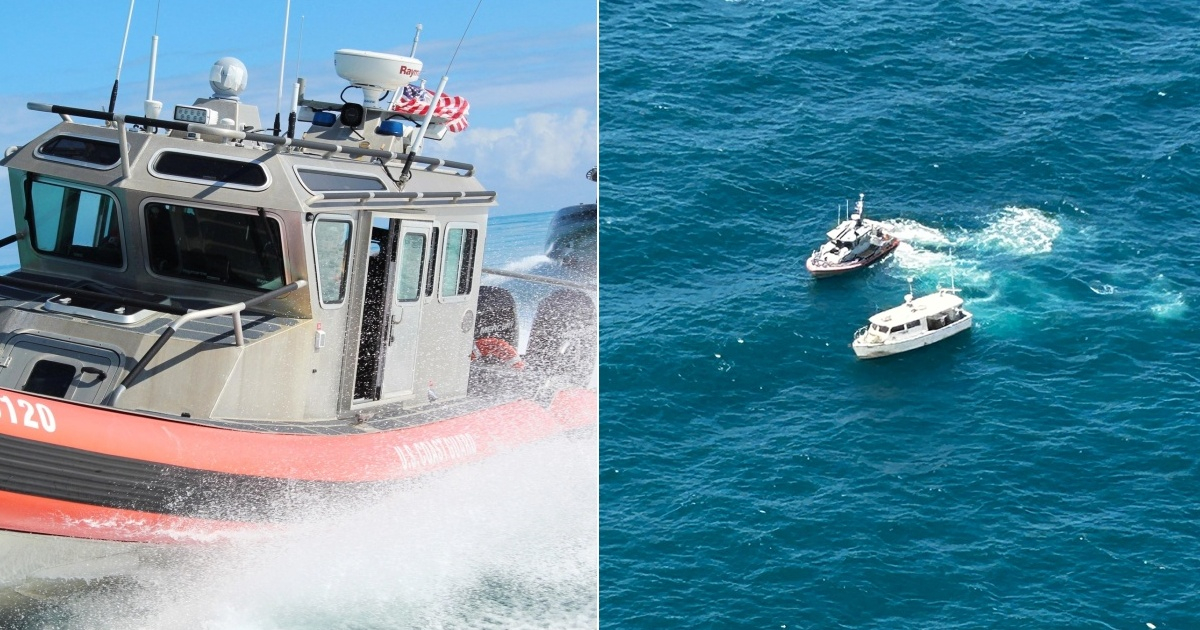
Amid growing fears of a potential migration crisis stemming from Cuba, Florida's state authorities, federal agencies, and the U.S. military have initiated an unprecedented coordinated response.
As the island's economic and social situation continues to deteriorate, Governor Ron DeSantis has ordered increased surveillance along Florida's southern coast. Meanwhile, the U.S. Southern Command has ramped up its operational readiness to prevent any large-scale maritime exodus.
This strategy, as U.S. officials have articulated, aims to avoid a repeat of the 1994 scenario when thousands of Cubans took to the sea in makeshift rafts heading for Florida.
Proactive Measures to Thwart Maritime Departures
Florida's government has implemented a preventive strategy along its coastline, enhancing state force presence and working closely with the Coast Guard and federal agencies, as reported by local media.
DeSantis's directive follows weeks of prolonged power outages, shortages, and protests across Cuba, conditions that have historically sparked waves of migration. The governor has been clear about his administration's stance.
“We do not want to see a massive flotilla of people landing on the shores of the Florida Keys,” he warned, emphasizing that the state will not allow a large-scale landing.
Maritime patrols in the Florida Strait have been increased, with the objective of intercepting any vessels before they reach U.S. territory. Authorities prioritize maintaining control over maritime borders to prevent situations that could overwhelm response capabilities.
Federal Coordination with Southern Command
On a federal level, the U.S. Southern Command has intensified its involvement through military exercises and joint planning for scenarios involving mass migration. A notable operation, “Integrated Advance,” is designed to practice rapid responses to irregular migration flows.
In Congressional hearings, military leaders confirmed a directive to support the Department of Homeland Security (DHS) should such a crisis arise. The strategy focuses on intercepting migrants in international waters to prevent them from reaching U.S. soil.
In this framework, the Guantanamo Naval Base plays a pivotal role. Authorities have indicated that the facility can expand its capacity to host tens of thousands of migrants, serving as a reception and processing center outside the regular immigration system.
The official stance is clear: those attempting to reach the U.S. by sea will not receive immigration benefits. “People attempting to enter the United States illegally by sea will be detained and returned to their country of origin or departure,” the Coast Guard recently stated.
Guantanamo's Central Role in U.S. Response
The naval base situated in Cuban territory has been reactivated as a logistical hub for the U.S. response. Migrants intercepted at sea would be transported there for assessment and, in most cases, eventual repatriation.
This mechanism allows authorities to manage the flow without migrants formally entering the United States, thereby avoiding conventional immigration court processes. Planning includes large-scale scenarios, with capacity to accommodate up to 30,000 individuals if necessary, reflecting Washington's concern over a potential rapid deterioration in Cuba.
A Strong Warning Amid Cuba's Crisis
U.S. authorities have also stepped up their warnings. DeSantis has reiterated that an exodus “would not be acceptable,” highlighting that current policies aim to prevent any uncontrolled departures.
Meanwhile, military officials emphasize inter-agency coordination as a key element. As presented to Congress, the integration between the DHS, Coast Guard, and local authorities ensures “containment of any irregular flow and guarantees an immediate response.”
The hardening of the discourse coincides with a particularly delicate moment for Cuba, marked by economic collapse, fuel and food shortages, and increased social tension.
Historical Context and Rising Concerns
The specter of a new migration crisis is not unfounded. Cuba's recent history includes episodes like Camarioca, Mariel, and the 1994 raft crisis, which forced Washington to devise emergency responses.
Although the migration wave that began in 2022 has already been described as the largest in decades, concerns now focus on a possible maritime surge, which is far more dangerous and difficult to control.
In Washington, the issue is openly discussed. Lawmakers have raised the possibility of a “humanitarian crisis in Cuba,” while military leaders acknowledge that a mass departure scenario cannot be ruled out.
However, some voices within the exile community suggest that the warnings also reflect political tensions and that current conditions on the island may not necessarily support large-scale maritime migration in the short term.
Meanwhile, on the Cuban side, uncertainty continues to grow.
Key Questions About the U.S. Response to Possible Cuban Exodus
What actions has Florida taken to address a potential Cuban exodus?
Florida has increased surveillance along its coast, enhanced state force presence, and coordinated efforts with the Coast Guard and federal agencies to intercept any vessels before they reach U.S. territory.
How is the U.S. Southern Command involved in preventing a Cuban migration crisis?
The U.S. Southern Command is conducting military exercises and planning scenarios to address mass migration, including operations like "Integrated Advance" to practice rapid response to irregular migration flows.
What role does the Guantanamo Naval Base play in the U.S. strategy?
Guantanamo Naval Base is prepared to serve as a reception and processing center for intercepted migrants, with the capability to expand its capacity to host tens of thousands, allowing the U.S. to manage flows outside the regular immigration system.