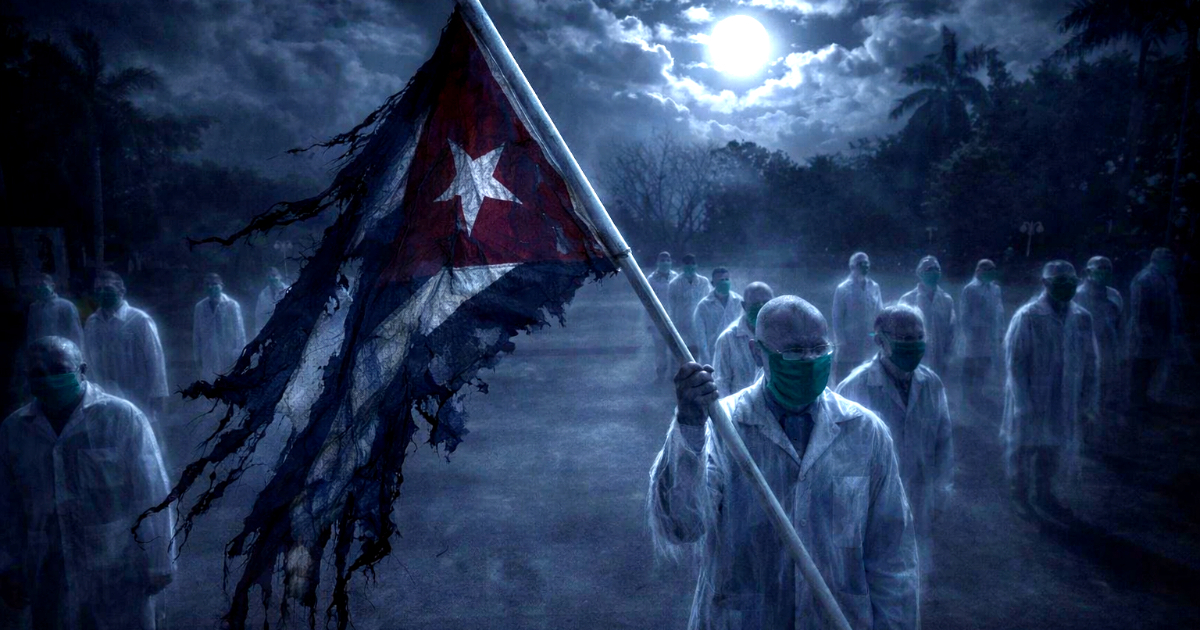
Cuba's Foreign Minister, Bruno Rodríguez Parrilla, issued a public accusation against the U.S. government on Tuesday. He alleged that Washington is exerting intense pressure and using coercion on Latin American countries to expel Cuban medical brigades, openly acknowledging that the aim is to "continue cutting off sources of income for our economy."
This statement from the foreign minister follows a series of cancellations of contracts with Cuban medical brigades in the region during the first months of 2026.
Honduras chose not to renew its agreement, which expired on February 25, leading to the departure of approximately 172 Cuban professionals. Similarly, Guatemala ended its arrangement in February, which had been in place since 1998, removing 412 workers, including 333 doctors.
On March 4, Jamaica announced the unilateral termination of its agreement that had been active since 1976, prompting Cuba to withdraw its brigade of 277 professionals by March 6. Guyana also ended its cooperation, resulting in the withdrawal of over 200 Cuban doctors after five decades of partnership.
Implications of U.S. Actions on Cuban Medical Brigades
Rodríguez Parrilla's statement highlights a critical aspect: by referring to the "sources of income" for the regime, he admits what Havana has long tried to mask as humanitarian solidarity.
The medical missions are essentially the primary export business of the Cuban dictatorship. According to the National Office of Statistics and Information (ONEI), these missions generated approximately $4.882 billion in 2022. The U.S. State Department estimates that they contribute between $6 billion and $8 billion annually to the regime's coffers.
This business model has spurred international accusations due to the Cuban government's practice of fully collecting the contracts' payments while retaining between 70% and 85% of the doctors' salaries.
Human Rights Concerns and Modern Slavery Allegations
Additional issues include the confiscation of passports, constant surveillance, and the threat of an eight-year ban on returning to Cuba for those who abandon their mission.
The European Parliament has described these conditions as "modern slavery," while U.S. official Jeremy Lewin went further, labeling them one of the worst examples of modern slavery this month.
Washington's Diplomatic Offensive
The U.S. intensified its diplomatic efforts against these brigades with Marco Rubio's appointment as Secretary of State in January 2025. Rubio implemented visa restrictions for officials from countries maintaining contracts with Cuba and gradually expanded sanctions to Brazil, African countries, Grenada, Honduras, and Guatemala.
By August 2025, measures also targeted former Pan American Health Organization executives due to their involvement with Brazil's Mais Médicos program.
The Economic Context of Cuban Medical Missions
These contract cancellations come at a dire time for Cuba's economy, which has seen its GDP shrink by 11% over five years amid widespread blackouts and shortages of fuel, food, and medicines.
In 2025, Cuba had over 24,000 healthcare workers deployed in 56 countries—a scheme the regime desperately needs to maintain its finances as the internal crisis worsens.
The Business Framework Behind Cuban Medical Services
Away from the official narrative of "solidarity," the export of medical services operates as a highly centralized business system where state-owned companies act as intermediaries, channeling billions of dollars into the regime's power structures.
A key player in this scheme is the Comercializadora de Servicios Médicos Cubanos (CSMC S.A.), responsible for signing contracts with foreign governments and formalizing the deployment of healthcare personnel.
In countries like Angola, the role of Antillana Exportadora S.A. (ANTEX), a company directly linked to the military conglomerate GAESA, becomes more apparent. Independent media investigations and testimonies reveal that ANTEX not only manages mission logistics but also controls payments, retains salaries, and oversees the accounts where doctors' earnings are deposited.
In this setup, receiving countries may pay up to $5,000 per professional monthly, but workers receive only a fraction—between $100 and $200 in cash—while the remainder is held under state control.
Leaked documents have also exposed a control system that includes passport retention, movement restrictions, and political loyalty demands, conditions that international bodies and experts equate with forced labor.
The link with GAESA is crucial: this military corporation, which dominates wide sectors of the Cuban economy, has received hundreds of millions of dollars from these contracts, reinforcing its role as the regime's financial backbone.
Recently, however, this model has started to show cracks. Complaints from doctors in Africa, wage cuts, and even lawsuits against ANTEX for "wage theft" indicate a growing level of internal conflict.
Simultaneously, some countries have opted to hire Cuban professionals directly, bypassing state intermediaries and weakening the regime's control over these revenues.
This context sheds light on why Havana considers medical missions a strategic "source of income": it is not merely about healthcare cooperation but one of the economic pillars sustaining the system amidst its worst crisis in decades.
Understanding the Impact of U.S. Sanctions on Cuban Medical Missions
Why is the U.S. targeting Cuban medical missions?
The U.S. targets Cuban medical missions to cut off a significant source of income for the Cuban regime, which is accused of exploiting healthcare workers and engaging in practices akin to modern slavery.
How do Cuban medical missions impact the economy?
Cuban medical missions are a major export business for the regime, generating billions of dollars annually, which are crucial for sustaining Cuba's economy amid ongoing financial crises.