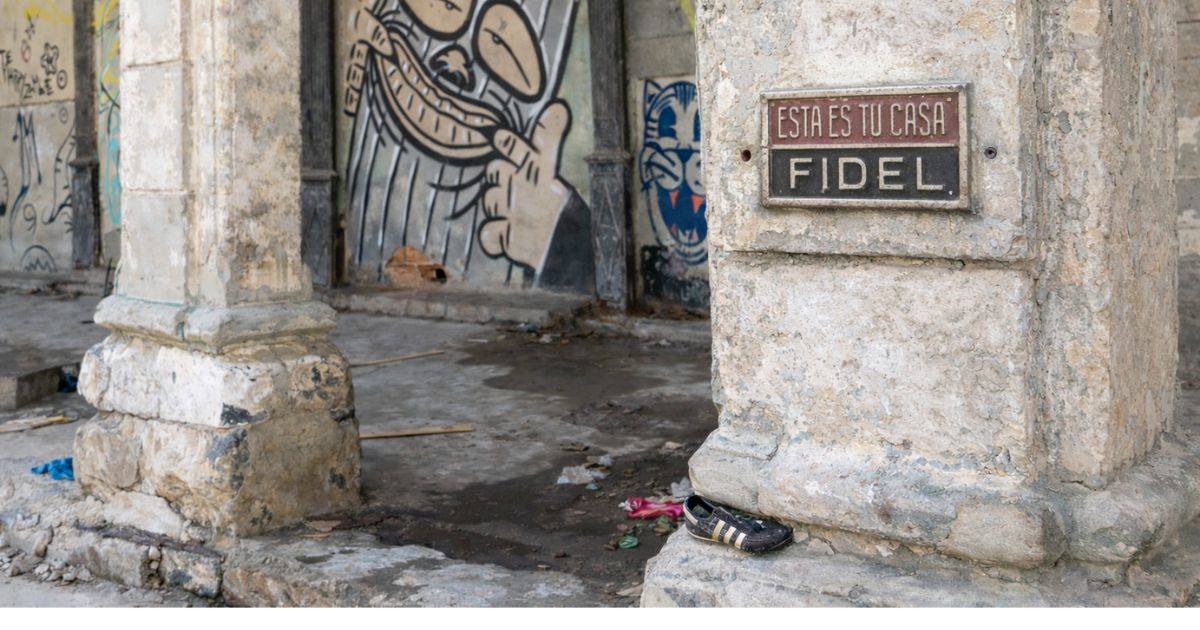
Fidel Castro was acutely aware of his actions. Observing the fall of the Berlin Wall, he opted to dig in rather than adapt, fully aware of the implications. For him, true economic openness in Cuba wasn't merely a reform—it signified the potential collapse of the regime. This was a lesson he took from Eastern Europe and the Soviet Union. His decision was calculated and ruthless: better to rule a destitute, controlled population than face the uncertainties of a prosperous, autonomous one. As the architect of the system, he wielded the authority to defy expectations without dismantling the narrative, because he embodied it. Despite this, he chose inaction, leaving behind a fractured nation.
The Paralyzing Fear
The leaders steering Cuba today lack the cold strategic acumen of the system's founder. Instead, they grapple with a crippling fear: inheriting a legacy they neither understand how to maintain nor transform. Díaz-Canel and his inner circle are well aware that genuine reforms would spell the end of their privileges. However, they no longer possess the political capital to guide such a transformation, even if they desired it. Announcing real economic freedom, political openness, and market prices would lead to a haunting question from eleven million Cubans: Why endure all this? Each substantial reform retroactively admits that the sacrifices were unnecessary, that generations sacrificed their youth and future in vain. Such an admission would be politically catastrophic, hence it is avoided.
Adding to this fear is another, less visible yet equally immobilizing: the regime is no longer the monolithic entity it once claimed to be. It harbors factions; those sensing the need for change and those viewing any reform as a betrayal of the Revolution. This internal rift turns every decision into a minefield. Those willing to make a move fear becoming scapegoats for failure, while the orthodox watch for opportunities to accuse them of betrayal. Caught between these conflicting fears, no action is taken. As the regime is paralyzed by its internal contradictions, Cuba continues to empty out.
The Blight of Incompetence
Yet, fear isn't the sole factor. A significant portion of Cuba's current paralysis stems from sheer incompetence masquerading as ideology. Today's Cuban leaders didn't build the system they oversee; they inherited it in its most dysfunctional form: an economy originally designed to subsist on foreign subsidies—initially Soviet, later Venezuelan—incapable of generating its own wealth because it was never intended to.
Fixing such a system would demand extraordinary vision, remarkable political courage, and exceptional technical expertise. Instead, the country is run by mediocre bureaucrats, trained to follow orders and manage scarcity, not to enact transformation. Their mismanagement of the 2021 monetary restructuring exacerbated the very crisis they aimed to resolve, driving inflation and economic turmoil. This wasn't a calculated malevolence but technical ineptitude with severe consequences. Astonishingly, no one was held accountable.
In Cuba, incompetence bears no political cost for those in power. There are no elections to lose, nor a free press to scrutinize, nor an opposition to demand accountability. The burden falls solely on ordinary Cubans.
The Rhetoric of Anti-Imperialism
At the heart of it all lies the anti-imperialist narrative, serving as the regime's ultimate justification. As long as a credible external enemy exists, the regime maintains its perpetual alibi. This is why Cuba clings to its conflict with the United States, more than the U.S. needs a conflict with Cuba. Consequently, any diplomatic engagement destabilizes Havana more than sanctions do. A regime dependent on an adversary for survival cannot afford peace, even if it means letting its citizens starve while waiting for it.
The difference between Fidel and his successors isn't ideological or generational in the conventional sense. Fidel knowingly chose stagnation, fully aware of its costs. His successors are ensnared in the trap he laid, lacking the intellect to escape or the courage to try. The outcome for Cubans remains unchanged: a stagnant nation, a populace bleeding through emigration, and an elite finding endless reasons to resist change.
Understanding Cuba's Current Challenges
Why does the Cuban regime resist economic reform?
The Cuban regime resists economic reform because genuine changes threaten the privileges of the ruling elite and could lead to political suicide by admitting past sacrifices were unnecessary.
What role does incompetence play in Cuba's stagnation?
Incompetence plays a crucial role in Cuba's stagnation, as the current leaders inherited a dysfunctional economic system and lack the technical expertise to enact effective reforms.
How does the anti-imperialist narrative sustain the regime?
The anti-imperialist narrative sustains the regime by providing a permanent justification for its policies, using the U.S. as a scapegoat to divert attention from internal issues.