"The strategic goals of Washington and the Cuban people's desire for freedom are more aligned now than ever," asserts journalist and political analyst José Manuel González Rubines.
In an article published in the Spanish newspaper El Debate, González Rubines, who also co-directs the civic think tank CubaxCuba, argues that if the Trump Administration aims to establish a secure southern border, it requires a non-hostile government and a stable Cuba. This would necessitate foreign investment and the island's integration into the global economy.
However, the writer clarifies that such a scenario is unattainable without a political transition in Cuba, a requirement set by the Helms-Burton Act for lifting U.S. trade restrictions. Moreover, Cuba's government must regain credibility as a counterpart, ensuring legal security and honoring financial commitments—an almost impossible feat under current dictatorial conditions.
The recent economic easing measures announced by the Cuban government under pressure from the White House illustrate, according to the analyst, that the primary barrier to earlier reforms was not the American embargo but the island's own totalitarian system.
Nevertheless, the regime in Havana "takes back what it concedes under duress whenever it can. This is the crux of the matter: as long as the regime remains unchanged, any reform will be temporary, reversible, and unreliable," the researcher notes, citing the swift reversal of changes adopted during the "thaw" with the Obama administration as an example.
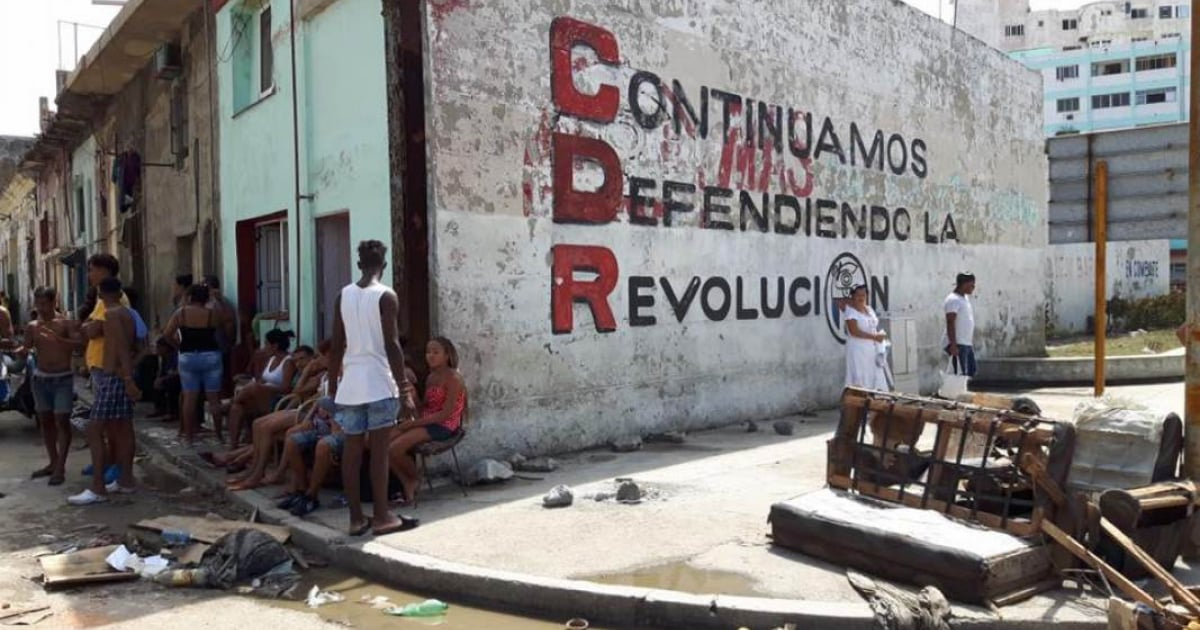
The article highlights a critical aspect by referencing a recent study from the Cuban Observatory of Human Rights, which reveals that 89% of the Cuban population lives in extreme poverty, and 78% express a desire to emigrate. If the island continues to deteriorate without systemic change, a massive migration wave to the North, which would hardly benefit the current administration's political interests or the career plans of Secretary of State Marco Rubio, may occur, the text suggests.
To understand that Cuban "socialism" is "an inherently perverse political system that prefers to spend more on repression than on production," ample data is available, the writer reflects.
For instance, there are hundreds of political prisoners—one of the highest numbers globally—and public investment in agriculture, livestock, and fishing is a mere 2.7% of the executed budgetary capital, according to the latest government data, despite the government owning 80% of the nation's land.
Changing this state of affairs and the regime that perpetuates it is not only a necessity for the U.S. to fulfill its interests but is notably what the Cuban people have been demanding for decades, with persistence despite decades of repression, concludes González Rubines.
In his view, removing the dictatorship "like a cancer whose metastasis spread guerrillas throughout Latin America and implanted chavismo in Venezuela and orteguismo in Nicaragua, is an issue that extends beyond U.S. geopolitics and should be a moral and political demand for any democracy that takes itself seriously."
Besides being a researcher and journalist, José Manuel González Rubines holds a Master's in Democracy and Good Governance from the University of Salamanca and has worked as a university professor, fundraiser, and in public interpersonal diplomacy.
Understanding the Political Situation in Cuba
What are the primary obstacles to political reform in Cuba?
The main hurdles to political reform in Cuba include the entrenched totalitarian regime, which reverses any reforms made under pressure, and the lack of a credible government that can guarantee legal and financial commitments.
Why does the U.S. need a stable government in Cuba?
A stable government in Cuba is essential for the U.S. to secure its southern border, as it would ensure that Cuba is not a source of instability or hostility, allowing for better economic and security cooperation.
How does the current Cuban regime impact the country's economic situation?
The Cuban regime's focus on repression over production leads to minimal public investment in key sectors like agriculture, contributing to widespread poverty and prompting many Cubans to seek opportunities elsewhere.