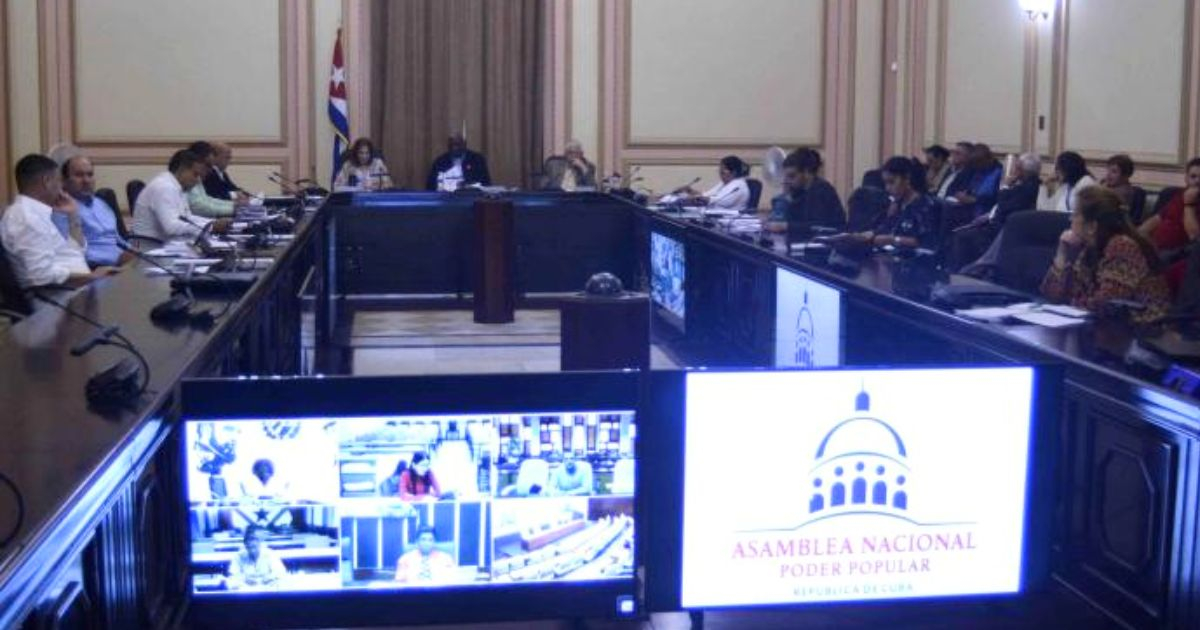
This week, the Cuban regime once again assessed its "Government's Economic and Social Program for 2026" during a Council of State session, amidst severe energy crises, fuel shortages, and the country's worsening economic conditions.
Led by President Miguel Díaz-Canel, Council of State President Esteban Lazo, and Prime Minister Manuel Marrero, the meeting focused on reviewing the progress of this governmental agenda. The official newspaper of the Communist Party of Cuba (PCC), using its usual euphemistic language, characterized the current situation as "challenging."
According to Marrero, the program has been updated following a public consultation process and now outlines 10 general objectives, 111 specific goals, 505 actions, and 309 indicators.
The population, however, remembers similar figures from previous plans, agreements, guidelines, and measures aimed at updating, correcting errors, and restructuring the economy, particularly in sectors like agriculture. These have only resulted in deeper poverty and growing inequality across the nation.
Emphasis on Local Development
During the meeting, the focus was placed on territorial development, aiming to stimulate the economy at the municipal and provincial levels by leveraging local actors and integrating science and innovation—a mantra of President Díaz-Canel's administration since he took office in 2018.
The government emphasized the introduction of new regulatory measures, including decrees intended to decentralize powers and strategically manage local development.
Community Mobilization Initiative
Additionally, the session approved the launch of the "Mi Barrio por la Patria" movement, conceived as a community mobilization initiative to support the state's priorities in areas such as security, participation, and local production. Authorities highlighted its significance in upholding the economic program's objectives under the current circumstances.
Predictably, the efforts of "Mi Barrio..." align with the Cuban regime's tradition of neighborhood surveillance, control, and repression of dissent against governmental policies. The historic Committees for the Defense of the Revolution (CDR) have long exemplified this practice.
Economic Challenges and Criticism
This latest reform push occurs amid a severe economic downturn. Projections by Cuban economist Mauricio de Miranda Parrondo suggest that the GDP could shrink by 7.2% in 2026, following a 5% decline in 2025, resulting in a cumulative 23% contraction since 2019.
De Miranda has cautioned that the economic reforms proposed by the government are unfeasible without prior political changes. He pointed out that the current model might lead to resource concentration among elites connected to power. Furthermore, he criticized recent measures for maintaining high levels of state discretion and warned of corruption risks.
Cuba is ranked as the least free economy in the Americas and one of the worst globally, according to the 2026 Economic Freedom Index, which notes severe institutional weaknesses, investment restrictions, and dominant state control over productive activities.
Even internally, voices aligned with the system have acknowledged barriers in policy implementation. Deputy Carlos Miguel Pérez Reyes recently noted that the main issue is not reform design, but execution, hampered by staff shortages, institutional weaknesses, and the ongoing energy crisis.
In this context, the government persists in advancing, checking, and rechecking its economic program, which, this time, promises to lift the economy out of its pit. The country's grim reality, however, consistently contradicts these promises.
Frequently Asked Questions about Cuba's Economic Situation
What is the current economic situation in Cuba?
Cuba is facing severe economic challenges, including energy crises, fuel shortages, and a projected GDP contraction of 23% since 2019.
What are the main criticisms of the Cuban government's economic reforms?
Critics argue that the reforms lack viability without political changes and warn of resource concentration among elites and risks of corruption due to high levels of state discretion.
How does the "Mi Barrio por la Patria" initiative fit into Cuba's economic plan?
The initiative is designed to support state priorities in security, participation, and local production, aligning with the government's focus on neighborhood surveillance and control.