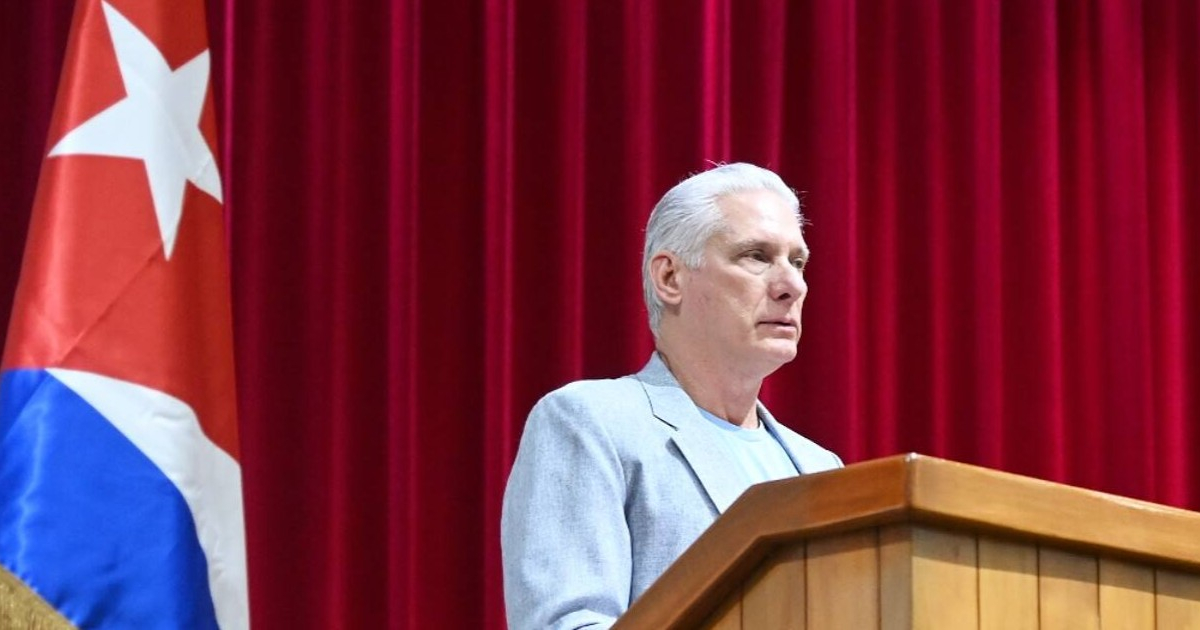
Cuban leader Miguel Díaz-Canel has once again reiterated Havana's official stance in relation to the United States. During a meeting with international delegations at the Palacio de las Convenciones, he emphasized that while Cuba remains open to dialogue, it will not compromise on its existing political framework.
Addressing members of the so-called Convoy Nuestra América to Cuba—consisting of 650 visitors from 33 countries and representatives from approximately 140 organizations—Díaz-Canel upheld his usual rhetoric of resilience and continuity.
"Revolutionaries do not surrender, revolutionaries are optimistic," he declared, aiming to bolster the regime's narrative of strength.
In a particularly striking statement, he remarked, "We are in tough times, but also times of definitions, and here stands a nation that prefers to live standing rather than die on its knees."
Cuba's Position on U.S. Relations
When discussing relations with Washington, Díaz-Canel clarified that Cuba is willing to engage in talks with the U.S. government, but without relinquishing its political system. He emphasized, "We remain committed to Patria o Muerte, and we will prevail."
He also expressed gratitude to leftist activists who traveled to the island amid the crisis, acknowledging their presence as an act of "bravery" and solidarity. "We understand what it means to come to Cuba," he said.
Global Implications of the Cuban Project
During the exchange, Díaz-Canel emphasized that the Cuban project has global significance: "What we're discussing isn't just Cuba's cause but also the cause of all the world's peoples," he asserted.
He portrayed Cuba as an international example, challenging the negative perception of the country: "Is that why we are a threat; or are we a threat because of the example we set?"
The Stark Contrast with Cuban Reality
These meetings and speeches starkly contrast with the reality faced by the Cuban population. While the regime persists in a narrative of resistance, frequently blaming external factors—especially Washington and figures like Donald Trump—the country grapples with a structural crisis characterized by power outages, shortages of basic foodstuffs, rising inflation, and wages that fall short of covering basic needs.
In such a context, calls to resist or even "die standing" while enjoying a position of privilege, removed from the daily hardships affecting the majority, only incite frustration and anger among ordinary Cubans.
The political leadership does not experience the same limitations as the rest of the populace, highlighting the disconnect between the regime and social reality.
The presence of foreign delegations supporting the Cuban system also draws criticism. These activists hail from countries where they enjoy political freedoms and stable economic conditions but advocate for a model that in Cuba translates to restrictions, hardship, and a lack of opportunities.
For Cubans, this external support deliberately overlooks the real difficulties facing society.
Meanwhile, the regime remains steadfast in its rhetoric that prioritizes ideological resistance over deep-seated reforms. Díaz-Canel made this clear by asserting that "this revolution will continue to triumph," reaffirming the continuity of the model amid an increasingly complex scenario.
Understanding Cuba's Political Stance
Why does Cuba want to engage in dialogue with the U.S.?
Cuba is open to dialogue with the U.S. to potentially improve relations and address mutual concerns, but it remains firm on maintaining its political system.
What are the main challenges facing Cuba?
Cuba is currently dealing with power outages, food shortages, inflation, and insufficient wages, all of which contribute to a significant structural crisis.
How does the Cuban regime justify its stance?
The Cuban regime justifies its stance by emphasizing ideological resistance and portraying the country as a global example, despite criticism and the hardships faced by the population.