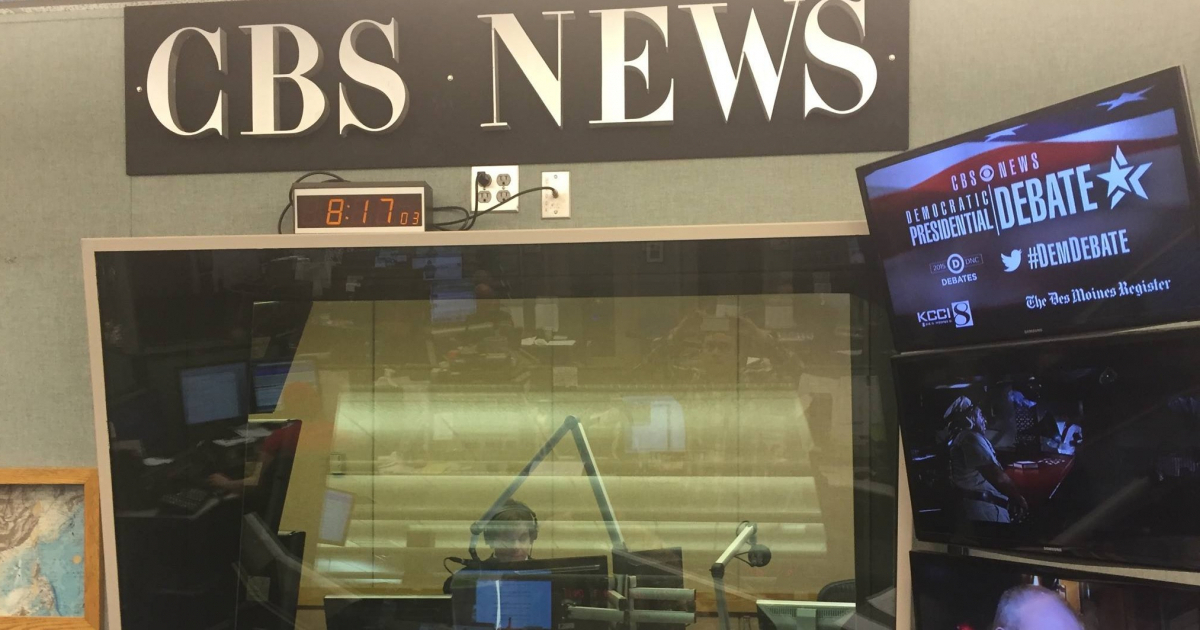
After almost a hundred years on air, CBS News Radio, one of the most iconic platforms in American journalism, will cease operations on May 22. This marks the end of an era for a service that has been a pillar of news dissemination since its inception.
The network's decision to end the service highlights the profound impact of evolving news consumption habits and the financial struggles faced by traditional media outlets.
Originally established in 1927, CBS News Radio began during a time when radio was the primary source of news, setting the stage for the media empire built by William S. Paley. Over the years, it became a trusted news source for millions of listeners.
For decades, CBS News Radio was there during pivotal moments in history, including the legendary reports by Edward R. Murrow from London during World War II bombings, providing real-time updates to the American public during one of the most turbulent times of the 20th century.
Yet, the media landscape today is radically different. The shift to digital platforms, the rise of podcasts, and the decline of traditional radio audiences have diminished the role of radio news. Facing these challenges, the network acknowledged that continuing the service was no longer viable.
Editor-in-Chief Bari Weiss explained to the Associated Press that while radio will always be a significant part of CBS News' legacy, maintaining operations was unfeasible despite exhaustive efforts to find a sustainable solution.
The closure of CBS News Radio is not an isolated event. In recent months, CBS had already scaled back its radio programming, cutting shows like Weekend Roundup and World News Roundup Late Edition in attempts to keep the service afloat. Nonetheless, economic realities ultimately prevailed.
Currently, CBS News Radio content was broadcasted by approximately 700 stations across the United States, known for its hourly news summaries. Its disappearance marks not only the end of a historic brand but also the loss of a structure that connected entire communities to national and international events for decades.
Veteran journalist Dan Rather encapsulated the symbolic weight of this closure with a poignant statement: "It's another part of America that vanishes."
The shutdown comes amidst a broader restructuring within the company. About 6% of the workforce, translating to over 60 employees, is expected to be laid off, though the exact number of those directly linked to the radio division remains unspecified.
Furthermore, potential corporate shifts involving parent company Paramount Global, which seeks further expansion within the industry, could bring additional changes.
Beyond statistics, the end of CBS News Radio represents a deep transformation in information consumption. Digital immediacy has overtaken formats that were once central to journalism, signaling the end of an era where radio not only informed but also connected audiences.
Impact of CBS News Radio Closure
Why is CBS News Radio shutting down?
CBS News Radio is closing due to shifts in news consumption habits and financial challenges facing traditional media outlets. The rise of digital platforms and declining radio audiences have made it unsustainable to continue broadcasting.
What impact did CBS News Radio have on journalism?
CBS News Radio played a significant role in American journalism, providing real-time news updates during critical historical events. It was a trusted source for millions and helped shape the media landscape as we know it today.
How will the closure affect CBS News employees?
As part of a broader company restructuring, approximately 6% of CBS News employees, equating to more than 60 individuals, are expected to lose their jobs. The exact impact on those within the radio division has not been specified.