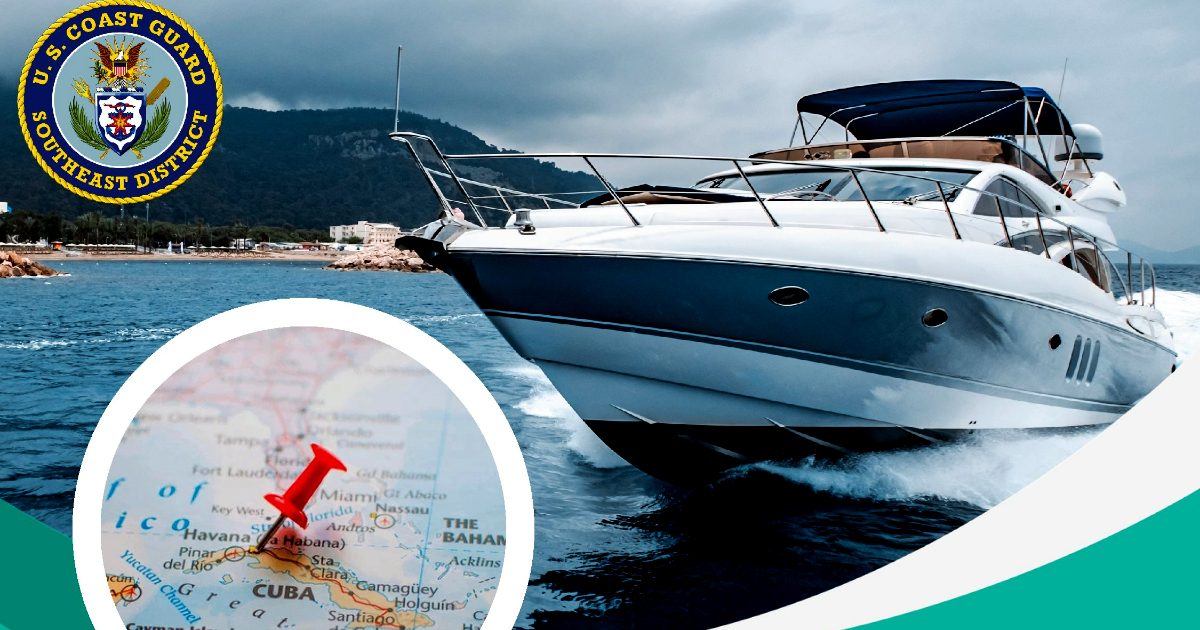
The United States Coast Guard Southeast District (USCG Southeast) issued a stark reminder this Friday, emphasizing that any U.S.-registered vessel intending to travel to Cuba must obtain prior authorization. Failure to comply may result in severe penalties, including both criminal and civil sanctions, as well as the forfeiture of the vessel.
This announcement, specifically targeting boat owners and operators, was shared across the institution’s social media platforms. It was accompanied by the Maritime Safety Information Bulletin MSIB 01-26, released last Tuesday from the Southeast District headquarters located in Miami.
Geared towards recreational sailors in the southern Florida region, the campaign has adopted the hashtag #DontTakeToTheSea, quickly garnering over 14,000 views within a few hours.
Heightened Attention on Unauthorized Naval Efforts
The Coast Guard's advisory emerges amidst growing focus on endeavors such as the "Nuestra América" flotilla or maritime convoy, organized by activists aiming to sail from southern Florida to Cuba with political and international pressure objectives in mind.
Such activities, which have gained notable traction on social media recently, amplify U.S. authorities' concerns regarding unauthorized departures and potential incidents in the Florida Straits—a region already marked by recent tensions and security risks.
Strict Regulations and Required Permits
According to MSIB 01-26, any U.S.-flagged vessel under 328 feet is prohibited from leaving U.S. territorial waters bound for Cuba without written authorization from the USCG Southeast District Commander. This requirement is in accordance with Title 33 of the Code of Federal Regulations, Part 107.
The application process involves submitting the CG-3300 form with comprehensive information, and processing takes a minimum of two weeks. Applications must be submitted via email to D7Miami-CubanPermits@uscg.mil or faxed to (305) 415-6809.
In addition to the USCG permit, applicants must include a special license approved by the Bureau of Industry and Security (BIS) of the Department of Commerce, as sailing to Cuba is considered an export under regulations from June 5, 2019. A license from the Office of Foreign Assets Control (OFAC) of the Treasury Department is also necessary for travel-related transactions to the island.
Return Protocols and Consequences
The bulletin outlines return obligations: vessel owners and operators must conduct a thorough inspection before departing Cuba and report their arrival immediately to the Customs and Border Protection (CBP). Non-compliance could lead to criminal and civil penalties, including vessel forfeiture.
Increasing Tensions and Energy Crisis
This advisory occurs during a period of heightened tension between Washington and Havana. On January 29, the Trump administration signed Executive Order 14380, declaring a national emergency with respect to Cuba and authorizing tariffs on countries supplying oil to the island.
On the same day, OFAC issued a license excluding Cuba from operations involving Russian crude in transit, thereby blocking new supplies amid the island's worst energy crisis in decades.
Cuba's energy crisis is marked by deficits of up to 2,040 megawatts, and last Monday saw a complete national electrical grid blackout, the cause of which the Cuban government admitted it did not know.
The security context in the Florida Straits has also worsened. On February 25, a Florida-registered speedboat was intercepted in Cuban waters with ten armed individuals on board, resulting in four fatalities and 21 gunshots, further escalating tensions in the area.
The USCG has issued similar warnings in the past. In July 2021, it cautioned that unauthorized sailing to Cuba could result in up to 10 years of imprisonment and fines of up to $25,000 per day, in addition to vessel forfeiture.
FAQs on Unauthorized Sailing to Cuba
What are the penalties for sailing to Cuba without permission?
Sailing to Cuba without the required permits can result in criminal and civil penalties, including fines of up to $25,000 per day, imprisonment for up to 10 years, and the possible forfeiture of the vessel.
What permits are needed to sail from the U.S. to Cuba?
Vessels must obtain a written permit from the USCG Southeast District Commander, a special license from the BIS, and a license from the OFAC for travel-related transactions to Cuba.
How long does it take to process a sailing permit to Cuba?
The processing time for a sailing permit to Cuba is at least two weeks, requiring the submission of form CG-3300 with complete information.