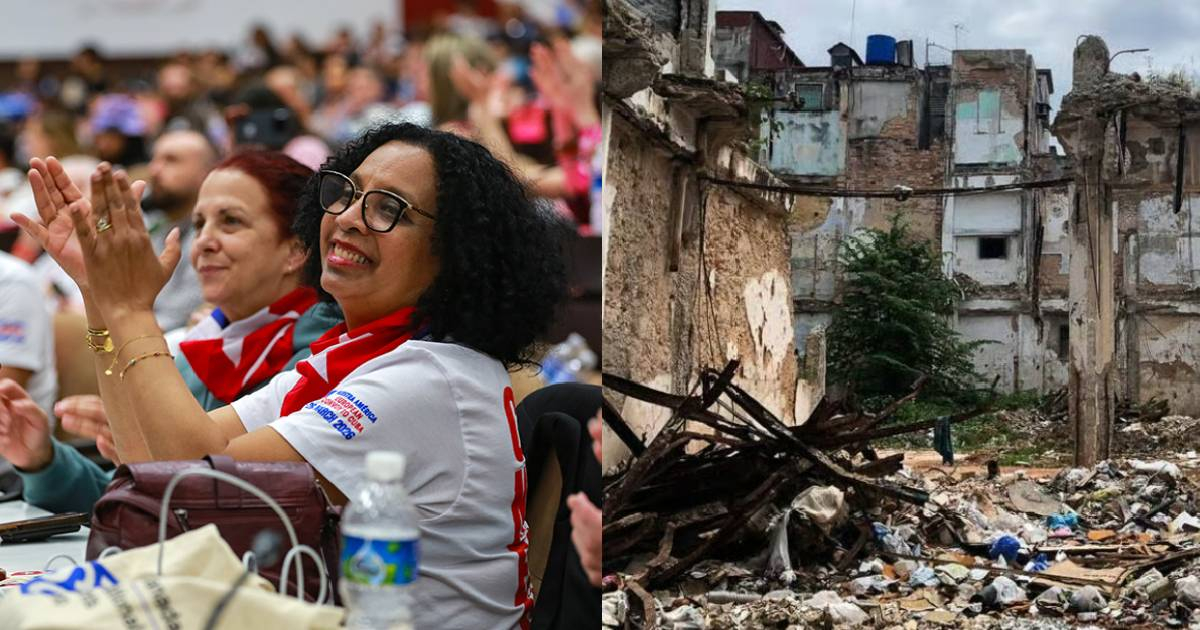
The Cuban musicologist Rosa Marquetti has expressed skepticism over the media-driven and political nature of some international solidarity efforts with Cuba. She argues that these initiatives exploit the country's deep-rooted crisis while overlooking the quiet support that churches and individuals have provided over the years.
In a thoughtful post on her Facebook wall, Marquetti highlighted that for decades, various churches and numerous individuals have been channeling humanitarian aid to the island without seeking publicity or political acknowledgment.
She clarified that these contributions, which include essential items like medicines, food, and clothing, are delivered directly to communities and parishes in a discreet and steady manner, with no fanfare or coverage by the official Cuban media.
Contrast with Government-Aligned Initiatives
According to Marquetti, a stark contrast is evident when these initiatives come from individuals deemed close to the government, as media mechanisms quickly mobilize to amplify their gestures.
"For the Cubans who have sent aid and contributions for decades, not a word, not a single accolade, sometimes not even the necessary facilities. Yet for non-Cubans who are 'among their own,' and far from understanding the struggles of those living in Cuba, all the reverence is given. This arrogance, disdain, and lash against their own have led to the current situation," she emphasized.
The Political Stage of Solidarity
The historian argued that these actions turn into performances that deliberately conflate the government with the Cuban people, transforming what could be a gesture of citizen empathy into a political and partisan act.
She also criticized that authorities prefer to engage with foreign allies rather than acknowledge the diversity of opinions within Cuban society or facilitate aid initiatives led by local citizens or the diaspora.
Marquetti connected this behavior with an international narrative that, in her view, uses Cuba's crisis as a political symbol. "I'm tired of seeing Cuba as a theme park of resistance," she stressed.
The Folklorization of Poverty
Additionally, she condemned what she described as the "folklorization of poverty," where the country's material hardships are turned into an aesthetic or ideological argument for foreign visitors who spend only a brief time on the island, without experiencing the true living conditions of the Cuban populace.
"No one asked us Cubans if we wanted to sacrifice ourselves to please nostalgic leftists, 'groupies' of nonagenarian guerrillas, or dreamy academics, gifting them the symbol of an outdated utopia that none of them chose, wanted, or wants to live," she concluded.
Her critique coincides with the presence of activists and leftist politicians in Cuba, who have even met with the ruler Miguel Díaz-Canel, as part of the Convoy Nuestra América, an international initiative promoting solidarity with the Cuban government.
In this context, statements from Havana by former Podemos leader Pablo Iglesias, claiming the country's situation is "difficult but not as portrayed from outside," sparked strong backlash among Cubans on social media.
Controversy also arose from a recent video by Swedish climate activist Greta Thunberg, who solely blamed the United States government for the island's crisis and called for international support for the Cuban government. This drew criticism from citizens who accused her of ignoring the internal political situation and the daily hardships faced by the population.
Comments on Marquetti's message reflected similar discontent. Some users accused sectors of the international left of using the Cuban crisis for ideological propaganda, while others insisted that effective aid is often that which arrives discreetly and directly to communities.
Participants in the discussion pointed out that international solidarity loses credibility when it turns into a political spectacle or when it ignores the Cuban system's own responsibility for the country's economic and social crisis.
Frequently Asked Questions about Solidarity and Criticism in Cuba
What are Rosa Marquetti's main criticisms about international solidarity with Cuba?
Rosa Marquetti criticizes the media-driven and politicized nature of some international solidarity initiatives, arguing they exploit Cuba's crisis while ignoring the silent aid provided by churches and individuals.
How does Marquetti describe the "folklorization of poverty" in Cuba?
Marquetti describes it as the transformation of Cuba's material hardships into an aesthetic or ideological argument for foreign visitors who do not experience the real living conditions on the island.
What sparked backlash among Cubans regarding Pablo Iglesias' statements?
Pablo Iglesias' statements downplaying the severity of Cuba's situation as perceived from outside received backlash as they seemed to ignore the struggles faced by Cubans.