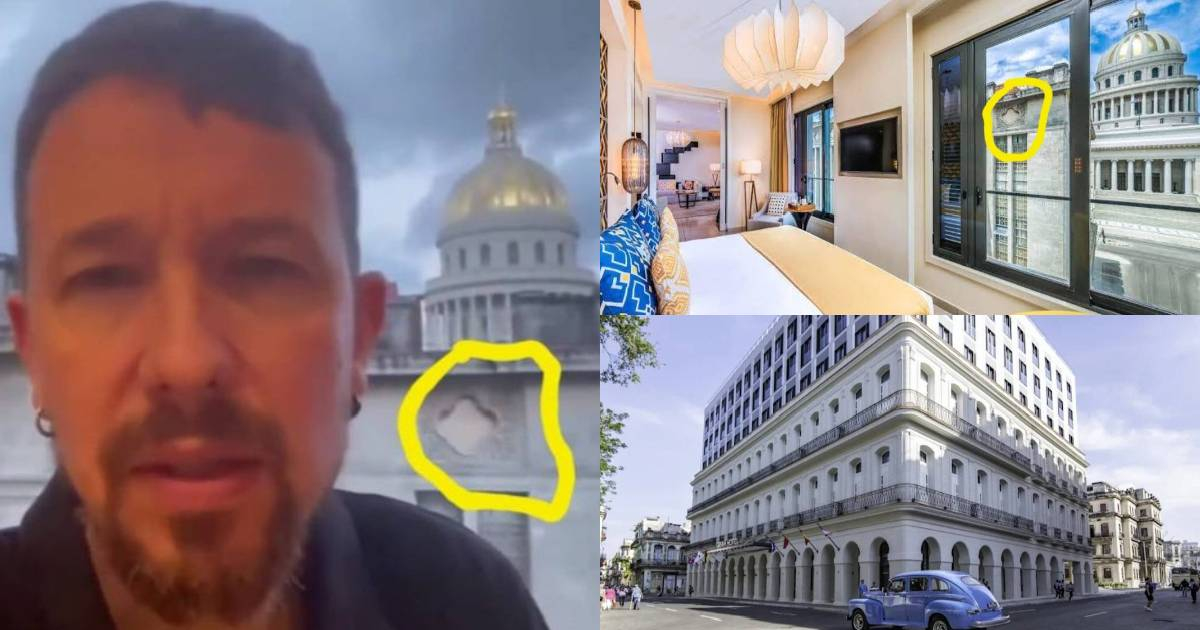
Comments made by former Podemos leader and Canal Red director, Pablo Iglesias, while in Havana, have sparked immediate backlash among Cubans on social media. Iglesias claimed on Friday that the situation in Cuba "is difficult but not as it is portrayed from outside."
In the Facebook group "Desmintiendo al NTV de Cuba," activist Ariel Maceo Téllez vehemently criticized the Spanish politician, accusing him of trying to "deceive" people about the country's reality. Maceo argued that Iglesias speaks from a privileged position, detached from the harsh living conditions faced by most Cubans.
Through photographic analysis, Maceo suggested that Iglesias filmed his statements from a room in the Gran Hotel Bristol Meliá Collection, a five-star establishment in Old Havana. He pointed to visual elements in the video, such as the view of the Capitol, to support his claim.
Maceo questioned the credibility of assessments made about Cuban reality from luxury locations that are out of reach for the majority of the population. The message emphasized that Cubans have firsthand knowledge of the situation on the island and reject attempts by foreign figures to interpret it after brief visits or meetings with officials.
Additionally, Maceo denounced the lack of political freedoms, the existence of political prisoners, and the worsening material conditions, including power outages, food shortages, and deficiencies in basic services.
In response to the post, several users reiterated that the country's situation cannot be judged from comfortable settings while the majority face daily hardships like lack of electricity, water, food, and medicine. Others labeled Iglesias's remarks as disrespectful to those living the crisis firsthand.
Earlier, during an appearance on the program El Tablero, Iglesias stated that Cuba's situation "is certainly difficult, but not as it is portrayed from outside," after meeting with representatives of the Communist Party (PCC) in Havana.
The backlash comes amid Iglesias's visit, which is part of an international convoy of leftist activists and politicians traveling to Cuba with a narrative supporting the government. This stance has been criticized by those who highlight the disconnect between such narratives and the country's internal reality.
This incident adds to a series of recent events where Cuban testimonies have challenged external narratives about the island, highlighting a persistent rift between international political discourse and the everyday experiences within Cuba.
Understanding the Cuban Response to International Narratives
Why did Cubans react negatively to Pablo Iglesias's comments?
Cubans reacted negatively because they felt Iglesias's comments, made from a luxury hotel, downplayed the severity of the crisis they face daily. They saw his statements as detached from their reality and potentially misleading.
What are the main criticisms Cubans have about foreign interpretations of their situation?
Cubans criticize foreign interpretations for being made from privileged positions without understanding the daily struggles, such as shortages and lack of freedoms, they endure. They feel these interpretations often overlook the real challenges faced by the population.
How does the political context influence international perceptions of Cuba?
The political context, including visits from international leftist politicians like Iglesias, influences perceptions by promoting narratives that support the government. These narratives can conflict with the lived experiences of Cubans, leading to criticism and skepticism.