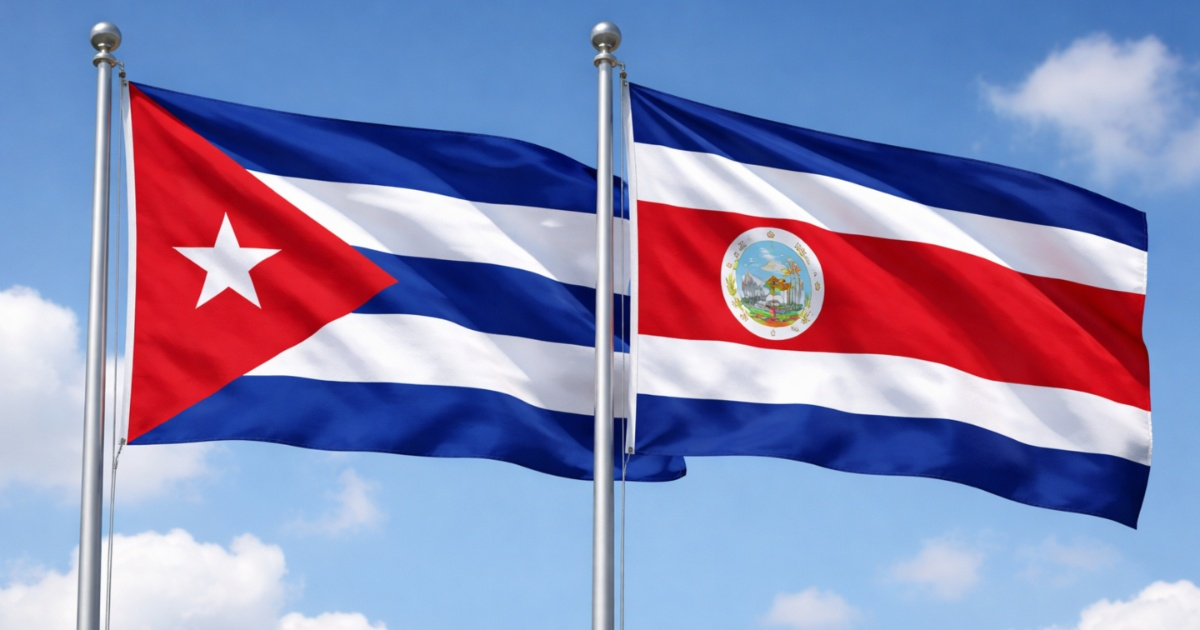
Cuba's Foreign Minister, Bruno Rodríguez, has sharply criticized Costa Rica's decision to close its embassy in Havana and limit diplomatic relations to consular affairs. He described the action as "arbitrary and unjustified," predicting it is "doomed to failure."
In a statement shared on social media platform X, Rodríguez accused Costa Rica of succumbing to U.S. influence. He claimed that Washington is attempting to drag other regional countries into its "historically failed" effort to isolate Cuba.
"We denounce Costa Rica's arbitrary and unjustified decision to downgrade relations with Cuba to a consular level. It is an act of clear submission to U.S. pressures, aiming to draw other nations into its historically failed attempt to isolate Cuba. This decision is bound to fail, as history has repeatedly shown between our nations, whose people have proven inseparable," Rodríguez expressed.
Context of Costa Rica's Decision
The Cuban foreign minister's response came after Costa Rica announced plans to shut down its embassy in Havana and requested Cuba to recall its diplomatic staff from San José. This move marks a significant reduction in political ties between the two countries.
This decision was confirmed by President Rodrigo Chaves and Foreign Minister Arnoldo André, citing a sustained decline in human rights conditions in Cuba as the reason. Costa Rican authorities attributed the decision to the worsening internal crisis on the island, characterized by repression, power outages, and widespread scarcity.
Costa Rica's Justification
Arnoldo André emphasized that the decision stems from Costa Rica's "deep concern" over the deteriorating situation, highlighting increased repression against activists, dissidents, and government critics. André pointed out escalating restrictions on fundamental freedoms, such as expression, association, and peaceful assembly, alongside worsening living conditions due to shortages of essential goods and services.
As part of redefining their bilateral relationship, Costa Rica asked Havana to reciprocate by withdrawing its diplomatic staff, maintaining only minimal consular functions. The Costa Rican embassy in Cuba has been without diplomatic personnel since February 5, making normal operations "virtually impossible."
Furthermore, President Chaves announced that Costa Rica will not maintain direct consular representation in Cuba. Instead, Costa Rican citizens will be attended to from Panama. The decision was made in consultation with President-elect Laura Fernández Delgado, who supported the measure.
Havana's Response
Following the announcement, the Cuban government accused Costa Rica of bowing to U.S. pressure. In a statement from Cuba's Ministry of Foreign Affairs, Havana described the decision as unilateral, arbitrary, and unjustified, stating it was notified through a diplomatic note.
The Cuban Foreign Ministry argued that the move does not align with the Costa Rican people's interests but rather with external pressures. It criticized San José's tendency to align with Washington's policies towards Cuba. The Cuban government explicitly rejected Costa Rica's request to reduce its diplomatic staff in San José, considering the reciprocity argument unfounded.
Despite these tensions, from April 1, relations between the two countries will persist solely at a consular level, confirming a significant diplomatic rollback. The Cuban regime views this as part of a broader U.S.-driven strategy to isolate the island amid increasing political and economic pressures.
Havana assured that this decision will not impact the historical ties between the Cuban and Costa Rican peoples. Bruno Rodríguez reiterated that history has shown "nothing has been able nor will be able" to separate the two nations' peoples.
Understanding the Diplomatic Rift Between Costa Rica and Cuba
Why did Costa Rica decide to close its embassy in Cuba?
Costa Rica decided to close its embassy in Cuba due to concerns over the deteriorating human rights situation on the island, including increased repression and worsening living conditions.
How did Cuba respond to Costa Rica's diplomatic move?
Cuba criticized Costa Rica's decision as arbitrary and influenced by U.S. pressure, asserting that it does not align with Costa Rican interests and is part of a broader strategy to isolate Cuba.
What will happen to the diplomatic relations between the two countries?
Diplomatic relations between Costa Rica and Cuba will be reduced to a consular level, with no direct consular representation from Costa Rica in Cuba. The relationship will be limited, but not entirely severed.