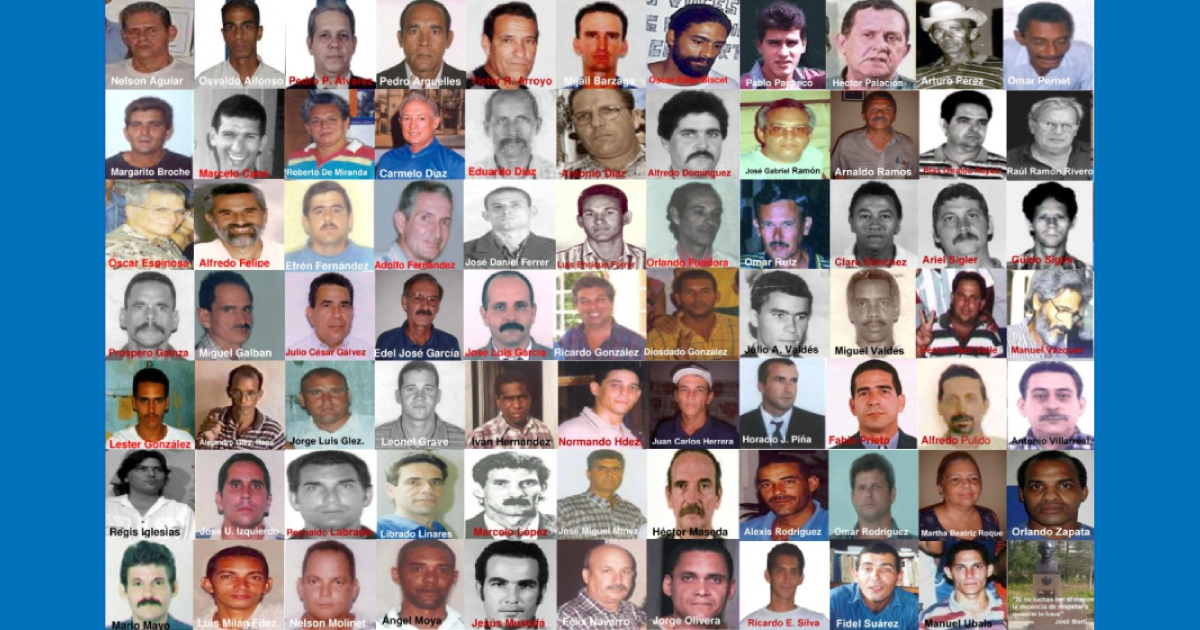
March 18, 2003, stands as a somber reminder of one of Cuba's darkest chapters in recent history. Within mere days, a wave of repression swept 75 peaceful dissenters into custody, subjected them to cursory trials, and handed down hefty prison sentences. This orchestrated crackdown, known infamously as the Black Spring, was far from a blunder or an overreach. It was a calculated act of political vengeance.
More than two decades have elapsed, yet one crucial truth remains insufficiently acknowledged: this was not a pursuit of justice; it was a manifestation of punishment. Among the 75, I stood accused. The prosecution sought an 18-year sentence for me, and I was ultimately condemned to 14 years. I spent five years behind bars, punished for my thoughts, not for any violent act or common crime, but for my ideas, my writings, my connections, and my refusal to remain silent.
This interpretation is not speculative; it is explicitly articulated in the verdict I share with three other political prisoners. A careful examination of this document reveals that the so-called "facts" leading to our conviction were nothing more than actions any citizen in a free society would undertake: engaging with others, seeking information, communicating, and expressing opinions. Yet, these were twisted as evidence of activities against the state. The real target was not a criminal act, but the essence of independence.
The Aftermath of Injustice
The legal mechanism employed—"acts against the independence or territorial integrity of the state"—sounds ominous, even warlike. However, stripped of its official political veneer, what remains is disturbingly simple: in Cuba, independent thought is criminalized.
My ordeal didn't conclude with my release from prison. I was never truly freed. Instead, I was exiled. My departure was coerced, deemed "final" by State Security. There was no genuine offer or option to remain in Cuba. This exile carried an additional cruelty for me: I was expelled the day after my mother's death.
This detail is significant. It illustrates that the intent wasn't merely to punish behavior but to shatter the individual's spirit. Yet there's another aspect of this story often neglected. For years, the regime's confiscation of properties has been rightfully criticized. However, there's scant attention to the confiscation of lives. To those of us who lost years of freedom, were torn from our families, and forced from our homeland.
Confiscated Lives, Not Just Properties
Many of us didn’t lose a business or a farm. In my case, I endured years without hope, and upon rejecting this dispossession, I lost five years to prison and my right to live in my land. This raises an unresolved question: if there's talk of compensating for confiscated assets, why isn’t there a discussion about repairing lives?
My narrative, and that of countless others, cannot be detached from a broader reality. Born in 1958, I never held genuine property. I lived in a house assigned to my father by the government, previously owned by someone who had left the country. It was later divided, and each child received a portion. There we lived, where our children and their children were born.
Many have touted these stories as proof of social justice. With time, I've come to see them as evidence of something else: an organized precariousness. It wasn't ownership. It wasn't security. It wasn't a life built on one's own foundation. It was living within a chain of dispossession that began before us and continued beyond.
A Generational Cycle of Dispossession
The original owner lost the house first. Then another family arrived, not as typical owners in a normal country, but as occupants in a distorted system. Then came the children, inheriting not a home, but fragments. A room. A division. An arrangement. A life built on the temporary. And then the grandchildren, inheriting the ruins of what was once a home and society.
This leads to the truly revealing question: if we return to Cuba, where do we belong? To the house once owned by another? To the home split into pieces? To the house likely inhabited by someone else due to the same chain of need, arbitrariness, and chaos?
Thus, an inevitable question emerges: if I return to Cuba, where do I return?
This question encapsulates the failure of a system that not only stripped original owners but also condemned entire generations to live without legal security, clear inheritance, or a place to fully belong.
Seeking True Justice for Cuba's Victims
If someday the issue of justice in Cuba is genuinely addressed, it won't suffice to discuss confiscated properties. It will be essential to include the victims. Those of us who were imprisoned, exiled, silenced, and stripped of our dignity.
I'm not seeking pity; I'm speaking of justice. And that justice rests on a fundamental principle: if confiscated assets deserve restitution, so does political imprisonment. If property dispossession requires acknowledgment, so must exile and the destruction of families.
Twenty-three years have passed since the Black Spring, yet the debt remains unchanged. Until the victims are fully recognized, and the whole truth is embraced, any discourse on justice in Cuba will remain incomplete. It wasn’t merely about imprisoning 75 individuals. It was an attempt to break an idea. And that idea, the idea of freedom, endures.
Alejandro González Raga is a former political prisoner and the Executive Director of the Cuban Observatory for Human Rights (OCDH).
Understanding Cuba's Black Spring: Key Questions Answered
What was the Black Spring in Cuba?
The Black Spring refers to the 2003 crackdown by the Cuban government on 75 peaceful dissidents, resulting in their arrest, summary trials, and lengthy prison sentences as a means of political retaliation.
Why is the Black Spring significant in Cuban history?
The Black Spring is significant as it highlights the Cuban government's use of harsh measures to suppress dissent and independent thought, showcasing the regime's intolerance for political opposition.
How were the dissidents punished during the Black Spring?
The dissidents were subjected to swift trials and sentenced to long prison terms for actions considered normal in free societies, such as communicating and expressing opinions, which were deemed as threats against the state.
What does Alejandro González Raga advocate for?
Alejandro González Raga advocates for justice and recognition of the victims of political repression in Cuba, emphasizing the need for restitution not only for confiscated properties but also for the lives affected by imprisonment and exile.