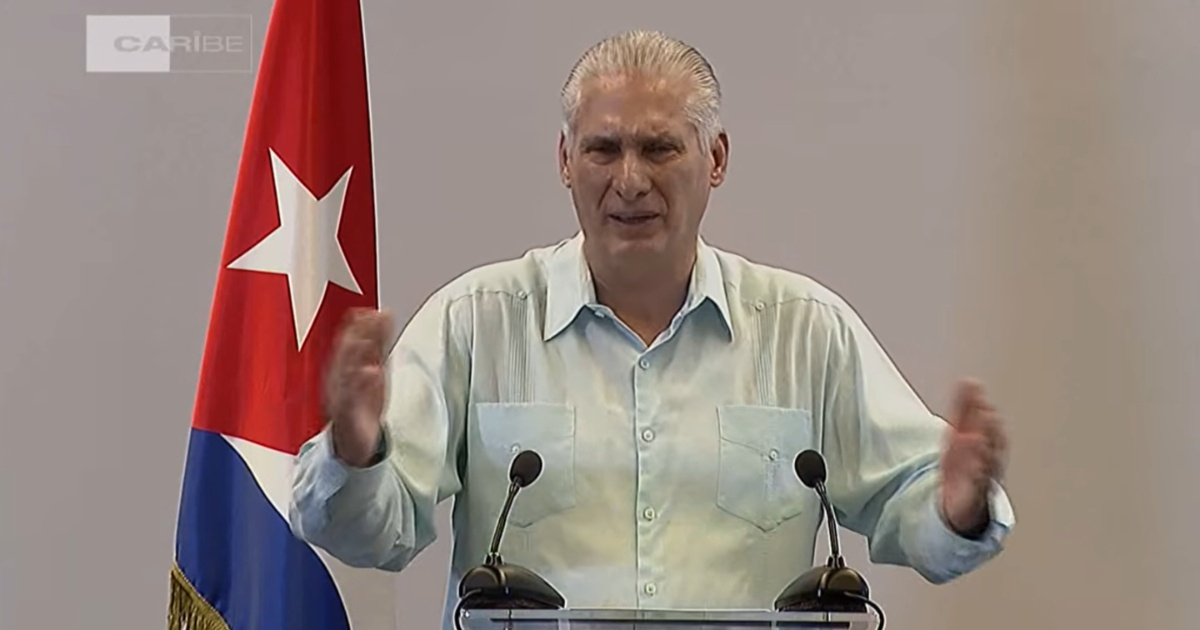
The Cuban leader, Miguel Díaz-Canel, sparked a wave of social media reactions after he released a statement condemning supposed threats from the United States against Cuba. He asserted that the nation is prepared to withstand any external aggression.
In his statement, the leader accused Washington of almost daily threats to forcibly overthrow Cuba's constitutional order. This was a direct response to recent comments made by President Donald Trump and Secretary of State Marco Rubio.
"Any external aggressor will encounter an unyielding resistance," Díaz-Canel declared with bravado, evoking memories of Venezuelan counterpart Nicolás Maduro, who famously taunted Trump with "Come for me, coward!" before facing capture.
The message triggered a flood of criticism and mockery from Cuban users, who likened his rhetoric to the fiery declarations often heard from Venezuela's chavismo.
Drawing parallels to Maduro's provocative challenge to Washington—"Come for me"—many netizens sarcastically urged Díaz-Canel to echo the phrase.
"He's basically saying 'come get me,'" one user remarked, in a comment that garnered dozens of reactions. Others humorously suggested he should add, "I'll be waiting right here," comparing the scenario to recent events in Venezuela.
Beyond the mockery, numerous remarks highlighted the deep social discontent on the island, with direct criticisms of government management and calls for political change.
Some questioned the official narrative on the economic crisis, pointing out that daily hardships—characterized by blackouts, shortages, and the crumbling of essential services—stand in stark contrast to the government's rhetoric and the lavish lifestyle of its leaders.
These reactions arise amid escalating tensions in Cuba, where recent days have seen reports of protests, pot-banging demonstrations, and widespread expressions of dissatisfaction in multiple cities.
Understanding the Social Media Backlash Against Díaz-Canel
Why did Díaz-Canel's message provoke such a strong reaction?
Díaz-Canel's message was seen as reminiscent of Nicolás Maduro's taunt to the U.S., which many found ironic given Cuba's current struggles. The bravado in his statement clashed with the reality of the island's hardships, leading to widespread criticism and mockery on social media.
What are some of the main issues driving social unrest in Cuba?
Key issues fueling discontent include frequent power outages, shortages of basic goods, and the deterioration of essential services. These challenges are exacerbated by the contrast between the population's struggles and the opulent lifestyle of the country's leaders.