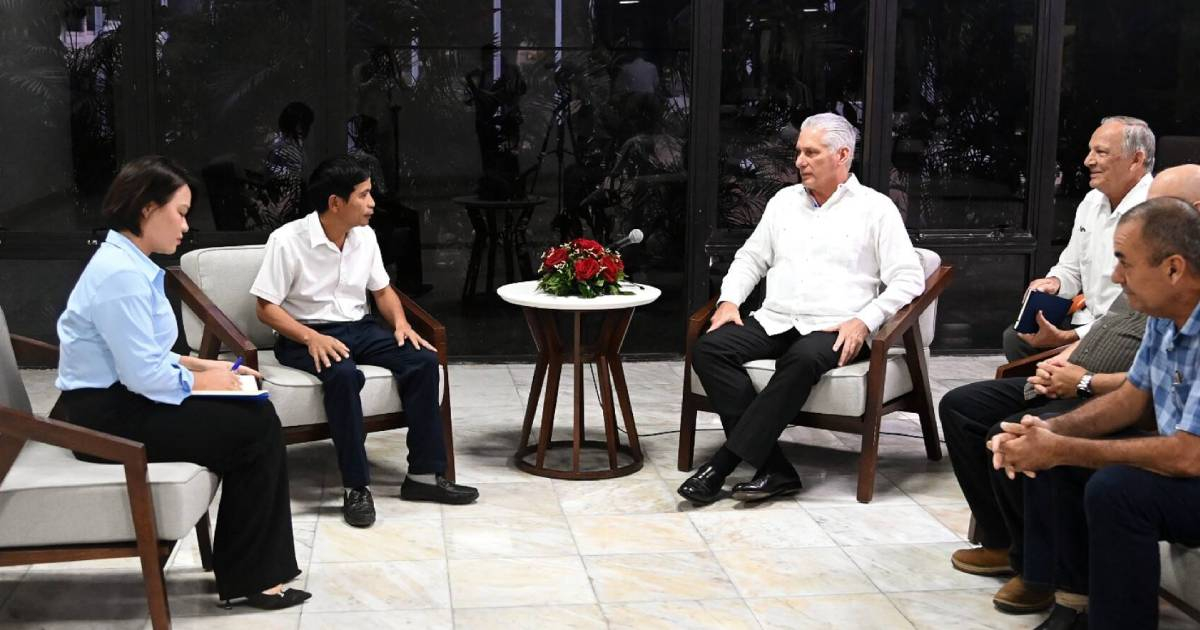
Amid growing public discontent, Cuban leader Miguel Díaz-Canel declared that the island could soon achieve self-sufficiency in rice production. This statement was made during a meeting with representatives from a Vietnamese company involved in agricultural projects in Cuba.
According to information released by the Cuban Presidency, Díaz-Canel met with entrepreneur Nguyen Van Quang, the president of Agri-VMA. This company is developing rice production projects in Los Palacios, Pinar del Río.
During the discussion, Díaz-Canel emphasized the positive outcomes of the collaboration between Cuba and Vietnam in this sector. He asserted that this partnership illustrates the potential for the country to meet its own rice demands.
"Cuba will soon be able to achieve rice self-sufficiency," he stated, despite the fact that the island has long struggled to provide even the subsidized rice included in the basic food basket.
The Vietnamese company operates through various modalities, including leased lands, partnerships with Cuban producers, and the sale of supplies in foreign currency, all aimed at boosting crop yields, as explained by the regime.
Díaz-Canel further mentioned that these projects are part of agreements made with the Vietnamese government, aiming to enhance agricultural production amid the nation’s ongoing food crisis.
Nguyen Van Quang expressed Vietnam's continued commitment to supporting Cuba, acknowledging that the island is facing "a difficult situation."
The Cuban leader's claims starkly contrast with the reality in the country, where rice—a staple food—often faces shortages and significant price increases, forcing many families to rely on the informal market or imports.
Currently, Cuba relies heavily on rice imports to satisfy domestic demand, amidst an economic crisis characterized by low agricultural output and a lack of resources.
Understanding Cuba's Rice Production Challenges
What is the current state of rice production in Cuba?
Cuba currently struggles with low rice production and is heavily dependent on imports to meet domestic demand, due to economic challenges and a lack of agricultural resources.
How is Vietnam supporting Cuba's agricultural sector?
Vietnam is supporting Cuba through agricultural projects, such as those led by Agri-VMA, which include land leases, partnerships with local producers, and supply commercialization to improve crop yields.
Why is rice considered a crucial staple in Cuba?
Rice is a fundamental part of the Cuban diet and is included in the basic food basket. Its scarcity and rising prices significantly impact Cuban households, making it a crucial staple.