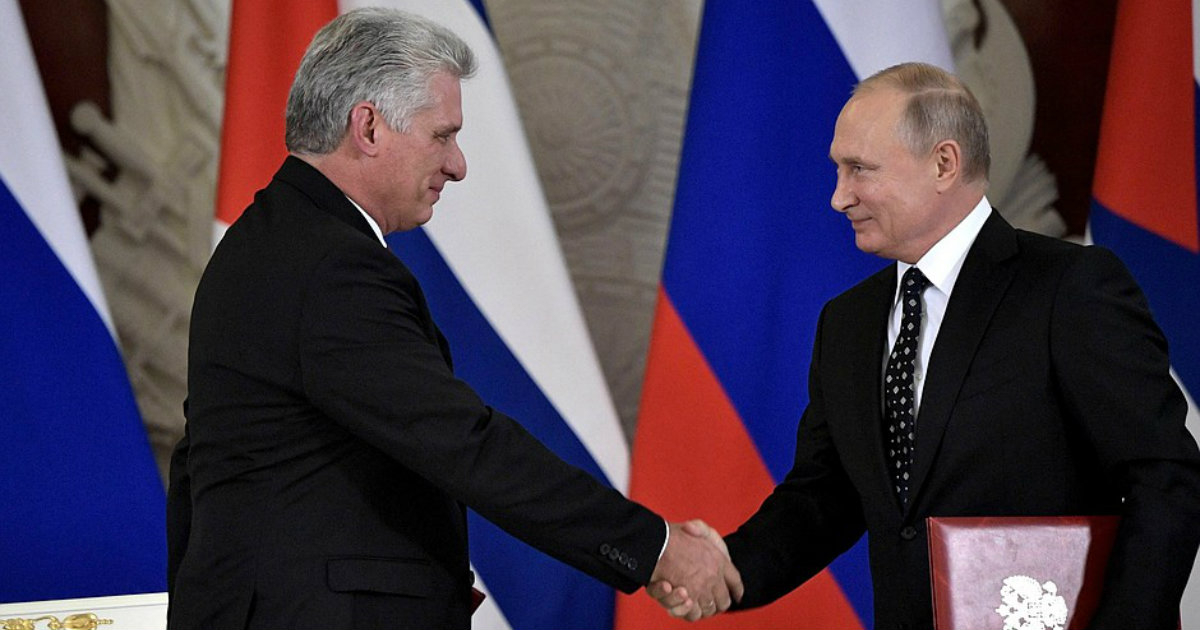
The Russian Foreign Ministry has voiced its "deep concern over the escalating tensions surrounding Cuba and the increasing external pressure on the island" through an official statement released by its embassy in Havana. This comes amid a backdrop of geopolitical tensions and a severe energy crisis affecting the country.
In the communication, Moscow accuses the current situation of being the result of an "artificially created atmosphere of confrontation" and reiterates its political stance by declaring its "unwavering solidarity with the Cuban government and the Cuban people."
The statement firmly rejects any actions that could undermine national sovereignty and condemns "attempts at abrupt interference in the internal affairs of a sovereign state," as well as "intimidation and the application of illegal unilateral restrictive measures."
Although the declaration does not directly mention the United States, it implicitly criticizes Washington's current policy towards the island, particularly under the administration of Donald Trump.
Russia attributes the worsening crisis in Cuba to external factors, pointing out that the island faces "unprecedented challenges" as a direct consequence of the "long-standing commercial, economic, and financial embargo, and more recently, the energy embargo imposed by the U.S."
Within this context, the statement adopts a tone of political resistance, asserting that "the heroic Cuban people have shown their commitment to the ideals of freedom, independence, and social justice," and will know how to "defend their inalienable right to choose their development path."
The Russian Foreign Ministry also clarified its willingness to continue supporting Havana. "For our part, we provide and will continue to provide Cuba with the necessary support, including material assistance," they concluded without offering further details.
Continued Kremlin Support: "Constant Contact" and Willingness to Assist
Simultaneously, Kremlin spokesperson Dmitri Peskov emphasized this message in statements gathered by the Interfax agency. He highlighted that Russia maintains "constant contact with our Cuban friends" to explore potential avenues of cooperation in addressing the crisis the island is undergoing.
Peskov described the Cuban situation as particularly challenging, stating that it involves "an independent and sovereign nation facing severe economic hardships due to a suffocating embargo."
According to him, the difficulties are not only due to decades of sanctions but also more recent issues related to energy supply.
The spokesperson warned of "emerging significant humanitarian problems" and reiterated that "from Russia, we are willing to provide all possible assistance, of course."
In line with this, he insisted that Moscow is actively collaborating with Havana: "we are working on all these matters with our Cuban counterparts."
Russian authorities believe that the crisis has intensified due to recent energy restrictions, leading to prolonged blackouts and deteriorating living conditions on the island.
Washington's Threats and an Increasingly Tense Scene
Moscow's statements come after a new episode of tension with the United States. President Donald Trump issued threats toward the Cuban government, including the controversial remark: "It would be an honor to take Cuba," in the context of growing diplomatic and economic pressure.
According to Interfax, the Kremlin chose not to directly comment on these statements, although it made clear that they do not alter its stance on Cuba.
From Moscow, there is a continued insistence on respecting the island's sovereignty and maintaining bilateral cooperation despite external threats.
Despite the emphasis from both the Russian Foreign Ministry and the Kremlin spokesperson on their willingness to help, it is evident that beyond declarations, Moscow has not concretely or visibly supported the island in recent months.
Unlike other allies like Mexico, which has managed to send humanitarian aid—though not fuel—Russian support remains, for now, in the political and discursive realm, without any specific measures announced to alleviate the current energy and humanitarian crisis in Cuba.
Understanding the Current Crisis in Cuba
What is causing the current crisis in Cuba?
The crisis in Cuba is attributed to external factors, including long-standing commercial, economic, and financial embargoes, as well as recent energy sanctions imposed by the United States.
How is Russia responding to the Cuban crisis?
Russia has expressed its solidarity with Cuba and pledged to provide necessary support, including material assistance, although tangible aid has not yet been realized.
What has been the reaction of the United States?
Under President Donald Trump, the United States has increased diplomatic and economic pressure on Cuba, with Trump making provocative statements about the island.