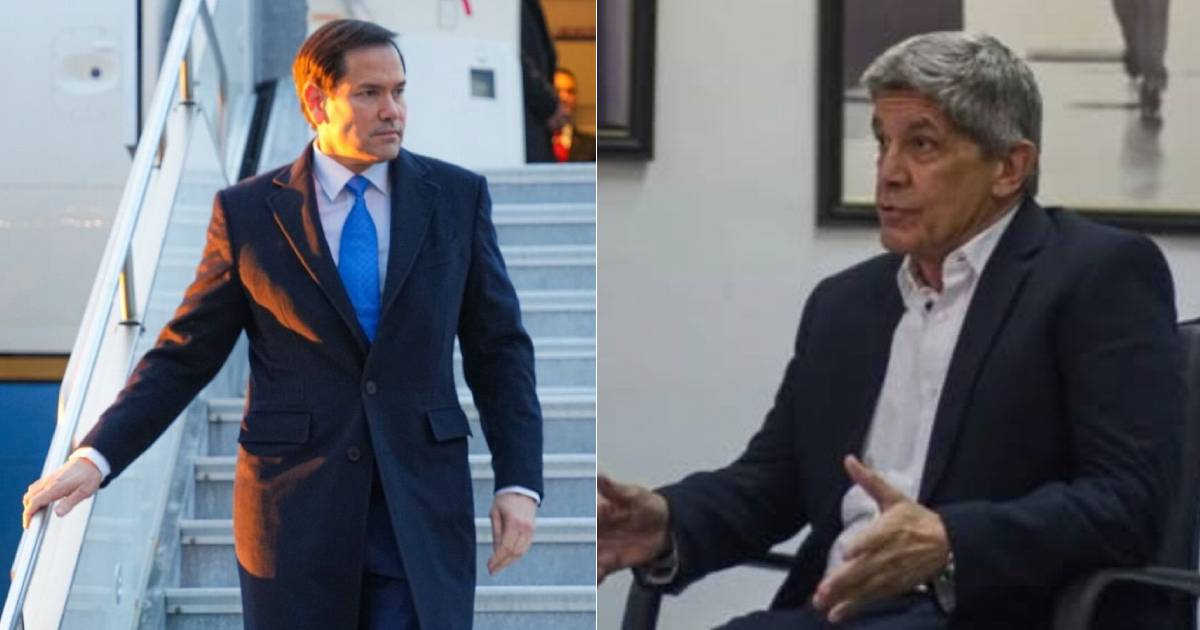
On Tuesday, the Cuban government issued a combative response to recent statements by U.S. President Donald Trump and Secretary of State Marco Rubio, amidst a tense backdrop of discreet talks and an escalating internal crisis on the island.
Carlos Fernández de Cossío, the Deputy Foreign Minister, was among the first to publicly address the situation. Using the social media platform X, he accused Washington of waging a "ruthless economic war" against Cuba, using it as a pretext to justify further threats.
"The US government continues its relentless economic war, denying Cuba access to financing, markets, technology, and fuel, then blames the country for its economic mismanagement, using it as an excuse to threaten military aggression and seize control," Fernández de Cossío commented.
His remarks followed hours after Marco Rubio's harsh critique of the Cuban system from the Oval Office. The U.S. diplomat bluntly stated, "The core issue is that their economy doesn't work," emphasizing that the island's problems are structural, stemming from decades of reliance on external subsidies.
Rubio also directly challenged the current leadership, asserting that those in power "don't know how to fix it" and advocating for significant changes at the helm: "They need to bring in new leadership."
Meanwhile, Donald Trump heightened the political stakes by confirming ongoing talks with Havana that may yield results soon. "Cuba is in discussions with Marco Rubio, and we will do something very soon," he declared, having previously labeled the island a "failed state."
The backdrop for these statements is particularly sensitive. Cuba is enduring an unprecedented economic and energy crisis, worsened by the cessation of Venezuelan oil supplies. This fuel shortage has led to widespread blackouts, shortages, and increasing social unrest within the country.
While Washington exerts pressure with demands for political leadership changes in Cuba as a condition for any agreement, the Cuban government attempts to project a narrative of resistance against what it perceives as hostile U.S. policies.
However, the divergence between these public statements highlights a more complex reality: negotiations that the Cuban government has denied for months, economic reforms deemed insufficient by Washington, and a population grappling with the direct impact of the crisis.
In this context, the public declarations seem to be just the tip of a much deeper negotiation, whose outcome could shape the immediate future of millions of Cubans both on the island and abroad.
Key Questions About the U.S.-Cuba Tensions
What are the main accusations made by the Cuban government against the U.S.?
The Cuban government accuses the U.S. of conducting a "ruthless economic war," denying Cuba access to vital resources and using this as a pretext for further threats.
What are the key issues highlighted by Marco Rubio regarding Cuba's economy?
Marco Rubio criticized Cuba's economic system as fundamentally flawed, attributing its problems to structural issues and decades of reliance on external subsidies.
How has the fuel shortage affected Cuba?
The fuel shortage has led to widespread blackouts, shortages, and growing social unrest within Cuba, exacerbating the country's economic crisis.
What might the outcome of the U.S.-Cuba negotiations mean for Cubans?
The negotiations' outcome could significantly influence the immediate future of millions of Cubans, both on the island and abroad, depending on whether substantial changes are implemented.