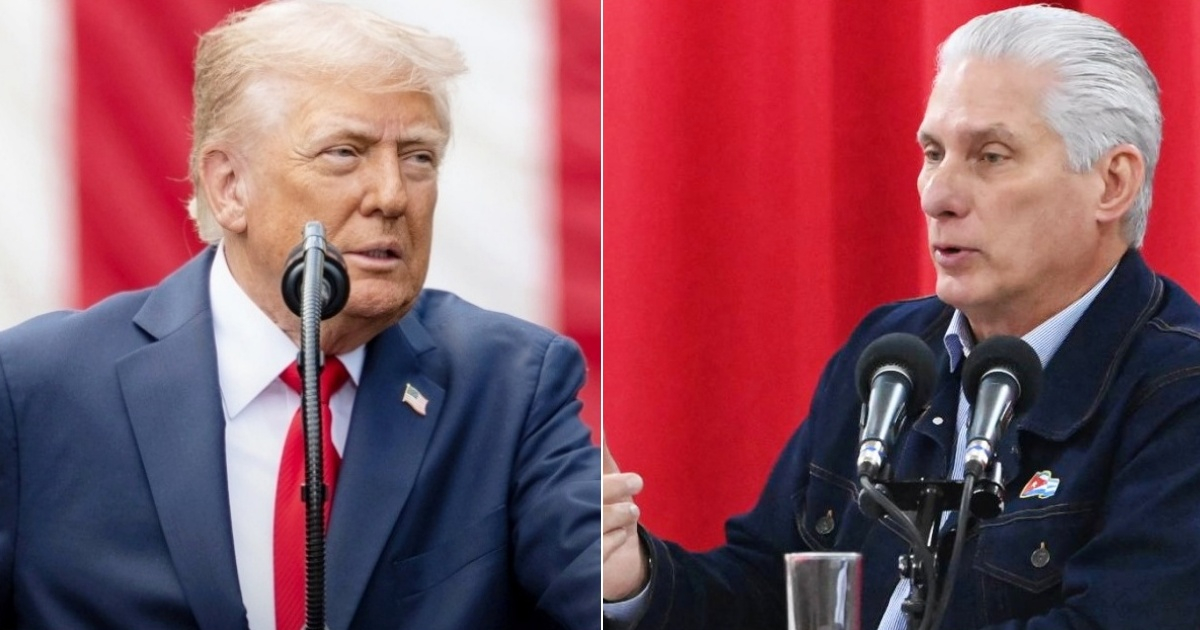
The removal of Cuban leader Miguel Díaz-Canel has become the focal point of negotiations between the Trump Administration and Havana.
As reported by The New York Times on Monday and later confirmed by Javier Ansorena, a correspondent for the Spanish newspaper ABC in New York, Washington has made any significant progress contingent upon the departure of the Cuban-designated president from power.
According to the report, U.S. officials have communicated to negotiators that Díaz-Canel must step down, though leaving the method of execution to the Cuban side.
The Centerpiece of the Negotiations
Four sources familiar with the talks indicated that this demand is part of an effort to instigate internal changes without completely dismantling the system.
Ansorena sums it up succinctly: “The U.S. is initiating contacts both inside and outside of Cuba and demands Díaz-Canel's exit for an agreement.”
This requirement from Washington is not a minor detail but the core of the process.
According to The New York Times, the White House seeks to remove Díaz-Canel from power as a condition to advance in agreements that could alleviate the island's economic stranglehold.
The political rationale behind this stance is that the Cuban leader poses an obstacle to deeper economic reforms.
From the American perspective, his departure would facilitate an internal adjustment of the system without the need to dismantle the entire regime structure.
Strategic Moves and Economic Pressure
In this vein, Ansorena points out that Trump might be attempting to “claim a significant victory” with the removal of the current Cuban president, considered part of the hardline wing of Castroism.
Besides Díaz-Canel, Washington also seeks the departure of other hardliners sharing his political stance, although no other names have been specified so far.
Simultaneously, Washington has deployed a network of contacts with key players both within and outside the Cuban power circle.
“The Trump Administration has initiated discussions with Cuban figures in Mexico and has also maintained contacts with Raúl Guillermo Rodríguez Castro, grandson of Raúl Castro,” the journalist notes, citing government sources.
Rodríguez Castro, known as “El Cangrejo,” maintains direct ties with the historical core of power.
At the same time, Secretary of State Marco Rubio's team is in communication with opposition figures in exile, such as Rosa María Payá, leader of Cuba Decide.
Pressure as a Tool for Change
Rubio, the son of Cuban immigrants, has maintained a tough stance against the regime.
The talks are unfolding amid intense economic pressure exerted by Washington. According to Ansorena, the strategy includes restricting Cuba's access to key energy sources.
As is widely known, to force this collapse, Venezuela has been compelled to cut its oil supply to Cuba, on which the island depends, with similar success achieved with Mexico.
The result is a “desperate situation for Cubans and their regime, amid shortages and protests.”
In this context, the Cuban government has begun to show signs of openness.
Vice Prime Minister Óscar Pérez-Oliva Fraga announced on NBC that Cubans abroad will be allowed to invest in the private sector and own businesses on the island, a measure linked to the negotiations.
Implications of a Leadership Change
Trump's strategy aims at a leadership change more than a complete transformation of the system.
Ansorena emphasizes that the American president seeks “a decapitation of the regime's leadership akin to what was achieved with Maduro in Venezuela.”
This would involve maintaining part of the power structure while forcing a reconfiguration that allows for greater cooperation with the United States.
In the Cuban context, this could translate to economic reforms and a potential easing of repression.
Should it materialize, the exit of the Cuban leader would represent the most significant political shakeup in decades within the island.
It would also be a symbolic victory for Trump, who could present it as the downfall of a leader from a government historically at odds with the United States.
However, the scenario might also generate tensions within the Cuban exile community, which for years has aspired to a more profound change involving the complete end of the system.
Trump's Rhetoric
Trump himself has hinted at the scope of his intentions. From the Oval Office, he stated that “it will be an honor to take Cuba.”
When asked by a journalist, he insisted: “Yes, take Cuba, in some way. Whether I liberate it or seize it. I think I could do whatever I wanted with it.”
Ongoing Political Standoff
For now, negotiations continue without confirmed results. What is clear is that Díaz-Canel's tenure has become the central issue in the standoff between Washington and Havana.
More than an immediate regime change, the U.S. strategy aims to force an internal power reconfiguration in Cuba, amid a growing economic crisis and an unprecedented recent context of external pressure.
Cuban Reactions: Skepticism About Limited Change
The possibility of Díaz-Canel's departure has sparked intense debate among Cubans, especially on social media, where skepticism prevails regarding the real impact of such a measure.
Many opinions agree that the leader is not the true center of power but a figure within a broader structure.
“The problem isn't him, it's the Castros,” sums up one of the most widespread perceptions.
Other comments insist that Díaz-Canel “is not the key piece,” considering him an executor of decisions made by more influential actors within the system.
From that perspective, his replacement would be a superficial change without structural consequences.
There are also those who warn that any real transformation should include the entire governing elite and not be limited to the president's replacement.
Without fundamental reforms, they argue, such a move would hardly impact the economic crisis or the country's political situation.
Key Questions About U.S.-Cuba Negotiations
What is the main demand of the U.S. in negotiations with Cuba?
The U.S. demands the removal of Cuban leader Miguel Díaz-Canel as a primary condition for advancing negotiations with Cuba.
How is Washington exerting pressure on Cuba?
Washington is applying economic pressure by restricting Cuba's access to key energy sources, such as cutting off oil supplies from Venezuela and Mexico.
What are the potential consequences of Díaz-Canel's departure?
If Díaz-Canel departs, it could lead to significant political changes within Cuba, potentially allowing for economic reforms and easing tensions with the U.S.
What is the reaction among Cubans to the idea of Díaz-Canel's removal?
The reaction is mixed, with many expressing skepticism about the real impact of Díaz-Canel's removal, seeing it as a superficial change without addressing the broader power structure.