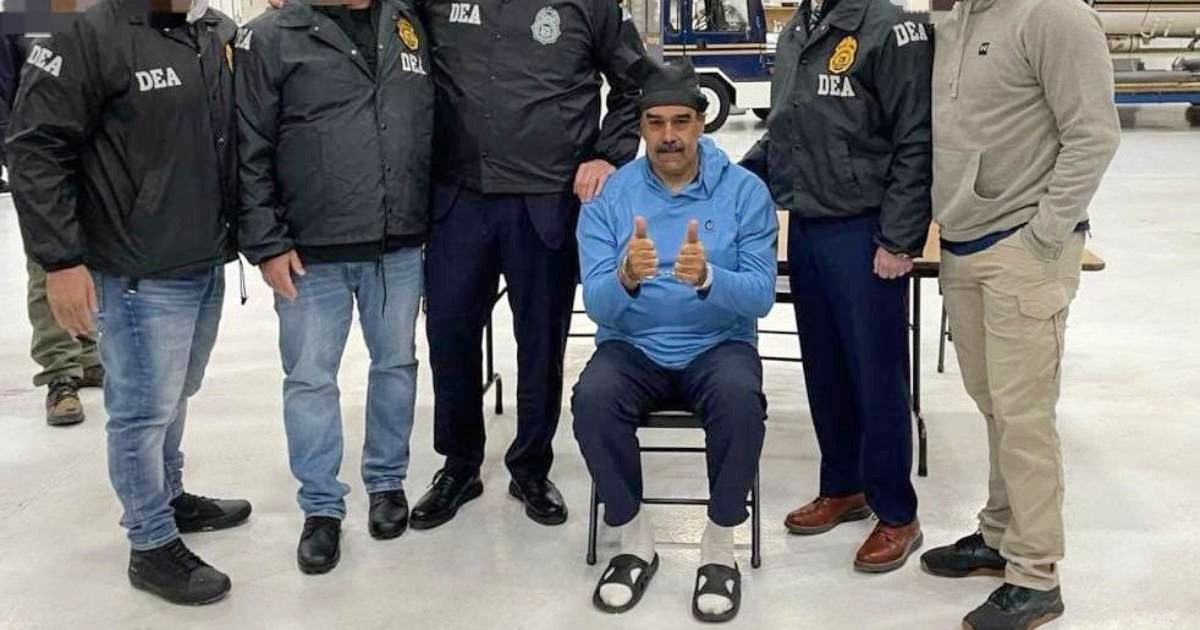
In a firm response, U.S. federal prosecutors dismissed the appeal from Nicolás Maduro's defense to drop the charges against him. This marks a new development in the legal proceedings faced by the former Venezuelan leader and his wife, Cilia Flores, in New York.
In a memorandum filed with the Southern District Court of New York, prosecutors urged the court to reject the legal maneuvers of both defendants. Their strategy revolves around alleging that their constitutional rights have been violated because they cannot access Venezuelan state funds to cover their defense costs.
The stance of the U.S. government is unambiguous: there is no legal foundation to nullify the proceedings.
Prosecutors Discredit Defense's Strategy
Headed by attorney Barry Pollack, Maduro's legal team had sought to void the charges by arguing that restrictions imposed by Washington hindered adequate funding for his legal representation.
The defense claimed this scenario violated the Fifth and Sixth Amendments of the U.S. Constitution. Pollack warned that "any trial conducted under these circumstances would be constitutionally flawed and unable to withstand future challenges."
However, the prosecutors dismissed these claims, emphasizing that the limitations are a result of current legal frameworks tied to sanctions against the Venezuelan regime.
The document submitted to the court highlights that the Office of Foreign Assets Control (OFAC) acted lawfully by preventing the use of Venezuelan state funds to pay for the defense.
"OFAC regulations prohibit a sanctioned entity from covering the legal expenses of another sanctioned individual," the memorandum states.
The Crux of the Financial Dispute
The core of the legal dispute focuses on the source of funds for paying the lawyers.
While the defense argues that Maduro lacks sufficient personal funds, prosecutors assert he can finance his defense but only with personal money, not state resources, which are under sanctions.
The U.S. government underscored the rarity of the request made by the former leader's legal counsel.
"It is exceedingly rare for someone sanctioned by OFAC to receive money to fund private defense from a sanctioned entity. This situation has never occurred in the country's legal history," prosecutors argued.
The Treasury Department supported this position, warning that allowing such a mechanism would be highly unusual:
"No sanctioned foreign government has ever been authorized to cover the legal services and representation of another sanctioned individual," they stated.
Revoked License Confusion
Prosecutors acknowledged an initial administrative error when OFAC issued a license permitting the use of Venezuelan government funds for defense. However, this authorization was quickly revoked.
According to official accounts, Maduro and Flores can now utilize personal resources—as long as they do not involve blocked assets or transactions within U.S. jurisdiction—but not state funds.
To Washington, the sanctions are not a novel tactic to hinder the trial but a pre-existing national security policy.
"These types of sanctions are among the most aggressive and far-reaching measures the United States can impose," the Treasury Department explained in their statement.
Serious Charges and Ongoing Trial
Maduro and Flores face multiple federal charges, including narcoterrorism conspiracy, cocaine trafficking to the U.S., use and possession of war weapons, among other organized crime-related offenses.
Both were apprehended on January 3, 2026, during a U.S. operation in Venezuela and were transferred to New York, where they remain detained.
Since their first court appearance, they have pleaded not guilty and claimed that the trial is politically motivated.
Federal Judge Alvin Hellerstein is scheduled to rule on the defense's motion in a hearing set for March 26.
The court will assess the arguments from both sides and decide whether to dismiss the charges and address possible decisions regarding the defendants' legal representation, including the option of appointing public defenders.
Meanwhile, prosecutors have made it clear they will not waver from their position: the trial must proceed, and the charges remain in place.
Key Legal Questions in the Maduro Case
Why did U.S. prosecutors reject Maduro's request to dismiss charges?
Prosecutors argued that there is no legal basis to invalidate the proceedings and that the restrictions on fund usage are tied to existing sanctions against Venezuela.
What are the main charges against Maduro and Flores?
They face multiple charges including narcoterrorism conspiracy, cocaine trafficking to the U.S., and crimes related to organized crime.
Can Maduro use Venezuelan state funds for his defense?
No, due to OFAC regulations and sanctions, Maduro can only use personal funds that do not involve blocked assets or U.S. jurisdiction.