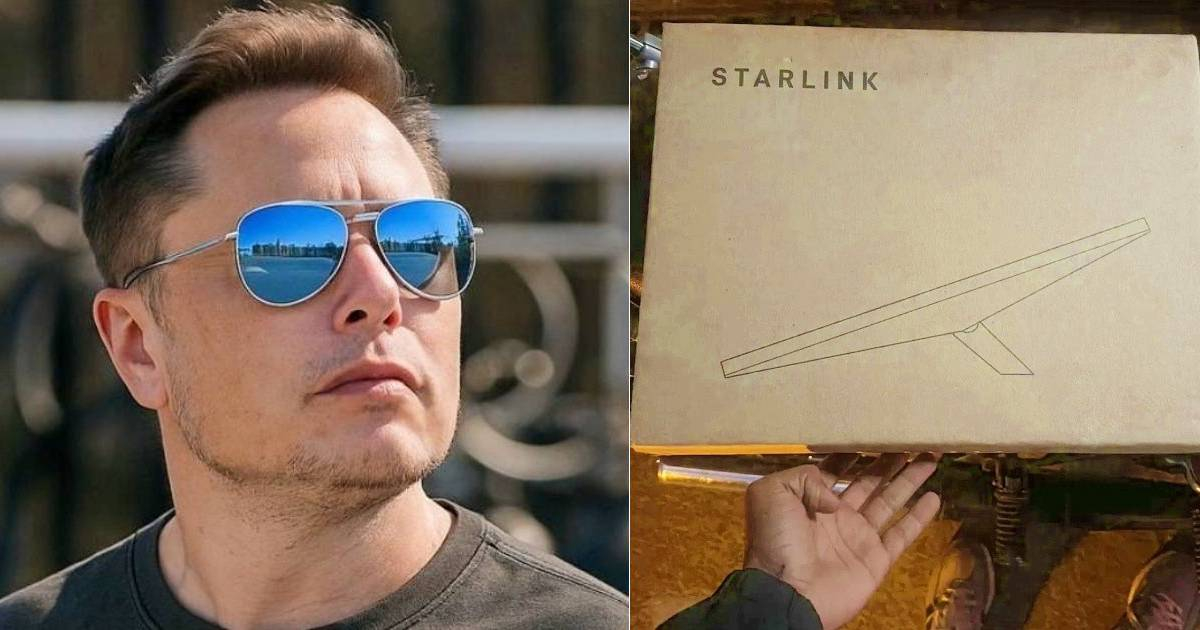
Tech mogul Elon Musk has confirmed that the Starlink satellite internet service is functional in Cuba. However, he emphasized that it cannot be legally sold within the country.
Musk responded to a query on social media platform X, stating, "Works in Cuba, just can’t be sold there," which highlights the availability of the Starlink signal in Cuban territory, despite existing barriers to its official sale or distribution.
Starlink, known for its high-speed internet access via thousands of low-orbit satellites, offers connectivity even in remote areas lacking traditional telecom infrastructure. For many on the island, it represents a potential alternative to the state-controlled ETECSA network, criticized for its slow speeds, high costs, and censorship.
Legal and Regulatory Challenges
In April 2025, the Cuban government issued a warning that using Starlink without state authorization is illegal and subject to penalties. The Technical Unit for Radioelectric Spectrum Control (UPTCER), part of the Ministry of Communications, stated that the service violates both national and international laws by operating without proper licensing or official coordination.
The agency insists that any satellite system needs government approval to utilize the country's radio spectrum. Without such permission, Starlink terminals are deemed illegal on the island.
Prohibitions and Potential Consequences
The Ministry of Communications' Resolution 272/2015 bans the import and use of telecom equipment without state approval, including Starlink antennas. Penalties for using these devices range from fines and equipment confiscation to technical interferences on frequencies.
In May of the same year, government spokespeople accused the introduction of these antennas of being part of an alleged "digital aggression" by the United States, suggesting it was aimed at destabilizing the nation.
Informal Market and Public Interest
Despite these restrictions, independent reports and listings on platforms like Revolico indicate that some Starlink equipment is already available in Cuba's informal market, priced between $1,300 and $1,800, plus installation fees.
For many Cubans, the appeal of this technology is practical rather than political: gaining internet access without relying on the state telecom monopoly.
While Musk's brief comment does not reveal any plans for officially enabling the service in Cuba, it confirms a longstanding speculation among users and tech enthusiasts: Starlink's signal reaches Cuba, yet its sales remain off-limits.
Starlink and Internet Access in Cuba
Why can't Starlink be sold in Cuba?
Starlink cannot be sold in Cuba due to legal restrictions imposed by the Cuban government, which require state authorization for any satellite system to use the country's radio spectrum.
What are the consequences of using Starlink in Cuba without authorization?
Using Starlink in Cuba without state authorization can result in fines, confiscation of equipment, and technical interferences, as outlined by the Ministry of Communications.
How much does Starlink equipment cost on the informal market in Cuba?
On the informal market in Cuba, Starlink equipment can range from $1,300 to $1,800, in addition to installation costs.