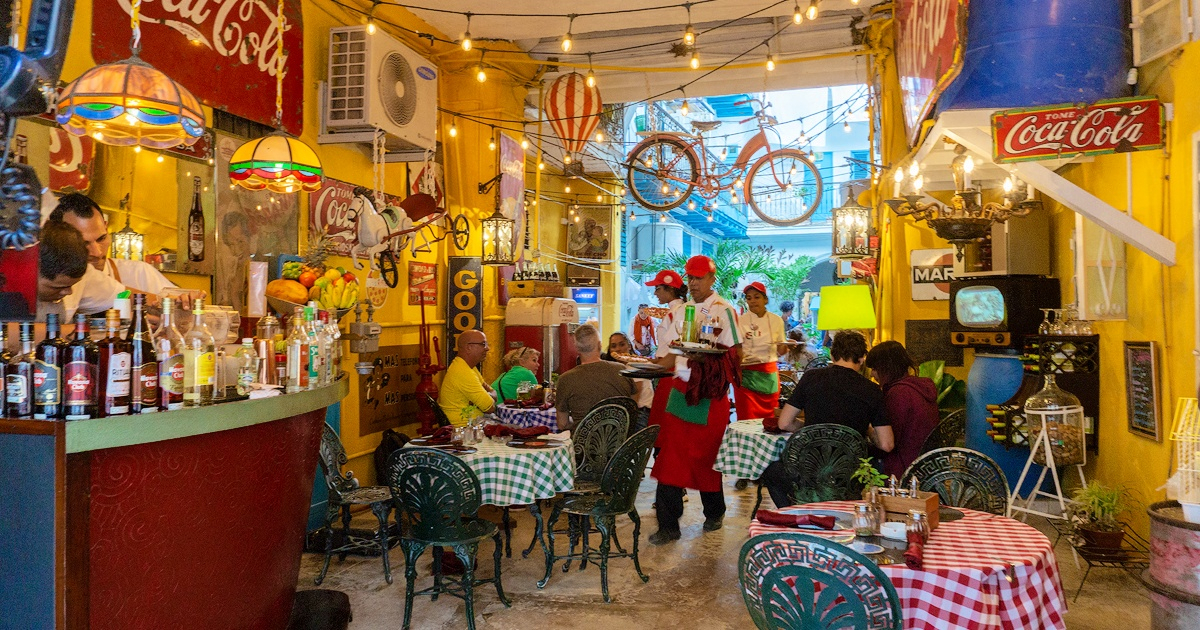
Recent reports suggest that the Cuban government is contemplating an economic opening that would allow expatriates to invest in private businesses on the island. This move could be announced in the coming days as part of potential reforms.
The Miami Herald, a prominent U.S. newspaper, has reported that the Cuban authorities might soon permit Cubans living abroad to invest in and even own private enterprises within the country.
These policy changes are expected to involve micro, small, and medium-sized enterprises (MSMEs), a business model that the government has gradually allowed in recent years as part of a limited shift towards private sector engagement.
Engaging the Cuban Diaspora in Economic Ventures
The plan, according to sources cited in the report, would enable Cubans residing in Miami, other parts of the United States, and various countries around the world to actively participate in Cuba's private sector.
Cuban leader Miguel Díaz-Canel recently acknowledged ongoing discussions between Havana and the Trump administration, hinting at forthcoming economic measures. He noted that Óscar Pérez-Oliva Fraga, Vice Prime Minister and Minister of Foreign Trade and Foreign Investment, will provide further details on these initiatives aimed at involving overseas Cubans in the nation's economic development.
Challenges Amid Economic Crisis
This potential opening comes during a severe economic crisis characterized by food shortages, prolonged power outages, infrastructure decay, and a significant wave of migration in recent years.
However, efforts to attract investments from the Cuban diaspora will face substantial hurdles. These include U.S. sanctions, a lack of legal assurances for investors, and a prevailing mistrust between the Cuban government and exiled communities.
New Structural Changes in Business Model
In a recent structural shift, the Cuban regime introduced regulations detailed in Official Gazette No. 24, issued on March 3, 2026. For the first time, these regulations outline how state enterprises can partner with non-state actors, including private MSMEs and cooperatives.
In this context, Díaz-Canel announced new policy measures related to Cubans living abroad, emphasizing the goal of facilitating their economic involvement while reducing bureaucratic barriers. These measures are expected to be revealed this Monday.
Speaking to state media, Díaz-Canel highlighted an "intense activity" over the past year involving contact with the Cuban diaspora through the Ministry of Foreign Affairs and the Ministry of Foreign Trade. "There has been a lot of connection," he stated.
Connecting with the Diaspora
The leader mentioned numerous meetings with Cubans in different countries, where they discussed potential contributions to the national economy. "There have been several meetings in countries, meetings by zones, by regions of the world, where they have expressed concerns, limitations, aspirations, and have made proposals on what they see as obstacles to contributing more to the country," he affirmed.
These discussions have been compiled into a report analyzed by the regime's political leadership. "We created a dossier of all those formulations," Díaz-Canel assured.
Beyond regional gatherings, there have been sector-specific meetings with Cuban professionals residing abroad. "If there's an industrial event or a business fair with Cubans in that sector, meetings are held. And this has also provided us with a lot of information," he added.
The leader stressed that the Political Bureau and the government have debated a package of measures designed to address many of the demands articulated by the diaspora.
Investing in Cuba: Key Questions Answered
What are the potential benefits for Cubans abroad investing in Cuba?
Investing in Cuba could provide opportunities for expatriates to participate in the country's economic development, potentially yielding financial returns while contributing to the growth of private enterprises on the island.
What challenges might investors face in Cuba?
Investors may encounter obstacles such as U.S. sanctions, insufficient legal protections, and a lack of trust between the government and the Cuban diaspora, which could complicate investment efforts.
How is the Cuban government planning to involve the diaspora in economic reforms?
The government is considering measures to reduce bureaucratic hurdles and facilitate the participation of Cubans abroad in the nation's economic activities, as highlighted by recent announcements and discussions with the diaspora.