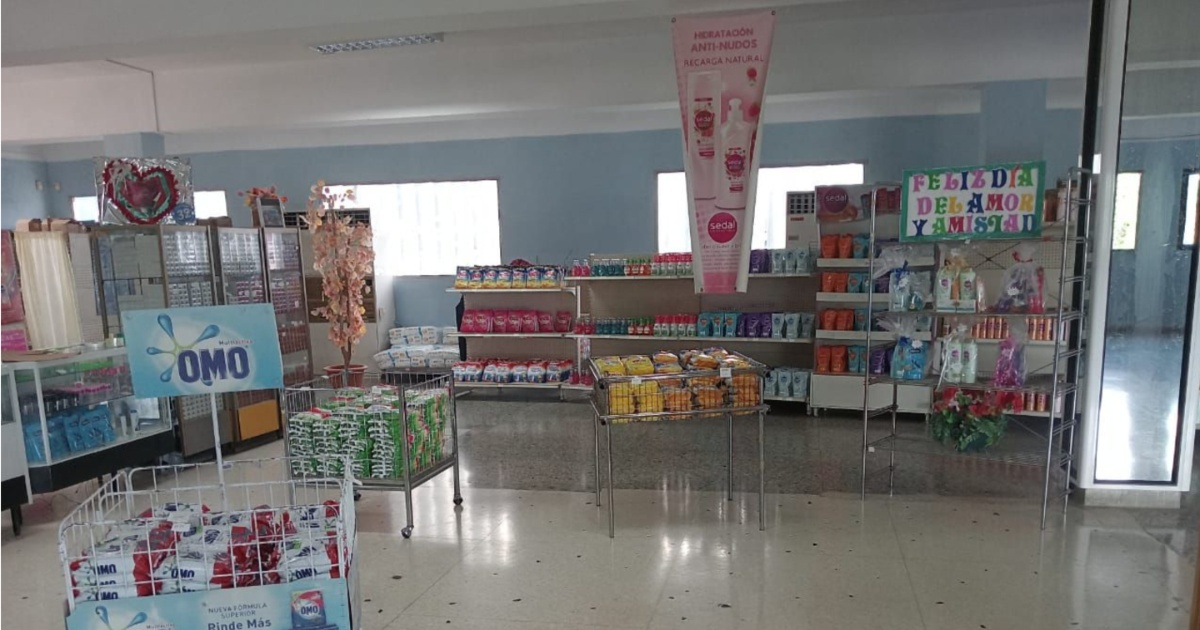
This past Saturday, the Caribbean Stores Chain announced that one of its retail locations in Morón sustained only minor damage—a corner of a glass pane broken—during recent protests in the area.
The company referred specifically to the El Vaquerito branch in Morón, stating that "no significant damage" occurred. This clarification was shared on Facebook following official reports of protests and "vandalism" in the municipality.
According to the state-run enterprise, the damage occurred when a stone struck a corner of the facility's glass. The protective grille reportedly prevented more severe consequences and further interior damage.
"Thanks to the protective grille, no major harm or safety threats to customers or employees occurred," the statement from Caribbean Stores highlighted, noting the alleged presence of people at the site despite the protest happening at dawn.
The company also mentioned that an investment brigade was already working on replacing the glass to ensure the store's quick recovery.
This clarification was issued "in response to information published by the Invasor newspaper," which mentioned damages at various establishments, including "a pharmacy and a Caribbean Stores Chain sales point."
The official stance of the chain is that the only material damage verified at its location was the impact on a corner of the glass, with no structural or functional repercussions.
The company also emphasized that by releasing this statement, it reaffirms its "commitment to transparency and continuous service to the public."
Social Unrest in Morón
The protest that erupted around midnight on Saturday in Morón resulted in five arrests and one injury, according to the state-controlled Periódico Invasor. The newspaper attributed these events to a group of residents taking to the streets, primarily voicing grievances over the electrical crisis and food access.
Per official accounts, the demonstration began with several people, mostly from the El Vaquerito community, moving through different streets in the northern city of Ciego de Ávila province. The state media pointed out that complaints were "mainly" linked to the electrical system's condition and difficulties in obtaining food products.
Initially described as "peaceful" and involving dialogue with local authorities, the protest reportedly escalated into "vandalism" against the Communist Party's Municipal Committee headquarters. The report claims that a smaller group threw stones at the building's entrance and started a fire in the street using furniture from the reception area.
In recent hours, numerous videos have surfaced on social media, capturing chants of "Freedom!" and the sound of pots banging as residents marched through the municipality's streets.
Other reports from activists suggest that after the initial clashes, the demonstration moved toward the city's police station.
The protests in Morón occur amid growing social unrest due to prolonged power outages, food shortages, and worsening living conditions across the country.
Understanding the Morón Protests and Their Impact
What triggered the protests in Morón?
The protests were sparked by residents' frustrations over the ongoing electrical crisis and limited access to food, reflecting broader dissatisfaction with living conditions.
How did Caribbean Stores Chain respond to the damages?
The chain reported minor damage to one of its stores, specifically a broken glass corner, and has already initiated repairs to swiftly restore the facility.
What was the government's reaction to the protests?
The government-controlled media described initial peaceful demonstrations that escalated into vandalism, highlighting the need for dialogue and resolution.
What do the protests signify for Cuba's future?
The protests indicate deepening discontent with the current regime and could signal increasing calls for change amidst ongoing socio-economic challenges.