On Friday, Miguel Díaz-Canel made a notable appearance at a military event just hours after acknowledging discussions with U.S. government officials. This move highlights a striking contrast in his diplomatic and militaristic engagements.
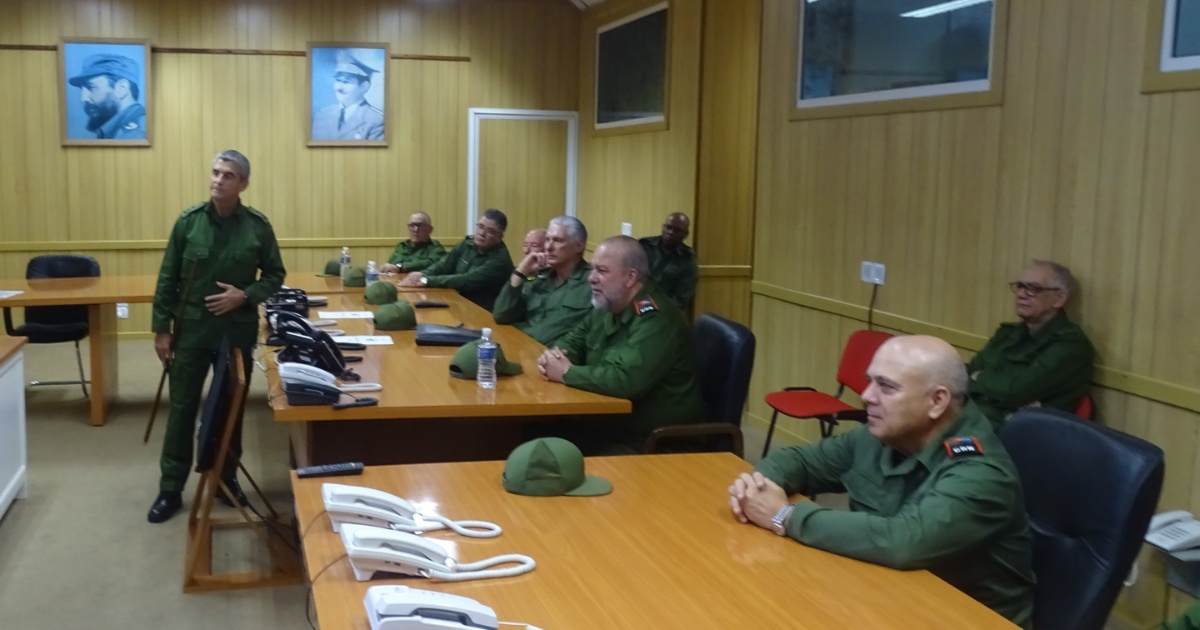
According to a statement from the Cuban Presidency, the leader visited the Western Army's General Staff to gain insights into the plans for the so-called "War of the Entire People." This visit was part of the National Defense Day activities, where Díaz-Canel participated as the head of the National Defense Council.
The statement detailed that during this event, he toured military installations of the Western Army and received briefings on the country's defensive preparation strategies. The timing of this visit was particularly noteworthy, as it followed his public address at the Palace of the Revolution concerning the country's current situation.
The trip to the military command, a place historically characterized by a warlike rhetoric due to a perceived threat from the United States, occurred right after his public statement focused on U.S.-Cuba relations.
Joining Díaz-Canel at this event were key figures from the political, military, and security sectors of the regime. The official report mentioned the presence of Prime Minister Manuel Marrero Cruz; the Secretary of Organization of the Central Committee of the Party, Roberto Morales Ojeda; and the Ministers of the Revolutionary Armed Forces and the Ministry of the Interior, Army Corps Generals Álvaro López Miera and Lázaro Álvarez Casas; along with Army Corps General Roberto Legrá Sotolongo, first vice minister of the FAR and chief of the General Staff. All of these individuals are members of the Political Bureau and the National Defense Council.
Also in attendance were Foreign Minister Bruno Rodríguez Parrilla; Secretary of the Council of Ministers, Division General José Amado Ricardo Guerra, both members of the Political Bureau; and the head of the Western Army, Division General Ernest Feijóo Eiró.
The Political-Military Facade
This entourage underscores the political-military nature of the event, where leaders from the Party, Government, Armed Forces, Ministry of the Interior, and Cuban diplomacy converged. The official note did not provide any direct quotes from Díaz-Canel nor details about specific decisions made during the visit.
Despite acknowledging contacts with Washington, the Cuban leader returned to a setting associated with military readiness and the regime's defensive doctrine. The report from authorities paints a dual picture of the day: on one hand, Díaz-Canel as the leader addressing national issues to the press, and on the other, as the head of the National Defense Council inspecting war plans alongside the core of Cuban power.
Understanding Cuba's Political Dynamics
Why did Díaz-Canel visit the Western Army's General Staff?
Díaz-Canel visited the Western Army's General Staff to gain insights into the plans for the "War of the Entire People" as part of the National Defense Day activities, emphasizing the regime's focus on defensive preparation.
What was significant about the timing of Díaz-Canel's military visit?
The timing was significant because it occurred right after Díaz-Canel's public address on U.S.-Cuba relations, underscoring a juxtaposition between diplomatic engagement and military readiness.
Who accompanied Díaz-Canel during this military event?
Key figures from the political, military, and security sectors, including Prime Minister Manuel Marrero Cruz and ministers from the Revolutionary Armed Forces and Ministry of the Interior, accompanied Díaz-Canel.