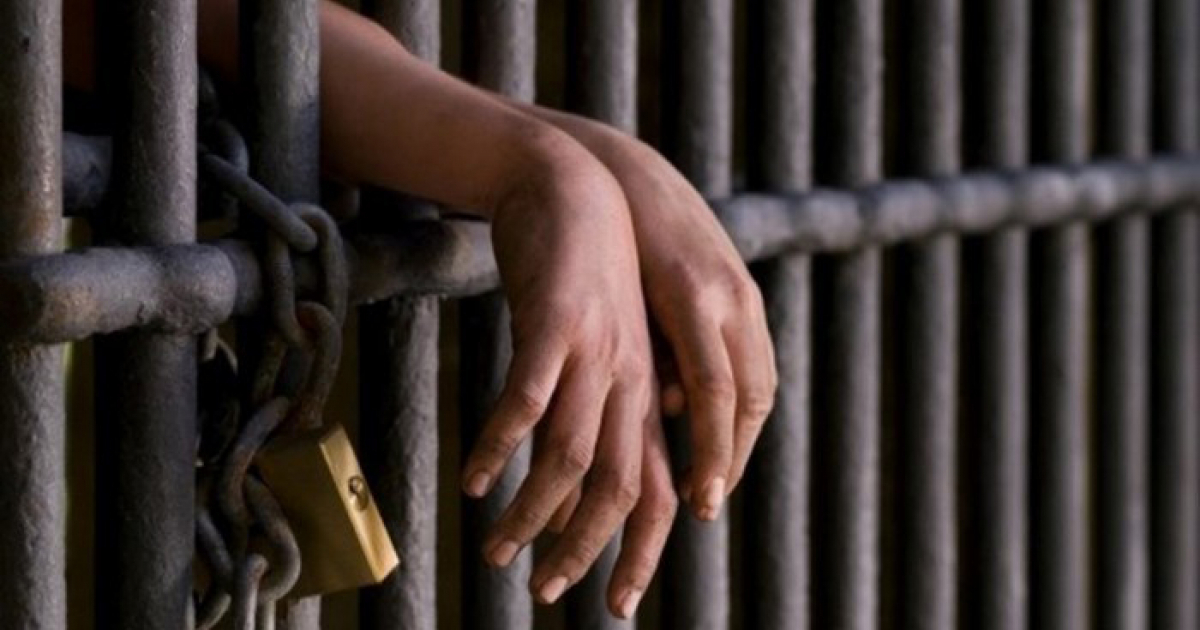
The latest wave of releases announced by the Cuban regime appears not only to benefit those jailed for political reasons, but also inmates convicted of common crimes, according to preliminary reports received by the organization Justice 11J from families of incarcerated individuals.
The group has emphasized that they are still in the process of verifying each case before providing a comprehensive list of names and details.
In a message shared on social media platform X, Justice 11J stated that they have been informed by families about “several potential releases” that have taken place recently.
The organization urged caution, promising to only disclose identities once they have been confirmed.
Releases Include Common Criminals
Within the same announcement, an important detail was highlighted: three different family sources reported that, during the current process, individuals convicted of common crimes are also being released. Initial information suggests that the number of these releases could surpass those of individuals incarcerated for political reasons.
This revelation adds a significant dimension to the actual scope of the measure announced by the Cuban authorities.
Focus on Political Prisoners
While public attention has largely been directed towards political prisoners, particularly those involved in the July 11, 2021 protests, preliminary data gathered by Justice 11J indicates that the process might be broader, extending to other inmates not associated with political causes.
Confirmed releases by human rights organizations so far include political prisoners from the 11J protests. Prisoners Defenders identified 10 individuals who have been released. Among them are Ibrahín Ariel González Hodelin, 26, sentenced to 9 years, from Mar Verde Prison, Santiago de Cuba, and Ariel Pérez Montesino, 52, sentenced to 10 years, from Guanajay Prison, Artemisa.
Also mentioned were Juan Pablo Martínez Monterrey, 32, sentenced to 11 years, from Ceiba 5 Forced Labor Prison, Artemisa; Ronald García Sánchez, 33, sentenced to 14 years, from Toledo 2 Forced Labor Prison, Marianao, Havana; and Adael Jesús Leyva Díaz, 29, sentenced to 13 years, from Zone 0 Forced Labor Prison, Combinado del Este, Havana.
Conditional Releases
Justice 11J confirmed the conditional release of Ronald García Sánchez and Adael Jesús Leyva Díaz. In both cases, the organization clarified that their original sentences were reduced via appeals, but stressed that these were conditional releases, not full pardons.
Both Justice 11J and Prisoners Defenders agree that these individuals' sentences remain in effect. The applied scheme is not equivalent to amnesty or pardon, but rather a form of penal benefit subject to monitoring and possible revocation. Prisoners Defenders described this form of release as a “particularly restrictive” conditional freedom, akin to a “carceral-home regime.”
Historical Context of Releases
The caution exercised by human rights organizations is further supported by recent precedents. In 2025, the Supreme People's Court announced the "successful" completion of a release process for 553 inmates, divided into two phases: 378 requests approved in January and 175 in February.
However, that measure did not result in full freedom. Those benefitted received an "early release" and continued serving their sentences under specific conditions, including regular appearances before a judge and the risk of having the benefit revoked if conditions were violated.
The political context surrounding these measures is also significant. The announcement in January 2025 coincided with the Biden administration's decision to remove Cuba from the list of state sponsors of terrorism.
Lack of Transparency
The current process is marked by a lack of official transparency, a recurring theme. Authorities have not released a comprehensive list of those freed nor clarified how many are political prisoners versus those convicted of common crimes.
This lack of official information has prompted organizations like Justice 11J to reconstruct the process based on family reports and independent verifications.
At the time of this announcement, Justice 11J documented a subregister of 760 individuals imprisoned for political reasons in Cuba.
Understanding Recent Cuban Prisoner Releases
What types of prisoners are being released in Cuba's recent announcement?
Recent releases in Cuba not only include political prisoners, but also individuals convicted of common crimes, according to reports from Justice 11J.
Are the recent releases in Cuba equivalent to amnesty?
No, the releases are not equivalent to amnesty or pardon. They are conditional releases subject to monitoring and potential revocation.
How is Justice 11J involved in verifying the releases?
Justice 11J is working to verify each case individually based on reports from families, to confirm the identities and details of those released.