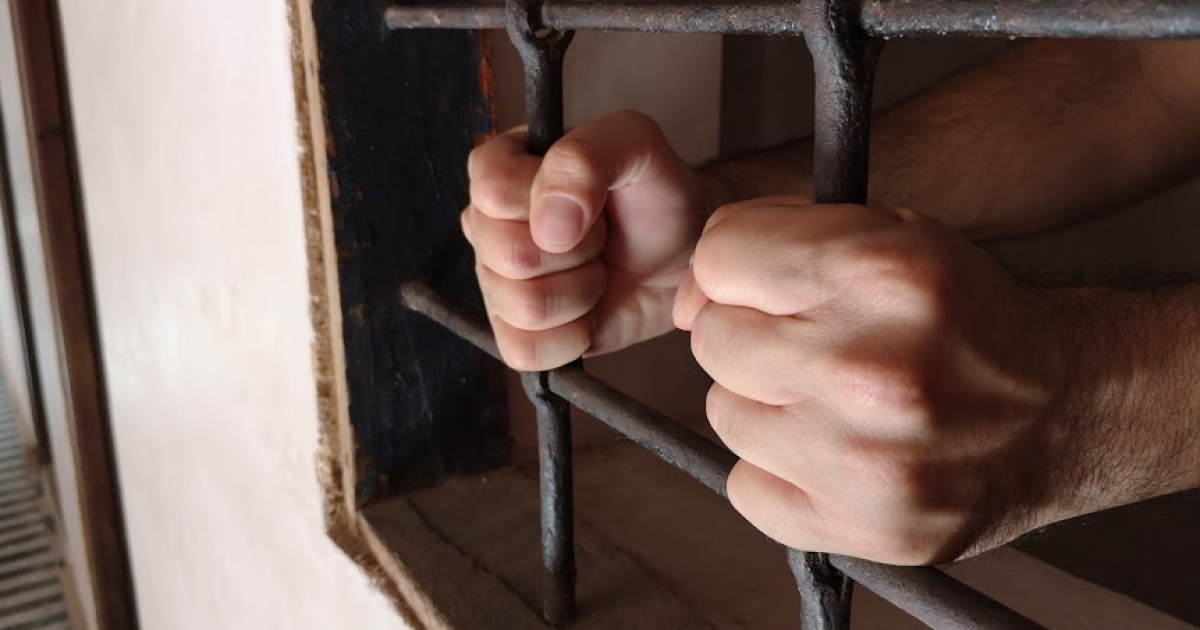
The Cuban government has declared its intention to release 51 individuals from incarceration in the coming days. This move is being portrayed as a gesture within the framework of the relations between the Cuban state and the Vatican.
A statement from the Ministry of Foreign Affairs indicates that this decision comes after longstanding exchanges with the Holy See regarding the review and release processes for those deprived of their liberty.
The statement highlights that those benefiting from this decision have served a significant portion of their sentences and have demonstrated exemplary behavior during their imprisonment.
However, the names of the inmates have not been disclosed, nor has it been clarified whether any political prisoners are among those to be released—a category that the Cuban regime consistently denies exists.
The Cuban foreign ministry also noted that this measure coincides with the approaching religious celebrations of Holy Week.
Additionally, the statement recalled that since 2010, pardons have been granted to 9,905 inmates, and in the past three years, approximately 10,000 convicted individuals have been released through various benefits outlined in the current legislation.
Authorities described the decision as part of the routine practice of Cuba's penal justice system and presented it as evidence of the humanitarian nature that the government claims has characterized the country's penitentiary policy.
Despite the lack of details on the identities of the potential beneficiaries or whether political prisoners are included, prominent dissidents such as Félix Navarro, who is in poor health, and his daughter Sayli Navarro Álvarez, remain imprisoned. Others incarcerated include Loreto Hernández García, Donaida Pérez Paseiro, Roberto Pérez Fonseca, rapper Maykel Castillo Pérez (Maykel "Osorbo"), and artist Luis Manuel Otero Alcántara.
According to Amnesty International, of the 553 individuals the regime claimed to have released by 2025, at least 211 were imprisoned for political reasons. Nevertheless, several of those freed were later re-incarcerated or forced into exile, illustrating the lack of genuine freedom guarantees.
This development occurred within the framework of an agreement reached following negotiations with the United States and mediation by the Vatican.
The official communication from MINREX stated that the decision was made in the context of the Ordinary Jubilee of 2025 declared by Pope Francis and, according to the island's government, reflects the "humanitarian and just" nature of its justice system.
Details on Cuban Prisoner Releases
Why is the Cuban government releasing these prisoners?
The release is being presented as part of ongoing relations with the Vatican and a reflection of the humanitarian nature of Cuba's penal system, coinciding with the approaching Holy Week celebrations.
Are any political prisoners among those being released?
The government has not disclosed whether political prisoners are included in the release, a category they deny exists. However, notable dissidents remain incarcerated.
What is the historical context of prisoner releases in Cuba?
Since 2010, Cuba has granted pardons to thousands of inmates, with the government claiming these actions reflect the humanitarian approach of its justice system.