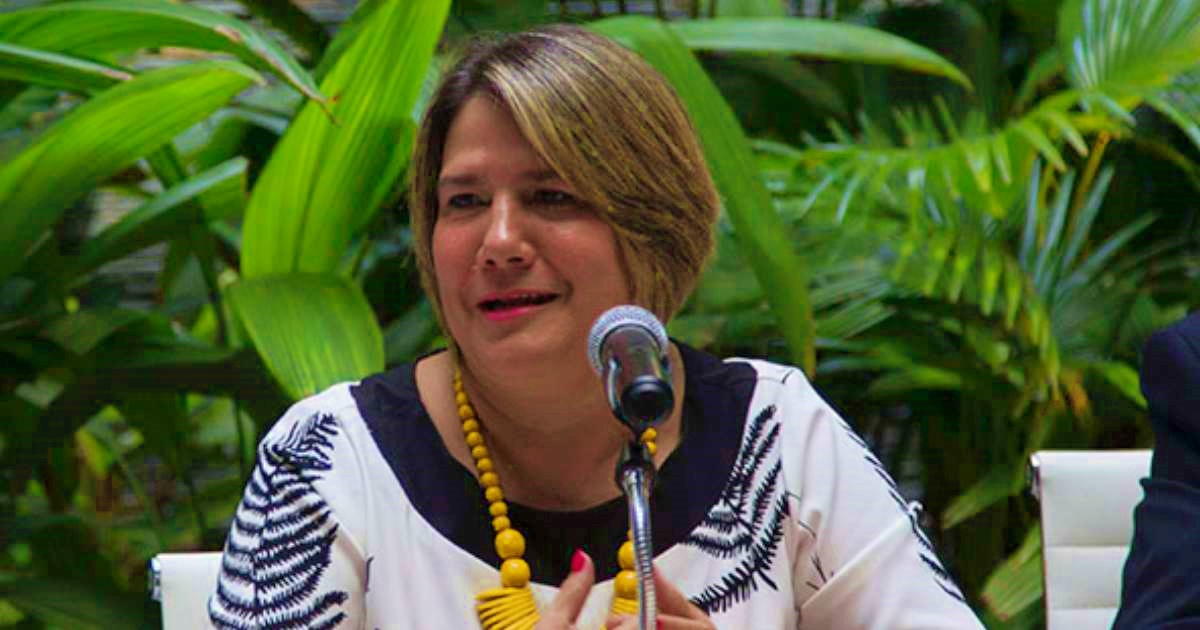
Lis Cuesta has recently become aware of the severe issues plaguing Cuba's healthcare system, denouncing the situation as "deeply saddening and outrageous" following her comments on social media about the nation's surgical waitlist.
The spouse of Cuban leader Miguel Díaz-Canel took to X to express her views, referencing a piece by Minister José Ángel Portal Miranda featured in "El Heraldo de México," which highlights the challenges faced by the healthcare sector.
In the article, Portal Miranda attributes the crisis to the "energy blockade" enforced by the United States, claiming it significantly disrupts medical services reliant on consistent electrical supply.
"Patients are suffering, and families are left waiting for solutions that are often delayed or never arrive due to external factors stemming from the U.S. government's ongoing economic strangulation of Cuba," he asserted.
"The surgical waitlist in the country has reached 96,387 patients, including 11,193 children. With current energy constraints, these figures are rising as the National Health System is forced to defer non-urgent surgeries to prioritize oncological cases..." he noted.
Cuesta amplified this publication with a succinct reaction: "Deeply saddening and outrageous."
A Long-standing Health Crisis
Cuesta's remarks arrive at a time when Cuba's healthcare system is enduring one of its most challenging periods in decades.
However, the dire issues now being publicly acknowledged are not new. For years, patients, doctors, and families have lamented the deteriorating condition of hospitals, the chronic shortage of medications, and the lack of essential medical supplies.
Many patients have died not due to complex surgeries, but because of the unavailability of antibiotics, anti-inflammatories, or bronchodilators for asthmatics.
Those who manage to survive often do so because they acquire the necessary resources for surgery or treatment through informal markets or with help from abroad.
In severe cases, such as cancer or transplant needs, families organize online fundraisers to gather money and secure humanitarian visas to obtain medical care abroad that is unattainable in Cuba.
These issues have persisted long before the current U.S. policies or the energy crisis affecting the country.
The shortage of medical professionals has worsened, exacerbated by the emigration of doctors and nurses or their departure from the sector due to poor working conditions and salaries.
Official Narratives vs. Reality
For decades, the Cuban regime has touted its healthcare system as a triumph of its political model.
Yet, the ongoing decline of hospital infrastructure and the swelling waitlists reveal a starkly different reality than what has been officially promoted over the years.
The authorities have frequently downplayed or denied the severity of these problems, often concealing or misrepresenting the actual state of healthcare.
Thus, the revelation of over 96,000 patients awaiting surgeries, including a significant number of children, has drawn particular attention, serving as an explicit acknowledgment of the crisis's magnitude.
These figures are now surfacing in official discourse, as the government seeks to blame external factors like U.S. policy for the difficulties encountered.
Nonetheless, the structural deficiencies within Cuba's healthcare system have been long-standing, repeatedly highlighted by those grappling with daily shortages.
Meanwhile, those at the upper echelons of power do not experience the same hardships as the average Cuban. High-ranking officials and their families receive care in exclusive medical facilities, with access to medications, technology, and specialists.
Lis Cuesta's depiction of the situation as "saddening and outrageous" echoes a reality that millions of Cubans have known for years: a healthcare system in crisis while countless individuals await treatments, medications, or surgeries that often fail to arrive in time.
Understanding Cuba's Healthcare Crisis
What are the main causes of the healthcare crisis in Cuba?
The crisis has been attributed to structural deficiencies, chronic shortages of medical supplies, and a shortage of healthcare professionals, exacerbated by emigration and poor working conditions. External factors, such as U.S. policies, are also cited by officials as contributing to the disruption of medical services.
How is the Cuban government responding to the healthcare crisis?
The government has attempted to attribute the healthcare challenges to external pressures like the U.S. economic blockade, while often downplaying or misrepresenting the severity of the systemic issues within the healthcare system.
How are Cuban citizens coping with the healthcare shortages?
Many citizens turn to informal markets or seek help from relatives abroad to obtain necessary medical supplies. In severe cases, families organize fundraising campaigns to secure treatment abroad.