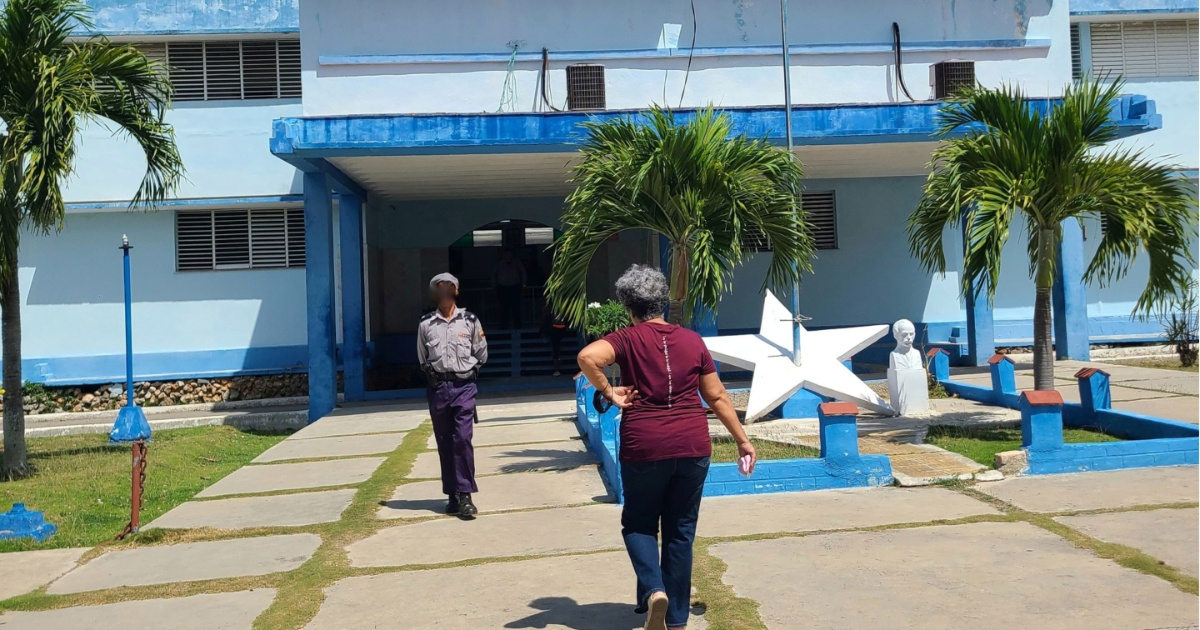
Caridad Silvente, mother of Cuban content creator Anna Sofía Benítez Silvente, known online as Anna Bensi, has been subjected to house arrest following an interrogation at a police station in Alamar, Havana. She faces charges for recording a police officer delivering an official summons, with a mandate to secure legal representation within five days.
In a phone conversation with journalist Camila Acosta from Cubanet, Silvente revealed that after leaving the police station, authorities informed her she is prohibited from leaving her home or receiving visitors.
Silvente's charges stem from a video shared by her daughter, capturing the moment when two plainclothes officers arrived at their home to deliver the summons. In the footage, one officer identifies himself as Yoel Leodan Rabaza Ramos, a sub-officer of the Ministry of the Interior (MININT).
Interrogation and Intimidation Tactics
Once at the police station, Silvente was taken to a room where two men and a woman, whom she identified as State Security agents, interrogated her for nearly two hours. She described the experience as "horrible" and noted that she was threatened with a potential five-year prison sentence.
According to her account to Acosta, the interrogation focused not only on the video recording but also on her allowing her daughter to voice criticisms on social media. She was accused of being a "bad mother" and was told that Anna Bensi was labeled a "counter-revolutionary," accused of "conspiring" and receiving directives from the United States, including alleged support for Donald Trump.
A Fabricated Case by the Regime
Silvente refused to sign any documents without a lawyer present and was instructed to return the following Tuesday with legal counsel. Authorities indicated that Anna Bensi would also be summoned in the coming days.
The charges against Silvente are based on Article 393 of the Cuban Penal Code, which penalizes "acts against personal and family privacy, personal image and voice, identity of another person, and their data." This article imposes penalties of two to five years of imprisonment or fines in cases involving unauthorized use of personal data that may lead to discrimination or harm to personal dignity.
The authorities claim that sub-officer Yoel Leodan Rabaza Ramos feels "threatened" following the release of his identity. The Cuban regime asserts that filming public officials is illegal, as they are protected by privacy rights.
Pressure on Anna Bensi
A day prior, Benítez reported that State Security-related agents visited her home to deliver the summons, an event she recorded and shared online. Silvente challenged the procedure, pointing out that summonses should be delivered at least 72 hours in advance. Although she refused to sign the document, she indicated her intention to comply with the summons.
The influencer views the summons as a tactic to pressure her due to her social media activity, where she frequently discusses Cuba's economic situation, daily life, and lack of freedoms. "I know they are looking for a justified way to reach me. I am not afraid, they do not intimidate me, and I will not be silenced, because I am simply exercising my right to express myself," she declared.
Anna Bensi, a 21-year-old from Havana, has gained notoriety on platforms like TikTok, YouTube, and Facebook, where her videos on Cuban realities have garnered significant attention and have even been cited by international media.
The summons to her mother comes amid other recent reports of pressure on families of young content creators critical of the Cuban government.
Understanding Cuba's Legal and Political Climate
What are the charges against Caridad Silvente?
Caridad Silvente is charged under Article 393 of the Cuban Penal Code for allegedly recording a police officer without consent, which is considered an act against personal and family privacy.
Why is filming public officials illegal in Cuba?
The Cuban regime claims that filming public officials is illegal because they are protected by rights to privacy and image, which prohibits unauthorized recordings that could threaten their personal security.
How has Anna Bensi responded to the government's actions?
Anna Bensi has expressed that she is not intimidated by the government's actions and intends to continue expressing her views on social media, exercising her right to free speech.