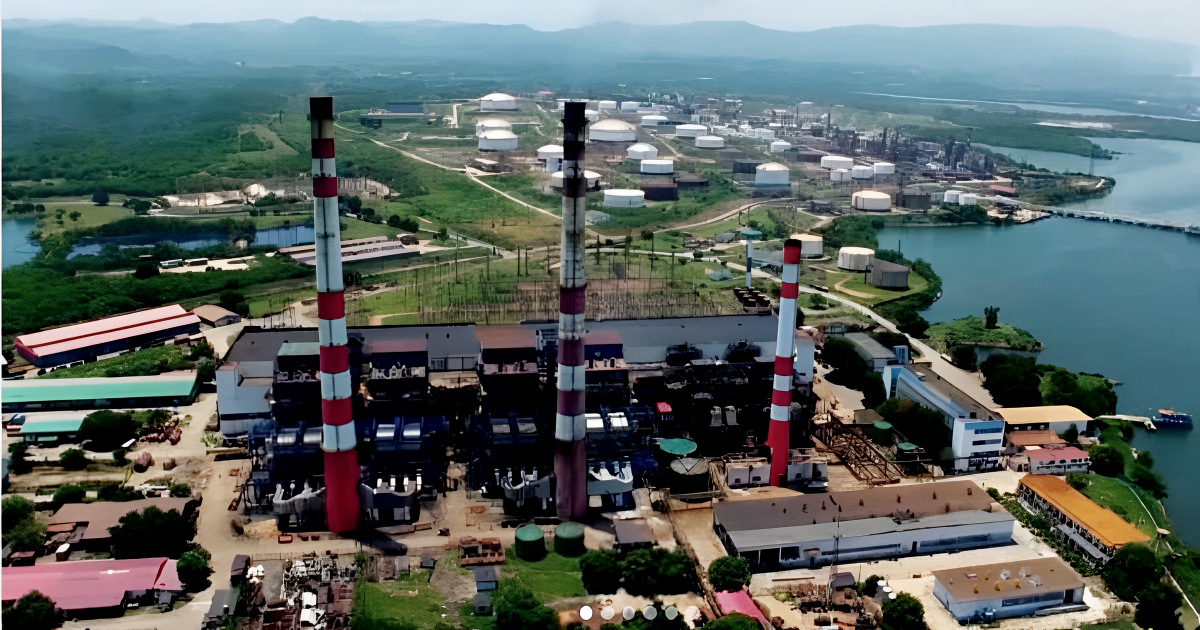
The Antonio Maceo Thermoelectric Plant, more commonly known as Renté and located in Santiago de Cuba, has suffered another setback as its Unit 5 was unexpectedly taken offline this Wednesday due to an "emergency clearance," as reported by the state-run Unión Eléctrica (UNE) through its social media channels.
Released around 11:30 a.m., the official statement highlighted that this unforeseen shutdown further strains Cuba's already fragile National Electric System (SEN), which is grappling with a prolonged energy crisis. Prior to this incident, the nation was already in a challenging situation, as indicated by the most recent SEN report from Wednesday morning.
At 6:00 a.m., available power stood at 1,120 MW against a demand of 2,337 MW, leading to a shortfall of 1,225 MW. During peak evening hours, the deficit was projected to approach 1,870 MW, with power outages affecting up to 1,900 MW.
The unexpected halt of Renté's Unit 5 likely exacerbates these challenges throughout the day, adding strain to a system where several units are already offline due to breakdowns or maintenance work.
This incident is part of a series of ongoing failures reported across various thermoelectric plants in Cuba since the beginning of the year, resulting in recurring power shortages exceeding 1,500 to 2,000 megawatts during peak demand periods. Such conditions have led to extended blackouts, impacting millions of Cubans daily.
Renté, a key power generation facility in eastern Cuba, has frequently appeared in recent reports concerning outages and unit disconnections. Early in February, defects at this plant, combined with issues at other facilities nationwide, contributed to widespread blackouts in eastern provinces.
Experts cite the aging infrastructure of the national thermoelectric network—comprising facilities with decades of use—as a primary factor in the ongoing electrical crisis. Compounding these issues are fuel shortages, delayed maintenance, and constraints on investment for system upgrades.
While regime authorities have promoted renewable energy initiatives, particularly solar farms, their impact remains minimal against the background of structural generation deficits, especially during peak nighttime demand.
As of now, Unión Eléctrica has not disclosed how long Renté's Unit 5 will remain offline or the extent to which this outage will affect blackout forecasts for the remainder of the day. Meanwhile, the loss of this unit adds further pressure to an already overtaxed electrical system.
Understanding Cuba's Energy Challenges
What is causing Cuba's current energy crisis?
Cuba's energy crisis is primarily due to the deteriorating condition of its thermoelectric plants, many of which have been in operation for decades. Additionally, fuel shortages, maintenance delays, and limited investment in modernizing the power grid contribute to the ongoing issues.
How does the Renté plant's outage affect the national electric system?
The unexpected outage of Renté's Unit 5 puts additional strain on an already fragile system, potentially increasing the frequency and duration of blackouts across the country.
What measures is the Cuban government taking to address the energy crisis?
The government is promoting renewable energy projects, such as solar farms, to supplement the existing power supply. However, these efforts have yet to significantly reduce the structural deficits in energy generation, particularly during peak demand periods.