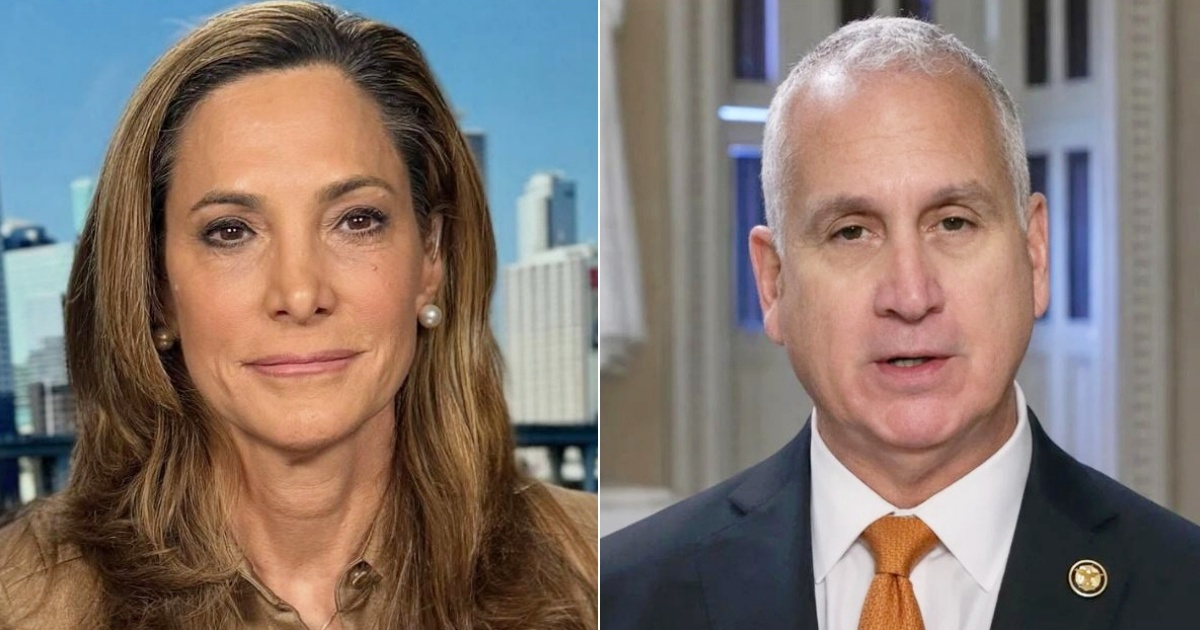
Republican congressmen Mario Díaz-Balart and María Elvira Salazar from South Florida have asserted that any potential negotiations between the United States and Cuba must necessitate the removal of the Castro family from power and the end of the current political regime on the island.
Their statements come amid rumors of potential communications between Washington and Havana regarding a possible political shift in Cuba. Both legislators emphasize that such discussions would only be meaningful if they lead to the dismantling of the system established by the Castros.
“The goal is to see that regime dismantled. How do we achieve that? We must rely on Secretary of State Marco Rubio, who is very clear on this matter,” Díaz-Balart stated in comments captured by Univision, referring to the role that the current U.S. diplomacy chief might play.
The congressman stressed that the aim of any dialogue with Havana cannot be to support the regime but to end its hold on power. “There is no confusion here: everyone knows who controls that regime; it must disappear; there are no negotiations to sustain or breathe life into that regime,” he emphasized.
Echoing these sentiments, Representative María Elvira Salazar stated that any potential contact with members of the Castro family could only be aimed at negotiating their departure. “We cannot leave any Castro there; if there are talks with any Castro, it's about when and how they are leaving, but not about anyone staying,” she declared.
The views of these lawmakers reflect the stance long held by sectors of the Cuban exile community and several politicians from South Florida, who believe that any talks with the Cuban government must lead to a political transition on the island.
Speculation about potential discussions between Washington and Havana has intensified following recent remarks by former President Donald Trump, who confirmed contacts related to Cuba’s political future, though he did not provide specific details about their nature.
During a media interaction, Trump was asked about the potential role of Secretary of State Marco Rubio in possible negotiations with the Cuban government. The former president hinted at the possibility of a political change in the island occurring in different ways, saying, “It could be a friendly takeover. It might not be a friendly takeover.”
These comments have sparked further questions about the actual scope of such discussions and whether any direct or indirect negotiations are indeed taking place between Washington and Havana.
From Havana, spokespersons for the regime have repeatedly denied any negotiations with the United States. Amid these conflicting reports, South Florida congressmen reiterated their support for the current administration's strategy toward Cuba, upholding the political line pushed by Trump and Rubio.
Díaz-Balart insisted that the objective of any engagement must be clear and cannot involve concessions that would allow the regime to extend its tenure in power. “There are no negotiations to sustain or give oxygen to that regime,” he reiterated.
This debate coincides with the severe economic and energy crisis facing Cuba, characterized by prolonged blackouts, fuel shortages, and an increasingly tense social situation within the island.
Amid this context, recent weeks have seen reports of potential international efforts aimed at alleviating Cuba’s energy crisis, including initiatives that might involve sending fuel for humanitarian purposes. However, some U.S. legislators warn that such aid could end up supporting the state apparatus if clear conditions on its usage are not established.
Díaz-Balart and Salazar acknowledged uncertainty about how a potential political transition in Cuba might unfold but noted that this scenario is being evaluated within the current U.S. administration.
According to them, decisions regarding any future strategy toward the island are being carefully considered by former President Trump and Secretary of State Marco Rubio. They believe that the combination of political pressure, international isolation, and internal economic crisis places the Cuban regime at one of its most vulnerable points in decades.
Consequently, they argue that any dialogue between Washington and Havana should result in a real change in power on the island, not the continuation of the existing system.
Key Questions About U.S.-Cuba Negotiations
What are the main conditions set by Florida congressmen for U.S.-Cuba negotiations?
Florida congressmen Mario Díaz-Balart and María Elvira Salazar demand the removal of the Castro family from power and the end of the current political regime in Cuba as prerequisites for any negotiations.
How does the current U.S. administration view potential talks with Cuba?
The current U.S. administration, as represented by figures like Marco Rubio, is analyzing strategies towards Cuba, focusing on political change rather than sustaining the current regime.