On Wednesday, the United States military issued a pressing warning to Iranian civilians to evacuate ports along the Strait of Hormuz. This area is heavily populated with Iranian naval units, indicating that Washington views these locations as viable military targets. Fox News provided live updates from the conflict zone.
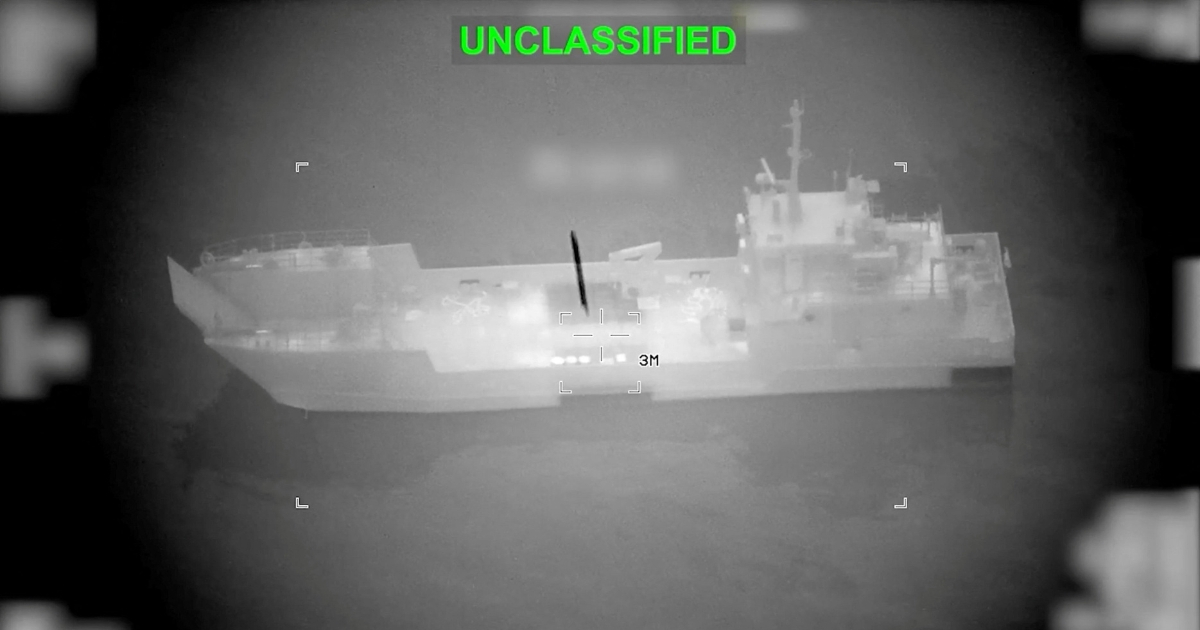
The warning was issued on the 12th day of the armed conflict involving the U.S., Israel, and Iran. It followed a day after the U.S. Central Command (CENTCOM) destroyed 16 Iranian vessels that were deploying mines near the strait. Defense Secretary Pete Hegseth described the operation as "the most intense raid since the war began."
President Donald Trump delivered a stern message on Tuesday regarding the threat of Iranian mines: "If Iran disrupts the oil flow through the strait, it will be hit by the United States twenty times harder than it has been so far." He further threatened unprecedented consequences if Tehran did not remove the mines.
This Wednesday, Iranian drones targeted at least three cargo ships in the region, including the Thai-flagged freighter Mayuree Naree and the Japanese container ship One Majesty, which reported a 10-centimeter hole in its hull 25 nautical miles northwest of Ras al-Khaimah, near Dubai.
The maritime traffic in the Strait of Hormuz has dramatically plummeted from 141 ships recorded on February 27 to just 4 by March 8, marking a 97% decrease, according to Crisis Group data. Iran has also deployed electronic interference affecting the Automatic Identification System (AIS) of ships in the area.
The strait is a crucial energy artery for the global economy, with approximately 20% of the world's oil, or about 16.7 million barrels per day, flowing through it. Since the conflict began, Brent crude oil prices have soared over 15%, exceeding $80 per barrel, with analysts warning it could reach $100.
The conflict was initiated on February 28 with Operation Epic Fury, a joint U.S.-Israel offensive targeting over 1,700 Iranian sites in the first 72 hours, including nuclear facilities in Natanz, Isfahan, and Fordow. Supreme Leader Ali Khamenei was killed in those attacks. His son, Mojtaba Khamenei, has assumed leadership, though reports indicate he is injured and his exact whereabouts are unknown.
The United States has deployed over 50,000 troops, 200 aircraft, and two aircraft carriers, the USS Gerald R. Ford and the USS Abraham Lincoln, in the region. At least six American soldiers have died in the conflict, four of whom were killed by drone attacks in Kuwait on March 1, and no fewer than 140 military personnel have been wounded in the first ten days.
While Trump mentioned on Monday the possibility of negotiating with Iran under certain conditions, the recent warning concerning civilian ports suggests that military pressure on Tehran continues to intensify unabated.
Frequently Asked Questions about the Strait of Hormuz Conflict
Why is the Strait of Hormuz significant?
The Strait of Hormuz is a vital energy transit route, with approximately 20% of the world's oil supply passing through it daily. This makes it a critical point for global economic stability.
What triggered the current conflict in the Strait of Hormuz?
The conflict began with Operation Epic Fury, a U.S.-Israel offensive targeting Iranian military sites, which escalated tensions significantly.
How has the conflict affected global oil prices?
Since the onset of the conflict, Brent crude oil prices have increased by over 15%, surpassing $80 per barrel, with potential to reach $100.
What are the potential consequences if Iran blocks the Strait of Hormuz?
If Iran blocks the strait, it could severely disrupt global oil supplies, leading to significant economic repercussions worldwide.