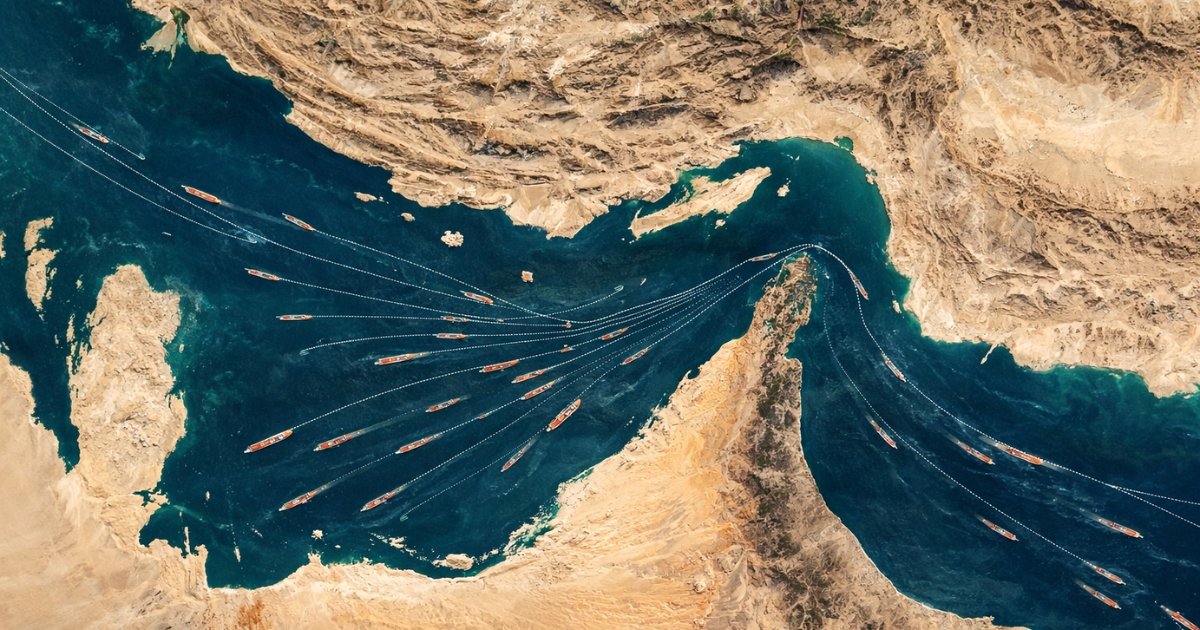
Iran formally warned on Wednesday that it would prevent oil shipments bound for the United States and Israel from passing through the Strait of Hormuz, according to reports from EFE. This threat emerges on the twelfth day of the ongoing armed conflict involving Iran, the U.S., and Israel, marking the most severe crisis faced by the Islamic Republic since its establishment in 1979.
The Revolutionary Guard commander, Ebrahim Jabari, made a stark declaration: "The strait is closed. Should anyone attempt to pass, the Revolutionary Guard will open fire on their vessels." Additionally, Iranian forces transmitted radio messages warning that "ship passage is prohibited," including commercial vessels.
The conflict began on February 28, following coordinated airstrikes by the U.S. and Israel against Iran —dubbed "Operation Epic Fury" and "Operation Roaring Lion"— involving about 200 fighter jets and targeting over 500 sites within Iranian territory. Among those killed in the attacks were the Supreme Leader, Ali Khamenei, his wife, a granddaughter, and top military officials. In retaliation, Iran launched "Operation True Promise 4," deploying over 500 ballistic missiles and 2,000 drones against Israel and U.S. bases in the region.
Since then, the U.S. and Israel have carried out more than 1,700 airstrikes, demolishing nuclear facilities such as Natanz, Isfahan, and Fordow —confirmed by the IAEA with no radiological leaks— as well as 17 Iranian ships and a submarine. The U.S. destroyed at least 16 Iranian warships involved in mine-laying activities in the strait, and President Trump has offered U.S. Navy escorts for oil tankers attempting to navigate the area.
The economic repercussions are severe. Approximately one-fifth of the world's oil supply, around 14 million barrels daily before the conflict, passes through the Strait of Hormuz, with 80% destined for Asia-Pacific nations. The WTI crude price experienced its largest weekly surge since 1983, fluctuating between more than $90 and close to $80 per barrel, stabilizing around $81 as of Wednesday.
Iraq has already curtailed its output by 1.5 million barrels daily, and experts warn that 15 million barrels per day could be disrupted if the situation persists. Prices could soar beyond $100 per barrel if the conflict drags on.
For Cuba, which heavily relies on fuel imports, a sustained rise in oil prices would exacerbate the ongoing energy crisis, characterized by power outages lasting up to 20 hours daily. The Havana regime, a longstanding ally of Tehran, has yet to issue an official statement on the conflict, but market volatility affecting energy suppliers Venezuela and Russia may compel a response in the coming weeks.
Politically, Iran's Assembly of Experts appointed Mojtaba Khamenei— the 56-year-old son of the deceased leader and perceived as more hardline than his father— as the new Supreme Leader, although reports indicate he is injured and his whereabouts remain unclear. President Trump criticized the appointment as "unacceptable," asserting that "it won't last long."
The U.S. president, who recently claimed that the war was nearly over and that Iran "had surrendered," warned that if Iran obstructed oil passage, "death, fire, and fury will rain down upon them," pledging a response "20 times stronger."
Impact of the Iran Conflict on Global Oil Supply
What is the significance of the Strait of Hormuz in global oil trade?
The Strait of Hormuz is a critical chokepoint in global oil trade, with around 20% of the world's oil supply, or approximately 14 million barrels per day, passing through it. The majority of this oil is destined for Asia-Pacific countries.
How has the conflict affected oil prices?
Oil prices have seen significant volatility, with WTI crude experiencing its largest weekly increase since 1983. Prices have fluctuated between over $90 and close to $80 per barrel, recently stabilizing around $81.
How might the conflict impact Cuba's energy situation?
Cuba's energy crisis, marked by power outages of up to 20 hours, could worsen if oil prices continue to rise, affecting its ability to secure affordable fuel imports. The Havana regime may be forced to react due to pressure on its energy suppliers, Venezuela and Russia.