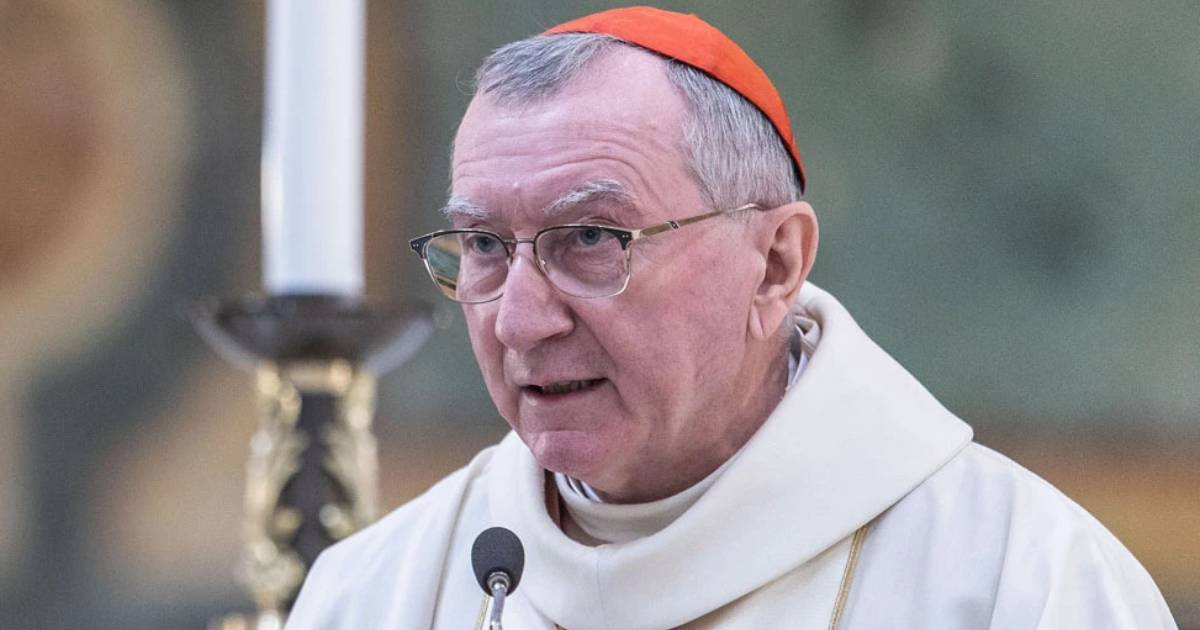
The Vatican's Secretary of State, Cardinal Pietro Parolin, has stated that the Holy See has undertaken "necessary steps" regarding the situation in Cuba with the aim of promoting a dialogue-driven resolution, as reported by ACI Prensa.
Cardinal Parolin, a top Vatican diplomat, mentioned recent interactions with Cuban government representatives amidst a backdrop of diplomatic maneuvers surrounding the island.
"We have done what was needed for Cuba, having met with the Foreign Minister and taken the necessary steps, always aiming for a dialogue-based resolution to the existing issues," Parolin remarked to various media outlets, including Vatican News, as noted by ACI Prensa.
His comments were made on March 9 in Rome during the second edition of the interfaith initiative Il Tavolo del Ramadan–Iftar, a gathering that unites Christian, Jewish, and Muslim representatives.
The Vatican's diplomatic leader's remarks follow several recent interactions between the Vatican, Cuban authorities, and U.S. representatives. On February 28, Pope Leo XIV met with Cuba's Foreign Minister Bruno Rodríguez Parrilla, who visited the Vatican as a special envoy of Cuban leader Miguel Díaz-Canel.
After the meeting, Rodríguez Parrilla publicly thanked the pontiff on social media platform X. "I deeply appreciate His Holiness Leo XIV for the honor of receiving me in an audience as the Special Envoy of the President of the Republic of Cuba," he wrote.
Earlier, on February 20, Mike Hammer, the head of the U.S. diplomatic mission in Havana, also held talks in Rome with the Vatican's Secretary for Relations with States, Monseñor Paul Richard Gallagher. They discussed the situation in Cuba and the Catholic Church's role within Cuban society.
Following this meeting, Hammer told ACI Prensa that Cuba is at a critical juncture and expressed hope that the nation can soon achieve freedom. "With freedom, there will be no suffering because the necessary change will occur. How will it happen? Well, that's what we're working on," the U.S. diplomat stated.
Simultaneously, there have been movements from the Cuban exile community. On March 2, a group of activists in Miami, led by Rosa María Payá, founder of Cuba Decide and daughter of the late dissident Oswaldo Payá, put forth the "Agreement for Cuba's Liberation," outlining ten steps to restore democracy and the rule of law on the island.
Historically, the Vatican has played a significant role in mediation processes related to Cuba. One notable instance occurred during former President Joe Biden's administration, when the Holy See facilitated diplomatic efforts that led to the release of 553 prisoners in exchange for Cuba's removal from the U.S. list of state sponsors of terrorism.
Parolin's statements come amid a time of intense diplomatic engagement regarding Cuba's future and the potential role of the Catholic Church as a channel for dialogue among various international actors.
Diplomatic Efforts and the Future of Cuba
What steps has the Vatican taken regarding Cuba?
The Vatican has engaged in discussions with the Cuban government and various international actors to promote a dialogue-based resolution to Cuba's issues.
Who are some key figures involved in the recent diplomatic efforts concerning Cuba?
Key figures include Cardinal Pietro Parolin, Vatican's Secretary of State; Bruno Rodríguez Parrilla, Cuba's Foreign Minister; and Mike Hammer, head of the U.S. diplomatic mission in Havana.
What role has the Vatican historically played in Cuban mediation efforts?
The Vatican has historically facilitated diplomatic negotiations, such as during the Obama administration, which led to significant outcomes like the release of prisoners in exchange for Cuba's removal from the U.S. terrorism list.