Once again, Cuba finds itself among the nations with the least economic freedom worldwide. The 2026 Economic Freedom Index, compiled by the Heritage Foundation, ranks the island at 175 out of 176 evaluated economies, with a score of 25.2 out of 100, placing it in the lowest category: "repressed" economies. Only North Korea scores lower.
This outcome also makes Cuba the least free economy across the Americas, significantly trailing behind regional countries like Chile, Uruguay, and the Dominican Republic, which have more open systems encouraging private investment and international trade.
The report evaluates twelve indicators grouped into key areas such as the rule of law, government size, regulatory efficiency, and market openness. Cuba receives notably low scores in nearly all these areas, reflecting an economic system where the state exerts dominant control over productive and financial activities.
A major concern highlighted is the institutional weakness. The index assigns Cuba 27.7 points for property rights, 16 for judicial effectiveness, and 33 for government integrity, indicating severe issues in legal protection and the independence of institutions.
As per the report, these conditions undermine investor confidence and hinder the creation and expansion of businesses, which are crucial for economic growth.
Furthermore, the document emphasizes the restrictions faced by private enterprise. Cuba scores only 41.4 in business freedom and 20 in labor freedom, indicators that reveal the regulatory hurdles for starting businesses or developing economic initiatives outside state control.
The situation is similarly dire regarding economic openness. The country earns 20 points in trade freedom and a mere 10 in investment and financial freedom, illustrating a tightly closed economy to international capital with a state-dominated financial system.
Adding to this is an exceedingly poor performance in public finance. In the index, Cuba scores zero in both government spending and fiscal health, highlighting the structural weaknesses of its economic model and the burden of the state apparatus on the national economy.
The report also underscores the strong correlation between economic freedom and prosperity. Nations classified as "free" or "mostly free" generate per capita incomes more than double those of countries with low economic freedom, and up to three times higher than those in "repressed" economies, such as Cuba.
This year's ranking does not come as a surprise. For decades, the island has consistently appeared near the bottom of the global ranking. For instance, in 2020, it ranked 178 out of 180 countries, and in 2021, it was 176 out of 178, remaining among the world's least economically free economies.
Index analysts attribute these results primarily to the high degree of state control over the Cuban economy. The government owns a large portion of the means of production, regulates foreign investment, controls the financial system, and imposes wide-ranging restrictions on independent business activities.
In contrast, the 2026 global ranking is led by Singapore, Switzerland, and Ireland, economies known for open markets, greater protection of private property, and more favorable regulations for entrepreneurship and investment.
Published annually since 1995, the index relies on data from the World Bank, international organizations, and specialized analysis to measure the degree of economic freedom in each country.
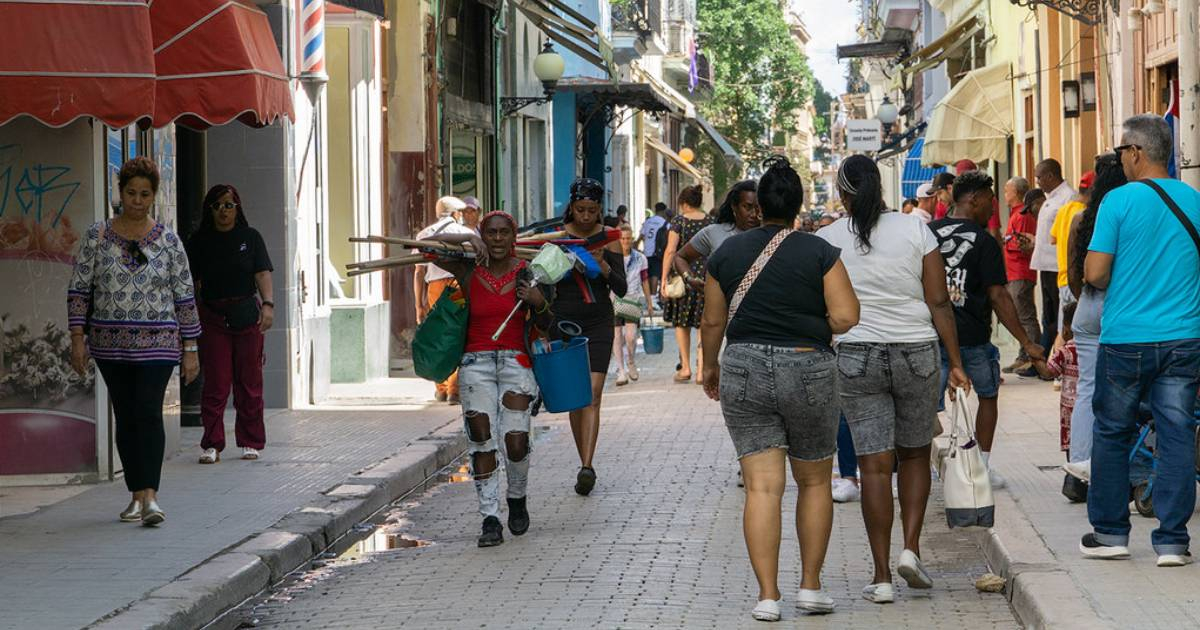
Beyond the ranking figures, the results reflect a reality that millions of Cubans face daily: a lack of economic opportunities, barriers to entrepreneurship, and a productive system characterized by state controls that, according to various analysts, continue to stifle growth and well-being on the island.
Understanding Cuba's Economic Situation
What is the Economic Freedom Index?
The Economic Freedom Index, compiled by the Heritage Foundation, evaluates the economic freedom of countries based on twelve indicators grouped into areas such as rule of law, government size, regulatory efficiency, and market openness.
Why is Cuba ranked so low in economic freedom?
Cuba's low ranking is due to its high degree of state control over economic activities, including ownership of production means, regulation of foreign investment, control of the financial system, and restrictions on independent business activities.
How does economic freedom affect prosperity?
Countries with higher economic freedom tend to generate higher per capita incomes, as more open and flexible economic systems foster growth, entrepreneurship, and investment, leading to greater prosperity.