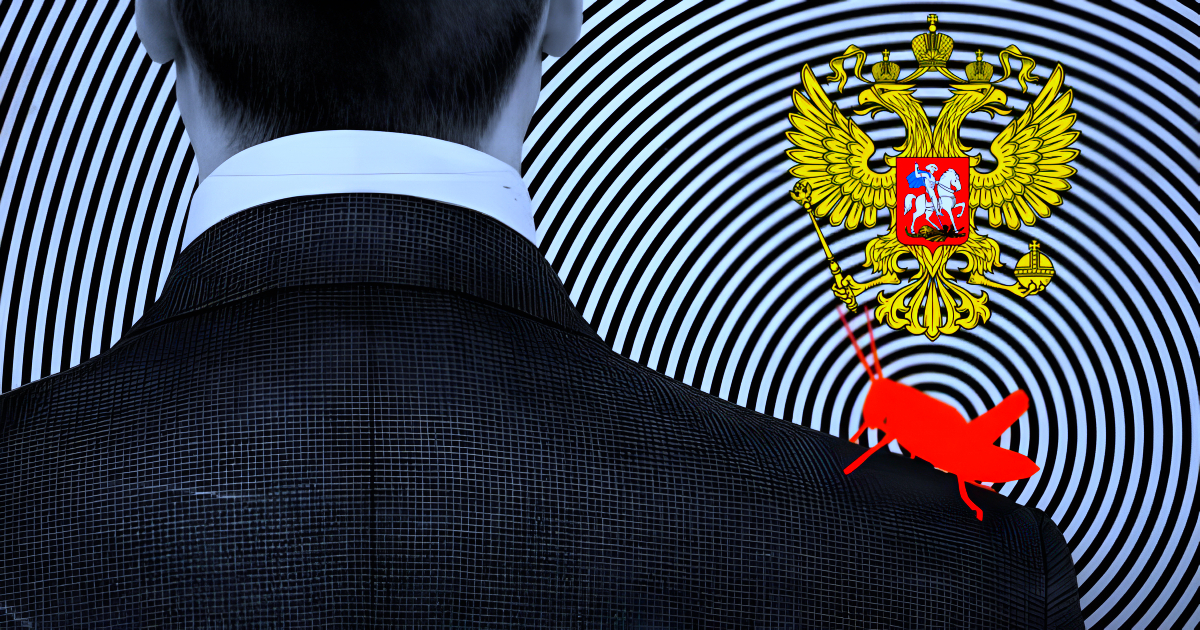
Recent revelations in the United States suggest that intelligence agencies may have internally concluded that Russia is responsible for the incidents linked to the so-called "Havana Syndrome." This comes as pressure mounts to declassify findings that have been downplayed for years.
The issue, originating in Cuba in 2016, highlights a sensitive area for the island, namely its close ties with Moscow. These ties are now weakened due to Russia's ongoing conflict in Ukraine, reducing its capacity to support its allies.
Unraveling the Mystery of Havana Syndrome
In a new twist to the Havana Syndrome saga, a report from the U.S. indicates a fierce internal debate within the intelligence community regarding the release of evidence that could implicate Russia in attacks on American diplomats, spies, military personnel, and other officials since 2016.
CiberCuba has documented the case from its inception, noting key developments such as journalistic investigations pointing to Russian military intelligence, allegations of a CIA cover-up, and the discovery of a portable device potentially linked to these unusual health incidents.
This new report suggests a shift in political gravity, shifting the narrative from mere suspicions and victim testimonies to tangible conclusions by U.S. agencies pointing towards Moscow. However, these conclusions have not been made public.
From Cuban Origins to Worldwide Implications
Named after the first occurrences among American diplomats in Havana in 2016, the phenomenon severely strained U.S.-Cuban relations, leading to a reduction in diplomatic staff and prolonged bilateral tensions.
Initially, the finger of suspicion did not necessarily point to the Cuban government. An investigation by The Insider, 60 Minutes, and Der Spiegel in April 2024 identified Unit 29155 of the GRU, a Russian military intelligence squad, as central to the operations. This unit has been linked to covert operations, assassinations, and destabilization efforts globally.
They discovered that members of this unit were found near sites of alleged attacks on U.S. personnel, and high-ranking officials associated with the unit had been commended for work related to "non-lethal acoustic weapons," a term used in Russian military literature to describe directed energy technologies like radiofrequency or microwaves.
Cuban Denials and International Skepticism
From the outset, the Cuban regime has consistently denied involvement, either in the phenomenon itself or in any deliberate attacks. In 2017, Foreign Minister Bruno Rodríguez Parrilla asserted that Cuba "has never and will never perpetrate actions of this nature," dismissing claims of attacks against diplomats.
In subsequent years, Cuban officials maintained that there was no evidence to support the existence of attacks, suggesting symptoms could be due to stress or environmental factors. In recent times, the official narrative has veered towards mocking the phenomenon, with MINREX dismissing the accusations as a "political operation."
Some, like diplomat Johana Tablada de la Torre, even rechristened the situation as the "Washington Syndrome," implying it was a piece of American propaganda. President Miguel Díaz-Canel has also described it as a "false pretext" for U.S. sanctions against the island.
Unveiling a Potentially Pivotal Device
In January, CiberCuba reported on a new element: the U.S. had acquired a portable device with Russian components potentially linked to the syndrome. The device, small enough to fit in a backpack, emits pulsed radiofrequency energy. The Pentagon has been testing it for over a year to see if it can replicate the effects reported by victims.
This aligns with a revelation from 60 Minutes, which stated that U.S. agents procured a miniaturized microwave weapon from a Russian criminal network in a Pentagon-supported operation. Tests on animals have shown neurological damage akin to that seen in some victims.
If verified, this discovery would dismantle longstanding claims by some intelligence sectors that such technology did not exist or couldn't be used portably.
Victims and Allegations of a Cover-Up
In January 2025, CiberCuba also shared the account of a former CIA officer, "Alice," who reported a cover-up within the agency and implicated Russia as a potential perpetrator. She recounted an attack in Africa with a portable energy weapon that left her with debilitating effects, accusing U.S. authorities of downplaying the incidents and withholding vital information.
A subsequent report highlighted divisions within the U.S. intelligence community. While some agencies saw it plausible that foreign adversaries had developed such technology, others deemed the hypothesis unlikely.
Implications for Cuba Amidst Rising Tensions
The case holds special significance for Cubans. If the Russian link is confirmed, it underscores the close relationship between the Havana regime and one of its key strategic allies. For decades, Moscow has been a crucial partner for Cuba politically, militarily, and economically. However, with Russia facing intense international pressure over Ukraine, its capacity to support allies is diminished.
In this context, any evidence linking Russian intelligence operations to incidents originating in Havana reinforces Cuba's geopolitical importance in the ongoing rivalry between Washington and Moscow.
A Puzzle Still Missing Pieces
After years of conflicting narratives, ambiguous assessments, and victim accusations, the "Havana Syndrome" appears less mysterious today. A clearer sequence is emerging: initial cases in Cuba, global spread, indications pointing to the Russian GRU, hypotheses of directed energy weapons, and new cover-up accusations within the U.S. government.
However, one crucial step remains: an official public determination identifying those responsible. Until then, the case will remain one of the most contentious episodes in recent U.S. national security history and a reminder that geopolitical confrontations between major powers can unfold in unseen ways.
Understanding the Havana Syndrome and Its Implications
What is the Havana Syndrome?
The Havana Syndrome refers to a series of unexplained health incidents first reported by U.S. diplomats in Havana, Cuba, in 2016, characterized by symptoms such as dizziness, hearing loss, and cognitive difficulties.
Who is believed to be responsible for the Havana Syndrome?
Recent reports suggest that U.S. intelligence agencies have internally concluded that Russia may be behind the incidents, although this information has not been officially disclosed to the public.
How has the Cuban government responded to allegations regarding the Havana Syndrome?
The Cuban government has consistently denied involvement in the incidents, dismissing them as politically motivated accusations from the United States and questioning the validity of the term "attack."