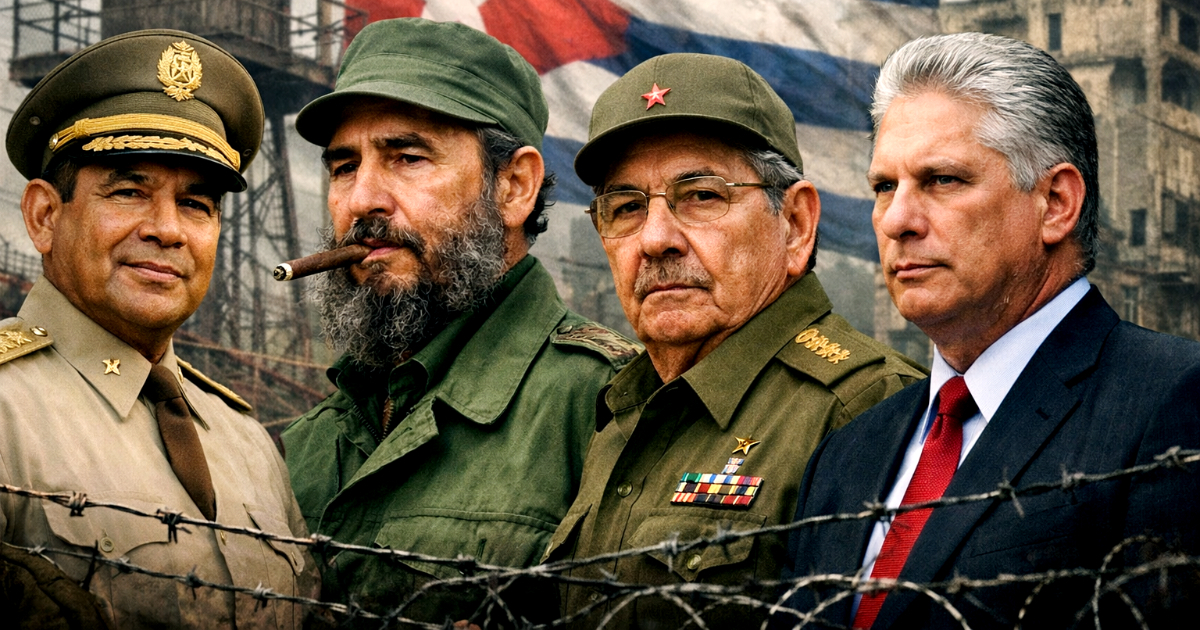
The military coup led by Fulgencio Batista on March 10, 1952, not only disrupted Cuba's immediate political trajectory but also initiated a historical cycle from which the nation has yet to emerge.
In the early hours of that day, troops seized control of key power centers, constitutional guarantees were suspended, and the upcoming elections were canceled. This act dismantled the institutional framework that had shaped Cuban politics since the 1940 Constitution, a document considered one of the most progressive in Latin America at the time.
The 1940 Constitution established the separation of powers, acknowledged extensive social rights, and ensured regular, competitive elections. Despite facing significant issues such as political corruption, economic inequalities, and social tensions, Cuba had mechanisms for democratic change and public freedoms comparable to many Western nations of the era.
Batista's coup halted this process. His military government ruled by decree, restricted political freedoms, and faced growing armed and civil opposition. Yet, the Batista dictatorship, though authoritarian and repressive, operated in a still somewhat pluralistic environment with political sectors, independent press, and spaces for opposition.
Unlike the totalitarian system established post-1959, 1950s Cuba maintained institutional and legal margins that allowed certain political and civil society functions. A telling example was the 1955 amnesty granted to Fidel Castro and participants in the 1953 Moncada Barracks attack. After being tried and sentenced by Cuban justice, those responsible were freed as a political measure to ease internal tensions.
This decision enabled Castro to leave prison, exile in Mexico, reorganize his movement, and prepare the Granma yacht expedition that would begin the guerrilla struggle against Batista. This episode highlights the differences between an authoritarian regime and the totalitarian system later established in Cuba.
The 1955 amnesty, unthinkable under the political model built by Castro after coming to power, reflects that even under Batista's dictatorship, political mechanisms and social pressures could influence government decisions. In post-1959 Cuba, however, the elimination of opposition, absolute institutional control, and lack of political pluralism entirely closed those spaces.
The so-called "Cuban Revolution" promised by Castro to restore democracy and the 1940 Constitution led to a radically different process. Within a few years, the new revolutionary power eliminated political parties, subordinated all institutions to Castro's leadership, and constructed a single-party system inspired by Eastern European communist models. The state took control of key economic sectors, and political life was monopolized by the Communist Party of Cuba.
The early years of the regime were marked by intense repression. Revolutionary courts held summary trials against military and civilians linked to the previous government. Hundreds were executed after trials criticized by international human rights organizations for lacking legal guarantees.
Over time, the system solidified into a totalitarian regime that infiltrated every aspect of society. Press freedom vanished, independent organizations were banned, and any political opposition was criminalized. Repression extended beyond prisons or political trials, manifesting in community-level surveillance and denunciation networks (CDR) and the ongoing exodus of Cubans seeking freedom and opportunities elsewhere.
From the initial 1960s exiles to the Mariel crisis in 1980 or the 1994 rafter crisis, the country has experienced massive migratory waves. Thousands have died attempting to cross the Florida Strait or Caribbean routes in precarious vessels. These disappearances at sea are a silent tragedy accompanying Cuba's recent history.
Simultaneously, the revolutionary regime engaged Cuba in foreign armed conflicts. During the Cold War, the Cuban government dispatched troops to Africa, notably Angola and Ethiopia, in military operations that claimed thousands of Cuban soldiers' lives.
Castrista influence in Latin America is well-documented, from Ernesto Guevara's guerrilla in Bolivia, interference in Salvador Allende's Chilean government, to the capture of the Venezuelan state and cooperation in repression under the Chavista dictatorship, among many examples. These actions aligned with the Soviet bloc's international strategy and strengthened Havana's ideological alignment with the global communist project.
Over decades, a political system without free elections or party competition took root on the island. The current socialist Constitution explicitly declares the system "irrevocable" and recognizes the Communist Party as the leading political force in society.
Historically, the result has been an unbroken institutional rupture beginning with the 1952 coup, deepened after 1959. For 74 years, Cubans have been unable to freely choose between different political projects or fully enjoy the civic freedoms present during the republican era.
However, the current international context suggests the country might be nearing a moment of change. Structural economic crises, the collapse of the state production model, and growing social discontent have weakened the regime. This is coupled with increasing international pressure, particularly from the United States, which has intensified its policy towards Havana in pursuit of political transition.
Washington openly discusses the need to promote democratic changes in Cuba. The U.S. government has increased economic, diplomatic, and political pressure on the regime while focusing on human rights conditions on the island.
This context coincides with a younger generation of Cubans unafraid to voice their discontent, as demonstrated by the massive July 2021 protests and subsequent demonstrations.
The combination of economic crisis, internal political erosion, and international pressure is creating a scenario that many analysts view as potentially decisive.
Seventy-four years after that military coup that disrupted the Republic's constitutional order, Cuba once again confronts a historical juncture.
The pressing question is whether the country can finally close the long cycle started in 1952 and regain the civil and political rights that have been suspended, buried, and forgotten for decades.
The outcome of this process will not only shape the island's future but also conclude one of the longest-lasting authoritarian periods in the Western Hemisphere.
Key Questions About Cuba's Political Future
What sparked the long-standing cycle of political issues in Cuba?
The cycle began with Fulgencio Batista's military coup in 1952, which dismantled the democratic framework established by the 1940 Constitution.
How did the Cuban Revolution change the political landscape of the country?
Post-revolution, the regime eliminated political parties, centralized power under Castro, and created a one-party system inspired by Soviet communism, eradicating democratic practices.
Why is the current situation in Cuba considered a potential turning point?
Cuba faces a convergence of economic crisis, political discontent, and international pressure that suggests a significant change might be imminent.