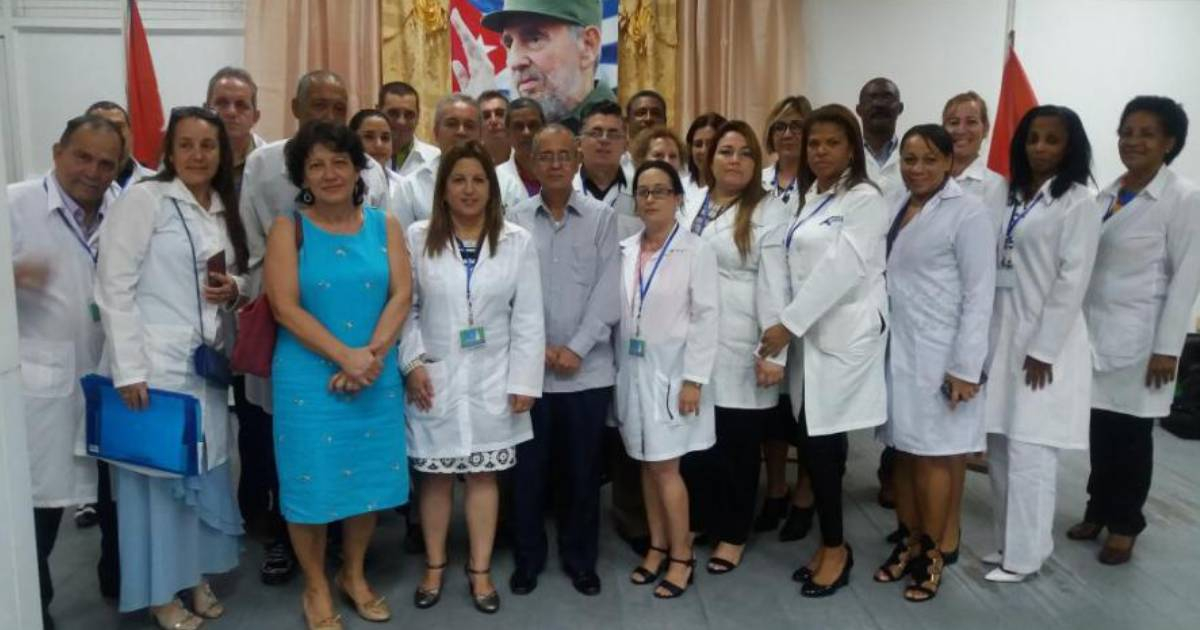
The government of Guyana has confirmed that it was Cuba that chose to withdraw its medical brigade, effectively ending a health cooperation agreement that had lasted for over 48 years.
Dr. Frank Anthony, Guyana's Minister of Health, clarified in an interview with News Source Guyana that Havana made this decision in February, while discussions about the program's future were still ongoing with the Guyanese government.
"I want to make it clear that it was the Cuban authorities who decided to dismiss or withdraw the Cuban doctors who were here," stated the minister.
Following the brigade's departure, Guyana has moved to directly employ Cuban doctors, nurses, and technicians who wish to stay or work in the country, provided they meet local health authority standards and certifications.
According to Anthony, several Cuban health professionals from the brigade opted to remain and are now directly employed by Guyana's public health system.
The minister also assured that the withdrawal of the medical contingent has not disrupted the nation's healthcare system, as the government has expanded training programs for local professionals. As part of this initiative, Guyana plans to graduate approximately 800 nurses this year to strengthen its healthcare services.
The minister's clarification comes after a group of citizens urged President Irfaan Ali to reconsider the agreement's termination and allow the Cuban medical brigade's return.
For weeks, rumors circulated that Guyana had canceled the program under pressure from the United States government, which has scrutinized Cuban medical missions abroad over alleged labor violations against Cuban professionals.
Cuba and Guyana have maintained cooperative relations for decades. In 2021, over 60 Cuban doctors were dispatched to the South American nation to aid in managing the COVID-19 pandemic peak, and numerous Guyanese students have received medical training on the island.
Caribbean Context: Jamaica Uncovers Irregularities
This situation unfolds amid a regional backdrop where other Caribbean nations are also reassessing their medical agreements with Cuba.
Recently, the Jamaican government disclosed details of irregularities found after ending its longstanding health cooperation program with Havana, which had been in place since 1976.
The Jamaican Ministry of Foreign Affairs explained in a statement that a review of the agreement revealed that Cuban doctors lacked possession of their own passports. Upon identifying this issue, the government took steps to ensure that these professionals could retain their travel documents.
The investigation further uncovered that the doctors' salaries were not paid directly to them but transferred in dollars to the Cuban government. The workers only received additional payments directly for overtime work.
Moreover, authorities pointed out that the agreement did not specify what portion of those salaries was to be ultimately given to the doctors, raising concerns about compliance with the country's labor and tax laws, as well as international conventions.
Jamaica indicated that it had attempted for months to renegotiate the program with Cuba to align it with its legislation. However, it claimed that no substantive response was received from Havana, leading to the decision to terminate the agreement.
Official data showed that 277 Cuban health professionals were working in Jamaica when the program's end was announced.
Debate over these medical missions has intensified in recent years. Washington has suggested they might involve labor exploitation, while the Cuban government denies these accusations and defends its medical brigades as a part of its international cooperation policy.
Cuban Medical Missions: Key Questions and Answers
Why did Cuba withdraw its medical brigade from Guyana?
Cuba decided to withdraw its medical brigade from Guyana as part of a decision made by Cuban authorities, despite ongoing discussions with the Guyanese government about the future of the program.
How has Guyana addressed the departure of Cuban medical professionals?
Guyana has opted to directly employ Cuban doctors, nurses, and technicians who wish to remain, ensuring they meet local health standards. The government also expanded training programs for local professionals to support the healthcare system.
What irregularities did Jamaica find in its medical agreement with Cuba?
Jamaica found that Cuban doctors did not have their own passports and that salaries were paid to the Cuban government rather than directly to the doctors, leading to concerns about legal compliance.