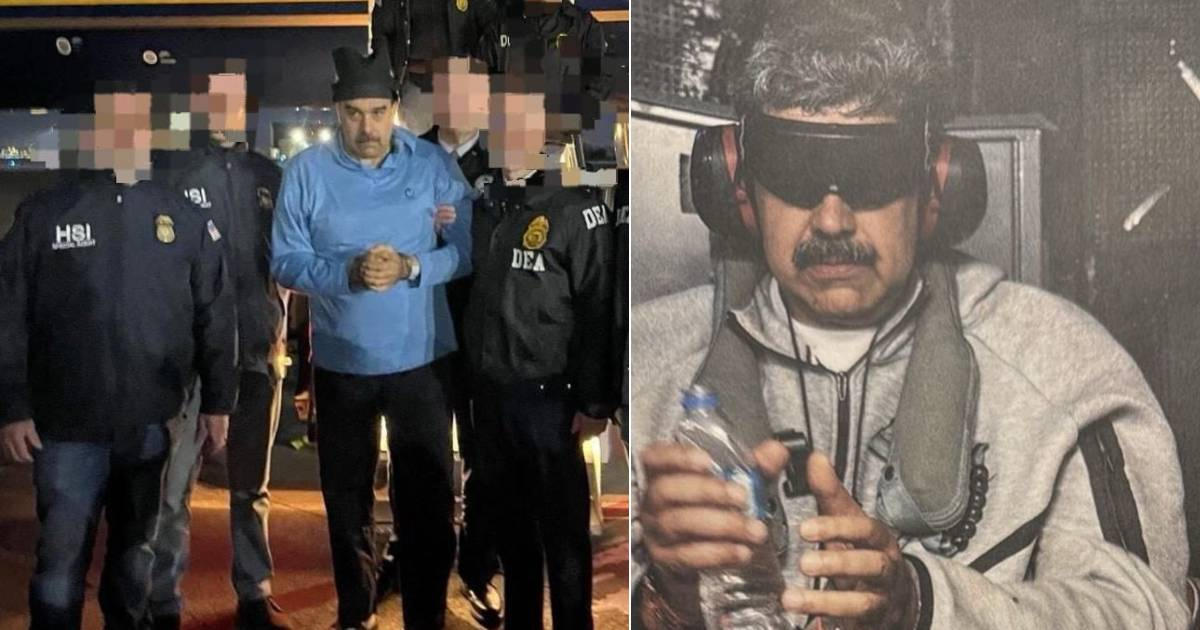
A letter purportedly penned by Nicolás Maduro from a federal prison in New York has reignited political discourse in Venezuela.
The message was shared on social media by his son, Nicolás Maduro Guerra, who claimed the former leader wrote the document while detained at the Metropolitan Detention Center in Brooklyn, facing charges from U.S. authorities.
Under the title "Prayer for Faith that Moves Mountains and Action that Builds the New, in Christ and Bolívar," the letter intertwines religious themes with political references to Chavismo, communal power, and symbolic figures like Simón Bolívar and Hugo Chávez.
Political and Spiritual Appeal
In the message, Maduro extends a political prayer to his followers, noting the International Women's Day, celebrated on March 8.
"Today, March 8, Women's Day, we come before God and Bolívar, alongside Venezuela's beloved communes, to ask the Lord to accompany us in building Popular Power, crafted by the courageous hands of our women and men," the text states.
The letter also outlines a slogan intended to guide Chavismo's political actions in today's climate.
"The faith that moves mountains and the action that builds the new, in Christ and Bolívar," the message continues, merging religious references with calls for grassroots political organization.
Religious Metaphors and Historical References
Additionally, the letter includes a Gospel of Matthew quote, serving as a metaphor for overcoming Venezuela's challenges.
"Jesus taught us: 'If you have faith and do not doubt, you can even say to this mountain, 'Be removed and cast into the sea,' and it will be done' (Matthew 21:21). Grant us that sincere and popular faith, to move the mountains of difficulties that sometimes hinder us, and turn them into a clear path for our homeland."
The message calls upon Simón Bolívar, referencing his Angostura speech as a political guide for the nation's future.
"Bolívar, in Angostura, showed us the path of action: he called for a popular, just, and moral government to end oppression and bring peace. Today, Bolívar invites us to vote and build a government of equality and freedom from the commune," the document reads.
Concluding with a plea for unity among Chavismo around the movement's symbols, the letter emphasizes solidarity.
"May this day, blessed by God, be a testament to our steadfast faith and daily struggle. United in Christ, Bolívar, and Chávez, we will make Venezuela a home of love, justice, and popular power. Amen."
Reactions and Legal Proceedings
The letter's publication by Nicolás Maduro Guerra, who asserted it was sent by his father from the detention center, sparked immediate reactions both within and outside Venezuela.
While Chavismo supporters viewed the letter as a message of political and spiritual resistance, analysts and opposition figures questioned its authenticity and potential impact on the nation's current political scene.
Currently, Nicolás Maduro is held at the Metropolitan Detention Center in Brooklyn, New York, facing federal charges brought by the U.S. justice system.
Recently, the former Venezuelan leader requested a Manhattan federal judge to dismiss the charges, arguing that the U.S. government violated his due process rights by blocking funds for his legal defense.
His attorney, Barry Pollack, argued in the Southern District of New York court that U.S. authorities prevented the Venezuelan government from covering the former president's legal fees.
"Mr. Maduro, as the head of state of Venezuela, has the right and expectation that the legal fees associated with these charges be funded by the Venezuelan government," Pollack wrote in court documents cited by the Associated Press.
In a statement included in the court file, signed as "Nicolás Maduro Moros," the former leader asserted: "I have relied on this expectation and cannot afford my own legal defense."
Maduro, 63, and his wife Cilia Flores, 69, were apprehended on January 3 in Caracas and transported to the United States. Both pleaded not guilty at their initial hearing, describing themselves as "prisoners of war."
The formal charges include four primary counts, among them conspiracy to commit narco-terrorism, cocaine trafficking to the United States, and war-related weapons offenses. If convicted, they could face life imprisonment.
Frequently Asked Questions About Nicolás Maduro's Situation
What charges is Nicolás Maduro facing in the United States?
Nicolás Maduro faces charges of conspiracy to commit narco-terrorism, cocaine trafficking to the United States, and war-related weapons offenses. If convicted, he could face life imprisonment.
How did Nicolás Maduro respond to his legal charges?
Nicolás Maduro requested a Manhattan federal judge to dismiss the charges, arguing that the U.S. government violated his due process rights by blocking funds for his legal defense.
What are the potential consequences if Maduro is found guilty?
If found guilty, Nicolás Maduro could potentially face life imprisonment based on the severity of the charges against him.