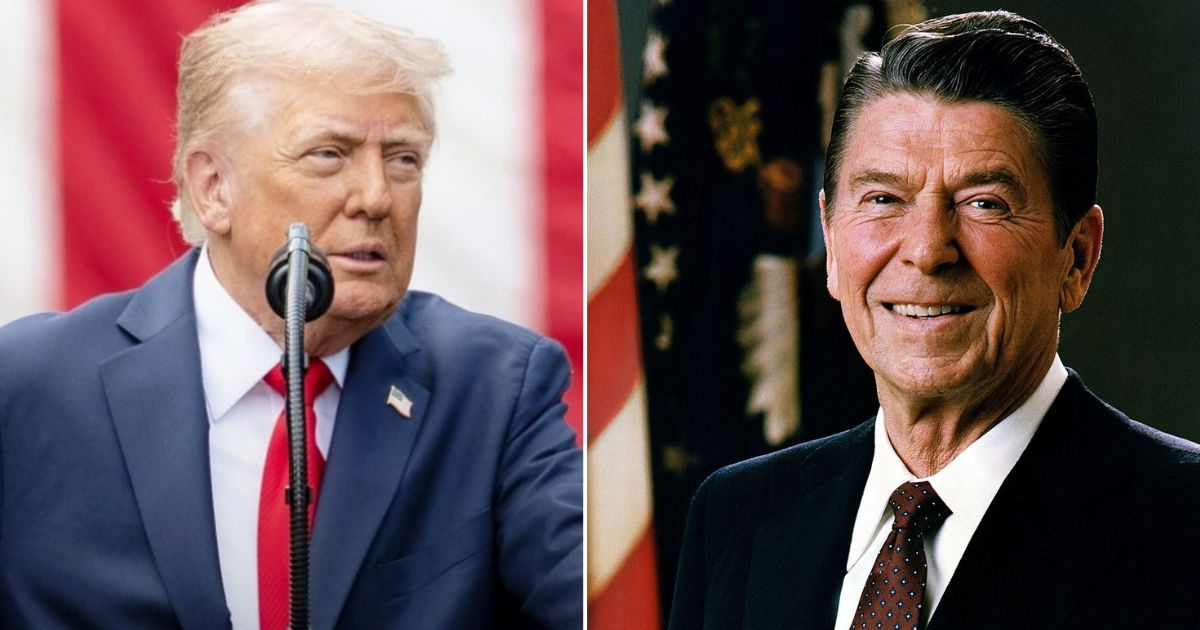
According to a column in The Wall Street Journal, President Donald Trump might emerge as the most impactful U.S. leader in foreign policy since Ronald Reagan if he succeeds in bringing down regimes like those in Iran and Cuba.
Authored by Joshua Muravchik, the opinion piece argues that political shifts in these nations would deliver a significant blow to America's adversaries on the global stage. The article highlights an existing alliance of authoritarian states, including Russia, China, Iran, and North Korea, aiming to curb Washington's international influence.
The author suggests that the downfall of the Iranian regime could substantially weaken radical groups and movements linked to Tehran across various regions worldwide.
As for Cuba, the article notes that while the island no longer poses a direct military threat to the United States, it remains a symbol of anti-American sentiment in Latin America and a supporter of allied governments like Venezuela. Muravchik posits that a political transformation in Cuba would have both symbolic and political repercussions, undermining the bloc of governments opposed to Washington.
The column concludes that should Trump manage to foster such international transformations, his impact could echo that of Reagan during the end of the Cold War, when the Soviet Union's collapse marked the conclusion of a significant historical era.
Within U.S. politics, some individuals have already drawn parallels between Trump and Reagan. Recently, U.S. Senator Lindsey Graham declared that the Cuban regime's days are numbered. "Cuba is next. They will fall. This communist dictatorship in Cuba has its days numbered," Graham stated during an interview with Fox News.
Graham, one of Trump's closest allies in the Senate, compared the president to Ronald Reagan, stating that Trump will finish the work Reagan couldn't complete. "We have the opportunity not only to dismantle the mothership of terrorism, Iran. We also have the chance to eliminate one of the most lethal allies in the Middle East, Hezbollah," Graham said, referring to the U.S. attack on Iran that eliminated top officials of the Islamic Republic, including Ayatollah Khamenei.
Potential Impact of Political Changes in Cuba and Iran
What could be the impact of political change in Cuba?
A political change in Cuba could weaken the bloc of governments opposing Washington, reducing anti-American sentiment in Latin America and impacting allied governments like Venezuela.
Why is a regime change in Iran significant?
A regime change in Iran could significantly weaken radical groups and movements linked to Tehran, affecting regions worldwide and diminishing Iran's influence.