Jordi Cabarrocas, the president of 1898 Compañía de Recuperaciones Patrimoniales S.L., firmly dismissed the notion that a shift to democracy in Cuba would lead to widespread home evictions.
His comments to CiberCuba emerge amid heightened anticipation following President Donald Trump's statements that Cuba will "fall very soon," and that the regime is "desperate" for an agreement with the United States.
Cabarrocas' firm, which has been managing property claims for families affected by the expropriations initiated by Fidel Castro's regime since 1959, advocates for solutions involving compensations and land swaps to address the demands for confiscated properties.
"Logically, no one should be thrown out onto the streets, because it neither makes sense nor is it appropriate. This situation will be resolved in a straightforward manner, but always with legal certainty, because, in the end, money requires legal certainty," the expert asserted.
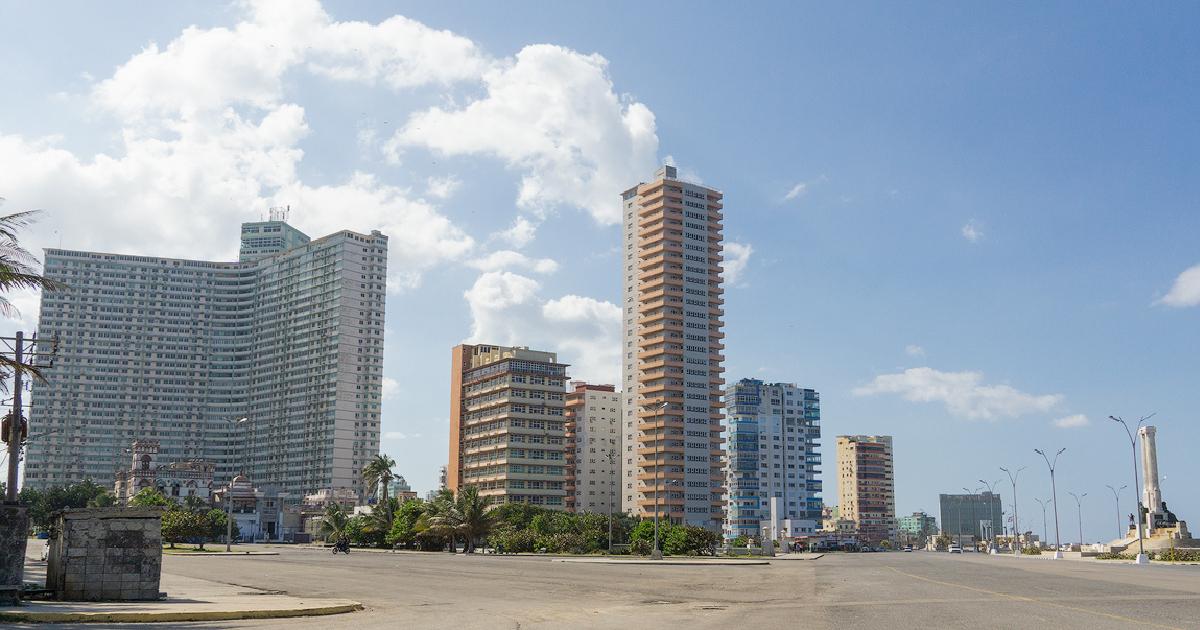
Cabarrocas noted that the Cuban regime did not develop extensive new urban areas but instead chose to divide and degrade existing ones. This strategy leaves ample land available for compensations without needing to displace current residents. The solution will involve collaboration with a future transitional government through creative approaches: equivalent lands, swaps, or other compensations, rather than directly restoring occupied properties.
To bolster his stance, Cabarrocas cited examples from a dozen countries in the Soviet bloc after the fall of socialism in the USSR and Eastern Europe. "Cuba is not an exception; it is relatively typical, and in other countries, it has been resolved without any issues," he emphasized.
The Spanish company, with offices in Barcelona, Madrid, and Miami, currently represents over 500 families, primarily second and third-generation descendants—children and grandchildren of those expropriated, mostly aged 40-50. Around 70% of claims are concentrated in Havana.
Following Trump's remarks and the January capture of Nicolás Maduro in Venezuela, which deprived Cuba of its main source of subsidized oil, the company has experienced a surge in inquiries. "There's a lot of activity. People with investment capacity and those eager for Cuba to prosper have approached us," Cabarrocas noted, also mentioning the return of families who had previously given up hope.
The expert expressed confidence that this time the transition could be genuine. "Now, I believe there is leadership. Many have raised their hands, and the overseas community believes it too. And there's President Trump involved. Of course, without him, it wouldn't be possible," he asserted.
To start a claim, families require little documentation. "Practically nothing. They just need to agree among themselves. That's the most important part," said Cabarrocas, whose company acts as a mediator to align the interests within families scattered across the diaspora.
The specialist was adamant about the necessity of resolving these claims as a prerequisite for Cuba's economic development: "Without resolving this, it will be very difficult for the transition in Cuba to be meaningful," he concluded.
Understanding Property Claims in Cuba's Transition
What is the role of 1898 Compañía de Recuperaciones Patrimoniales S.L. in Cuba?
The company manages property claims for families affected by expropriations in Cuba, advocating for solutions like compensations and land swaps.
Will homeowners face evictions in a democratic Cuba?
According to expert Jordi Cabarrocas, no widespread evictions will occur; instead, solutions will focus on compensations without displacing current residents.