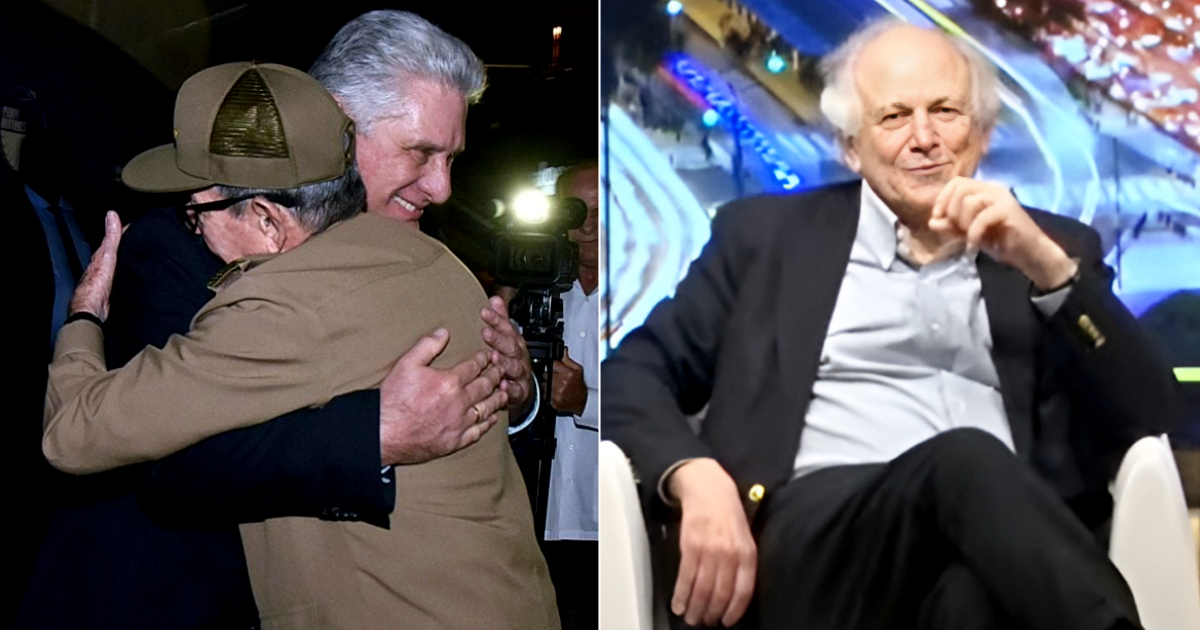
The Cuban regime is facing one of its most precarious periods in recent history. According to Carlos Malamud, a distinguished analyst and expert on Latin America, the political system that has governed the island since 1959 may not endure much longer.
Beyond the visible economic and social collapse affecting everyday life for Cubans, Malamud highlights two lesser-discussed factors that are crucial for understanding the current situation: the adaptation of the power elites to survive a potential power shift and the possibility that any transition may originate from within the regime itself.
In an article for El Mundo, Malamud depicted a nation in deep decline, characterized by extended power outages, fuel shortages, lack of food and medical supplies, and the degradation of essential services such as healthcare and waste collection.
However, the starkest contrast lies in the disparity between the living conditions of the general population and those within the political, military, and economic elite. While a significant portion of Cuban society struggles to survive, those connected to the regime enjoy privileged access to goods and services, evident in exclusive neighborhoods, electric vehicles, and private energy systems.
Many of these elites have adapted economically by indirectly controlling micro, small, and medium-sized enterprises (MSMEs), a sector that has seen growth on the island in recent years. This development represents a quiet transformation within the Cuban model. For decades, official rhetoric condemned any private initiative as a source of inequality. Today, however, numerous businesses operate through familial or political connections with establishment figures.
Some analysts interpret this as an attempt by certain power sectors to secure their economic standing in a potential post-regime scenario. In political transitions, particularly after extended periods of authoritarian rule, it's not uncommon for elite segments to begin adapting to new circumstances even before a change occurs.
In various Eastern European countries after the Soviet bloc's collapse or during some Latin American transitions, political, military, or business leaders connected to power sought to reinvent themselves economically or politically to maintain influence within the new system.
Such maneuvers often involve asset accumulation, control over emerging economic sectors, or establishing business networks that allow former regime members to retain significant positions even after political transformation.
This behavior is not unusual in political transition contexts. In countries with long-standing authoritarian systems, parts of the ruling elite have strived to economically reposition themselves before structural changes, preserving power and influence under new rules.
In Cuba, the expansion of MSMEs linked to those close to power raises questions about who might control the economic fabric if a broader opening occurs. Simultaneously, Malamud suggests another scenario gaining traction among international observers: the possibility that any political transformation may not initially stem from traditional opposition but from internal regime sectors.
The analyst echoes reports from American media suggesting exploratory contacts between Cuban power insiders and the Trump administration to assess potential political change scenarios on the island. Both Trump and several of his administration officials have confirmed the existence of such communications.
The logic behind this approach is a geopolitical calculus. A sudden transition could spark internal instability and a new migration crisis toward the United States, particularly Florida. Hence, some strategists see a gradual transformation led by experienced system insiders as more feasible, ensuring some level of institutional control during the process.
The question remains, however, as to who might assume this role. Hypotheses circulating in academic and diplomatic circles range from military figures with significant influence within power structures to civilian leaders with broader international networks.
Some analysts even consider that sectors linked to the Castro family might attempt to influence any reorganization of power they have held violently and illegitimately for over 67 years.
What seems increasingly evident, according to Malamud, is that the political and economic model constructed over decades shows signs of profound exhaustion. The combination of economic crisis, growing inequality, and international pressure has created a scenario many describe as a genuine end of an era.
In this context, the pressing question is not just when change might occur in Cuba, but who will lead it and to what extent the current power elites will manage to adapt to the new phase that may eventually open for the island.
Understanding the Potential Transition in Cuba
What are the key factors contributing to the fragility of the Cuban regime?
The Cuban regime's fragility is attributed to economic and social collapse, along with the potential adaptation of elites to survive a power shift and the possibility of an internal transition within the regime.
How are Cuban elites reportedly preparing for a potential change in power?
Cuban elites are reportedly preparing by maintaining privileged access to resources, indirectly controlling MSMEs, and establishing business networks to secure their economic position in a potential post-regime scenario.
What role might international observers play in Cuba's potential political transformation?
International observers are considering the possibility of a gradual transformation led by experienced insiders to avoid instability and migration crises, with exploratory contacts reportedly occurring between Cuban insiders and the Trump administration.