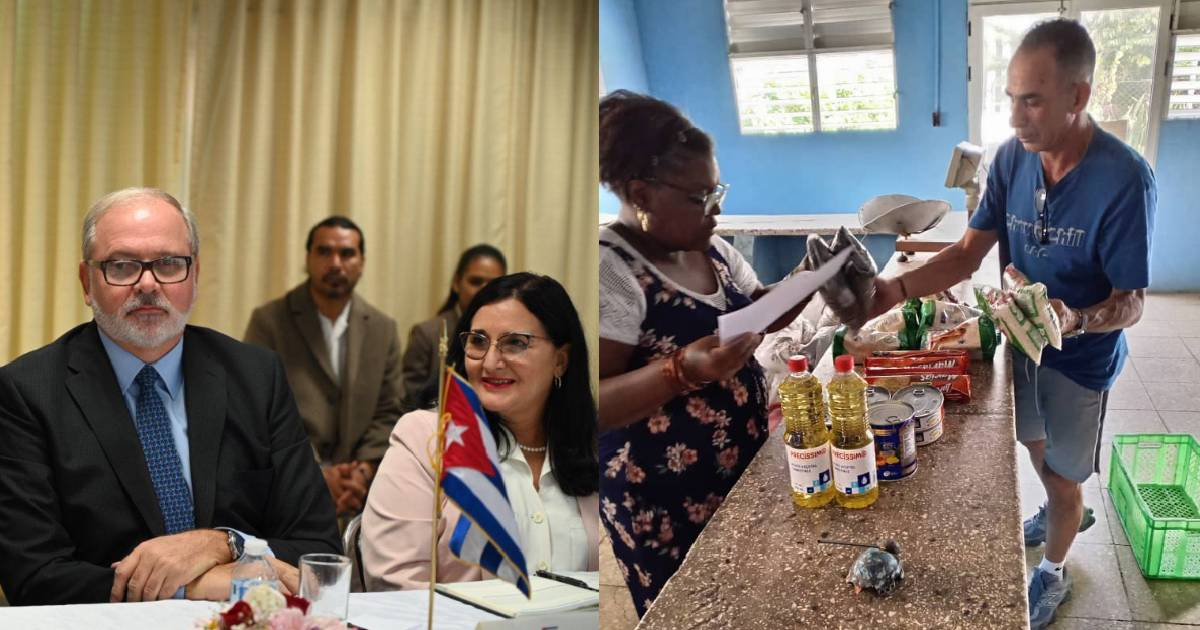
The Cuban ambassador to Mexico, Eugenio Martínez Enríquez, has once again criticized the Mexican network TV Azteca, accusing it of spreading misinformation following a report that claimed humanitarian aid sent to Cuba was being sold in state-run stores.
Through his profile on the social media platform X, the ambassador stated that the report was based on insufficient evidence.
"It's been a while since I've seen such a distortion like the one from @AztecaNoticias. They publish a photo of a supposed store in Cuba, faceless voices, a Mexican product on a shelf, and claim it's a donated product being sold," he wrote.
Martínez Enríquez also questioned the journalistic integrity of the channel. "Is there any serious journalist at @AztecaNoticias?" he added in the same message.
TV Azteca's Investigation and Government Response
The investigation by TV Azteca, led by journalist Rodrigo Lema, recently showcased images of Mexican products, including the so-called "frijol del bienestar," being sold in TRD Caribe stores. These stores are part of a commercial network linked to the Revolutionary Armed Forces (FAR) and the military conglomerate Grupo de Administración Empresarial S.A. (GAESA).
According to the report, these beans are priced at $2.97 per half-kilogram or up to $43 for 30-kilogram sacks.
The network also documented the presence of other Mexican-origin items in these establishments.
The investigation featured testimonials from locals who claimed they hadn't received these products through the state distribution system, despite being announced as part of the humanitarian aid sent from Mexico.
Official Statements and Public Debate
On March 5, in an extensive post on Facebook, Martínez defended the Cuban government's management and stated that "the aid is indeed for the Cuban people," while dismissing the version presented by the Mexican media as false.
Following the ambassador's criticisms, TV Azteca publicly defended its work on X, stating, "You do politics; we do journalism. No one told us, no one informed us: we were there, documenting with cameras what people experience."
The controversy arises after Mexico sent several shipments of humanitarian aid to Cuba in February, including food primarily intended for children, pregnant women, the elderly, and vulnerable individuals.
Amid the ongoing debate, Cuba's Ministry of Domestic Trade (Mincin) assured that donations cannot be sold.
Marpessa Portal Devilliers, the Director General of Merchandise Sales, stated on state television that these resources have a predetermined destination and that there are controls "up to the final consumer."
Nevertheless, TV Azteca's report claims that some of these products have ended up in stores that sell in foreign currency, fueling the debate inside and outside the island regarding the true destination of humanitarian aid.
Questions Surrounding Humanitarian Aid in Cuba
What accusations did the Cuban ambassador make against TV Azteca?
The Cuban ambassador accused TV Azteca of spreading misinformation about humanitarian aid being sold in Cuban state-run stores, claiming the report was based on insufficient evidence.
What were the findings of TV Azteca's investigation?
TV Azteca's investigation showed images of Mexican products, including "frijol del bienestar," being sold in Cuban stores linked to the military, with locals claiming they hadn't received these products as part of humanitarian aid.
How did the Cuban government respond to the allegations?
The Cuban government, through Mincin, stated that donations are not to be sold and emphasized that the aid is intended for the Cuban people, with controls in place to ensure proper distribution.