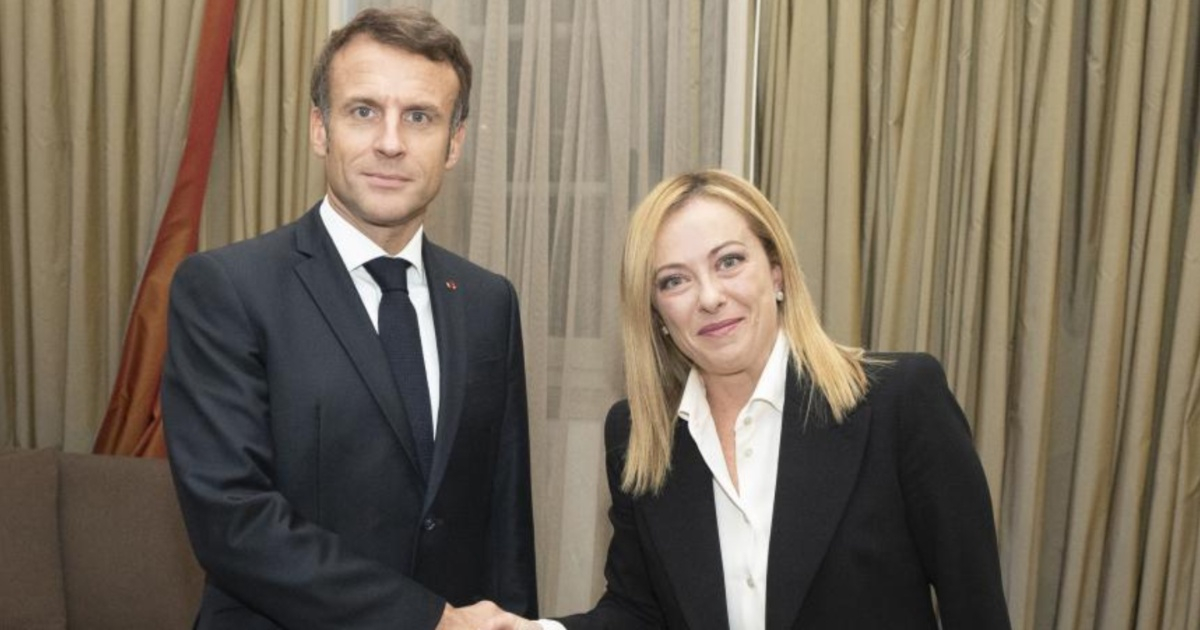
Italy and France have aligned their positions with Spanish Prime Minister Pedro Sánchez regarding the conflict in Iran. Both nations emphasize the distinction between not supporting or participating in the conflict and the need to bolster the defense of allied nations in the event of heightened military tensions.
As reported by Onda Cero, Italian Prime Minister Giorgia Meloni and French President Emmanuel Macron both assert that their countries are not at war with Iran and have no intention of becoming involved, despite deploying military assets for defensive purposes in the Eastern Mediterranean.
European Leaders Reaffirm Defensive Intentions
The alignment comes amidst rising tensions between former U.S. President Donald Trump and Pedro Sánchez, following Spain's refusal to allow U.S. forces access to the Morón and Rota bases for an offensive against Iran.
In response to Spain's decision, Trump reportedly threatened to sever all trade ties with the country, while Sánchez condemned the conflict as "illegal," echoing the "No to war" slogan from 2003. Trump's reaction included derogatory remarks towards Spain, labeling them "losers."
In this context, the document argues that Sánchez is not isolated in his stance. While Spain faces internal debate over the apparent contradiction of rejecting war yet sending a frigate to Cyprus, other European governments have taken similar actions.
Military Deployments Not Equivalent to War Involvement
France has deployed a carrier and missile systems; the UK, a ship; Greece, fighter jets; and Italy, naval vessels and missile systems. These activities aim to enhance the security of allies rather than participate in bombings over Iran, particularly after an Iranian drone struck a British military base in Cyprus, a European Union member.
Italian Prime Minister Meloni explicitly stated that Italy is "not at war" and has no desire to enter into one, affirming her country's defensive approach similar to Spain's.
President Macron mirrored this sentiment, clarifying that France would not engage in the war against Iran in the Middle East. He emphasized, "France is not part of this war. We are not in combat and will not become involved," reinforcing the distinction between direct military support and defensive deployments to protect European allies.
Defending Allies While Rejecting War
The debate centers around differentiating between "supporting war" and "defending allies." Spain's Defense Minister Margarita Robles framed the deployment of the frigate 'Cristóbal Colón' to Cyprus as part of a broader "deterrence and defense" effort within the European Union.
Retired Admiral Juan Rodríguez Garat, quoted by RTVE, encapsulates this view, arguing that "defending an island does not make you a belligerent." Thus, the military presence in Cyprus or nearby areas should be seen as a containment measure, not as support for military actions against Iran.
Escalating Tensions in Europe
The crisis in the Middle East, ignited by the U.S. and Israeli attacks on Iran on February 28, has led to a swift escalation of military and diplomatic tensions with global repercussions. In the conflict's early days, several European powers began reassessing their positions in response to the offensive and Iranian reprisals.
France, Germany, and the UK initially warned of their readiness to take "proportionate defensive actions" against Iran to protect their allies and personnel in the region. The impact of an Iranian drone on the British base in Akrotiri, Cyprus, highlighted the extent to which the war had affected EU-linked interests.
Politically, tensions have also surfaced within Europe. Spanish Prime Minister Pedro Sánchez revived the "No to war" slogan, popularized during the 2003 Iraq invasion, to articulate Spain's stance on the Iran conflict.
In an official statement, Sánchez denounced the armed conflict and called for a diplomatic and political resolution while expressing solidarity with countries affected by Iranian attacks. He also warned of the potential economic and humanitarian consequences of a prolonged war.
Spain's position comes amid deteriorating relations with Washington. President Trump threatened to halt all trade negotiations after Madrid refused to authorize the use of the Rota and Morón bases for military operations against Iran. He criticized Spain as a "terrible ally" and suggested a suspension of economic agreements, opening a new diplomatic front in an already tense international scenario marked by military escalation in the Middle East.
FAQs on Europe's Stance Regarding the Iran Conflict
Why are Italy and France aligning with Spain on the Iran conflict?
Italy and France support Spain's distinction between not engaging in the conflict and the necessity of defending allied nations amidst escalating tensions.
How has Europe's military deployment been characterized regarding Iran?
European military deployments have been described as defensive measures to protect allies rather than direct involvement in the conflict with Iran.
What was Spain's reaction to U.S. pressures regarding the Iran conflict?
Spain, led by Pedro Sánchez, rejected U.S. requests to use Spanish bases for military operations against Iran, citing the need for a diplomatic solution and condemning the conflict as illegal.