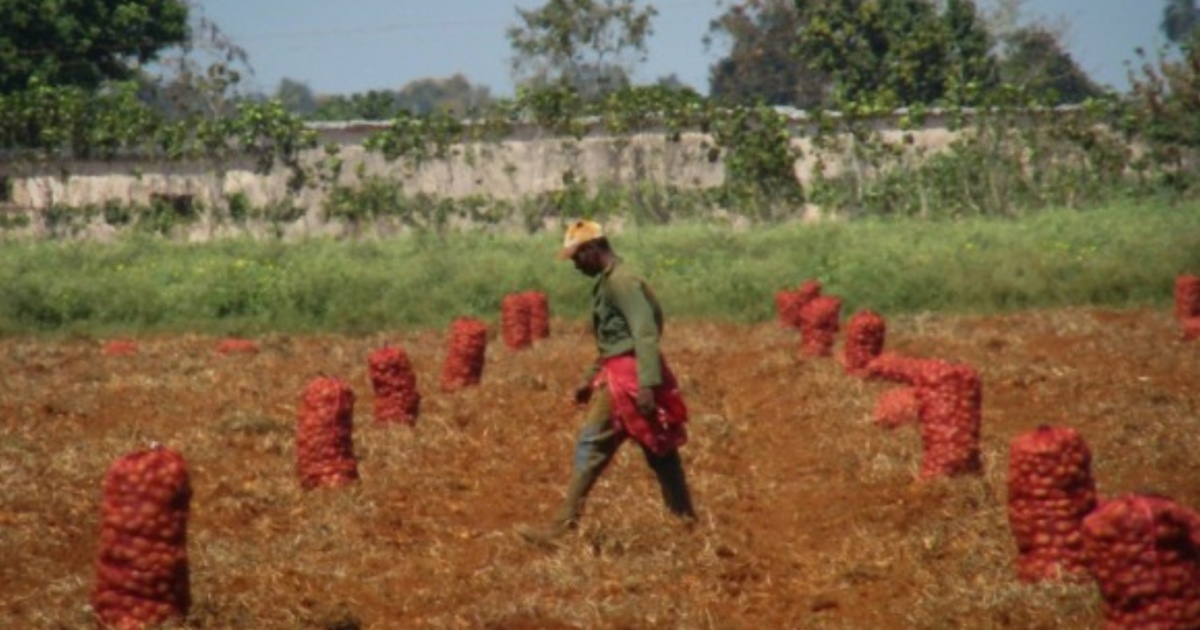
In a recent session at the National Capitol, Cuban lawmakers examined a new draft law concerning the Ownership, Possession, and Use of Land. This initiative is being promoted as a tool to "regulate land tenure, transfer, and utilization to enhance agricultural development, ensure food sovereignty, support rural communities, and uphold social justice."
Despite these claims, the regime has not provided any statistics in the state-run Canal Caribe report that would suggest this legal venture will effectively address the nation's food shortages.
The proposal was deliberated by Havana's municipal deputies as well as legislators from other regions via videoconference, under the leadership of high-ranking state and agricultural sector officials.
While the official narrative emphasizes the need for a more coherent legal framework for agriculture, the available content focuses heavily on regulation rather than verifiable production outcomes.
Enhancing the Agricultural Model: A New Legal Approach
Mayra Cruz Legón, the legal director of the Ministry of Agriculture, explained that the project aims to integrate and update scattered legal provisions into a "coherent and modern" legal framework for Cuba.
She highlighted that the current agrarian laws lack a singular, clear definition of key concepts such as agricultural producer, agricultural and forest land, among other guiding principles.
The future law seeks to govern principles like land for those who work it, the indivisibility of land, and the social function of land.
Meanwhile, Ramón Aguilar Betancourt, head of the National Assembly's Agro-Food Commission, argued that the proposal is essential to reinforce the agricultural sector's institutional framework and ensure rational and sustainable resource use.
He asserted that after reviewing various perspectives, the process would "complete the legislative chain to enhance Cuba's agricultural production model."
Aguilar also emphasized that the draft was collectively developed with input from experts, producers, and the deputies themselves.
As background to the project, the report notes that following specialized consultations by the Ministry of Agriculture, seven workshops were conducted, involving more than 300 participants.
Besides Havana's deputies, legislators from other regions also assessed the project via videoconference, with prominent figures such as Esteban Lazo Hernández, President of the National Assembly and the Council of State; Idael Pérez Brito, Minister of Agriculture; and parliamentary commission presidents among the attendees.
Plenty of Regulations, Scarce Tangible Results
The primary focus of the debate was on land tenure, transfer, and legal use, as well as updating legal concepts and principles.
However, there is a noticeable lack of data regarding crop yields, production volumes, or supply indicators to assess whether these legal changes have translated into more food for the population.
In this context, the Cuban state is merely introducing another legal adjustment about land, presenting it as part of the agricultural model's improvement.
Nonetheless, amid Cuba's ongoing food crisis, no immediate solutions are evident for increasing food production.
Understanding Cuba's New Agricultural Legislation
What is the main goal of Cuba's new agricultural law?
The primary objective of the new agricultural law is to regulate land tenure, transfer, and utilization to improve agricultural development, ensure food sovereignty, support rural communities, and promote social justice.
Who participated in the discussions about the new law?
The discussions involved Havana's municipal deputies, legislators from other regions through videoconference, high-ranking state officials, and agricultural sector leaders.
Does the new law address the current food crisis in Cuba?
While the law aims to enhance the agricultural framework, there is no immediate evidence or statistics provided to suggest it will solve the current food crisis in Cuba.