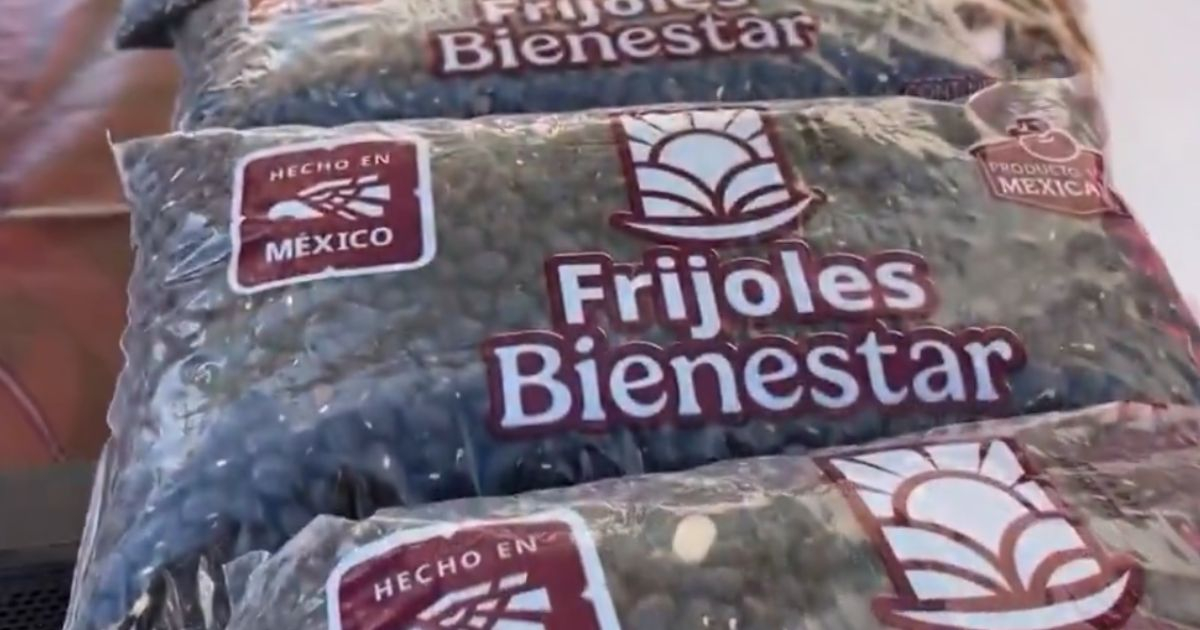
According to a report by Mexico's TV Azteca, humanitarian aid sent to Cuba by the Mexican government is being sold in dollar-denominated government-run stores linked to the military sector.
The investigation, led by journalist Rodrigo Lema, reveals that donated food intended to ease the island's crisis is being sold in foreign currency establishments, far from the promised free distribution.
One of the most well-documented cases, as highlighted in the report, involves the “frijol del bienestar” or "welfare beans," which were supposed to be distributed to the people as part of Mexico's humanitarian aid.
However, the outlet claims to have verified that this food product is being sold in wholesale distributors linked to military structures.
The report indicates that 30-kilogram sacks of beans are being offered for $43, translating to around $1.43 per kilogram, a price many Cubans find unaffordable amid the severe devaluation of the national currency.
The investigation also includes testimonies from citizens who claim they have not received any of the donation products.
One island resident remarked that despite images showing the arrival of aid ships in Havana Bay, the population has not received any distribution.
Another testimony collected by the media outlet notes that following the arrival of Mexican donation ships, several stores in the province of Matanzas, which were previously nearly empty, suddenly became stocked with Mexican goods.
TV Azteca's footage shows, for instance, Mexican beans being sold in a TRD Caribe store of the Revolutionary Armed Forces for $2.97 per half-kilogram.
According to cited sources, Mexican-origin products like toilet paper have also been found on sale in these stores.
Numerous interviewees stated that selling products in dollar-operated stores is a known practice on the island, and many donated items end up in these state-controlled commercial circuits.
The report concludes that instead of reaching the population through ration books or other social distribution mechanisms, part of the humanitarian aid is being turned into merchandise within foreign currency stores, which are out of reach for most Cubans.
Questions about Humanitarian Aid in Cuba
What is the “frijol del bienestar” and why is it significant?
The “frijol del bienestar” refers to beans that were part of Mexico's humanitarian aid to Cuba, intended for free distribution among the population. Its significance lies in the fact that these beans are reportedly being sold for dollars in government-run stores, contrary to their intended purpose.
How are donated goods being distributed in Cuba?
Instead of being freely distributed to the population, many donated goods are reportedly being sold in dollar-denominated stores controlled by the state, making them inaccessible to most Cubans.
What are the implications of selling humanitarian aid in government stores?
Selling humanitarian aid in government stores undermines the aid's purpose of providing relief to those in need. It also raises questions about corruption and mismanagement within the Cuban government, as it creates a situation where aid is inaccessible to the intended recipients.