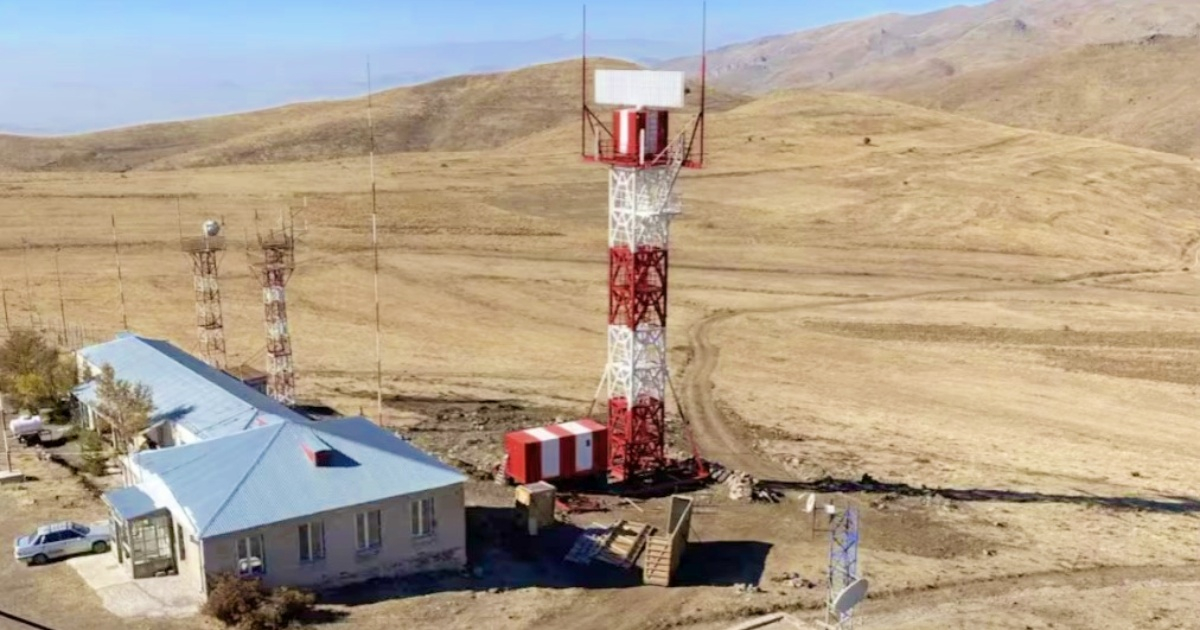
In a notable move, Russia has announced the delivery of state-of-the-art radar systems to Cuba for civil air traffic management, as part of a deal between Cuban authorities and the Obukhov plant, a component of the Russian aerospace defense consortium Almaz-Antey based in St. Petersburg.
The official Russian news agency TASS, quoting the manufacturer's press service, revealed this development.
According to the report, Havana is set to receive multiple sets of the Aurora-2 monopulse secondary radar, a sophisticated system designed to oversee air traffic and facilitate the operation of civil aircraft within Cuba's national airspace.
Details of the Radar Agreement
The Obukhov plant will produce and supply air traffic management equipment to the Republic of Cuba. Under the agreement, Havana will receive several Aurora-2 radar sets to ensure the organized management of civil aircraft flights, as stated by the company and reported by TASS.
The initial units of the Aurora-2 system are scheduled for delivery in 2026. Subsequently, these radars will be strategically installed across various locations in Cuba to ensure comprehensive coverage of the island's airspace.
Support and Training from Russian Experts
Beyond just supplying the equipment, the Russian plant will also handle additional project-related tasks, such as training Cuban personnel and providing initial maintenance for the systems.
"Our experts from the plant will assist our Cuban counterparts at every stage of the contract," affirmed Mikhail Podvyaznikov, the deputy general director of the Almaz-Antey aerospace defense consortium and general director of the Obukhov plant.
Podvyaznikov highlighted the company's extensive experience in implementing air traffic management projects and expressed confidence in the high quality and reliability of the equipment provided.
Advanced Features of the Aurora-2 Radar
The Aurora-2 is a digital multimode air traffic monitoring station used as a radar information source for airfields and regional centers within air traffic control systems. It offers 360-degree coverage and can detect aircraft up to a maximum distance of 465 kilometers, as well as determine their coordinates and process transmitted information from the aircraft, such as altitude, identification, and other flight data.
Unlike primary radars, which detect aircraft based on signal reflections from the fuselage, the Aurora-2 is a secondary radar, which relies on the aircraft's transponder response to gather detailed information.
The system is certified by the Interstate Aviation Committee and the Russian Federal Air Transport Agency for use in air traffic management systems.
Dual-Use Potential of Civilian Radar Systems
Although designed primarily for civil aviation navigation, some experts have noted that the radar's interrogation modes have military origins. The system supports RBS A/C/1/2 and Mode S, with Modes 1 and 2 being employed in specific military scenarios to identify missions and tactical platforms in shared airspace, indicating potential dual-use capabilities.
The deployment of Russian radar technology comes amid increasing reports of U.S. reconnaissance flights near Cuban airspace and heightened tensions between Havana and Washington.
This delivery also arrives during a critical time for aviation in Cuba. Since February, air traffic to Cuba has been severely impacted by a shortage of aviation fuel at Cuban airports and decreased frequencies from several international airlines.
FAQs on Russia's Radar Delivery to Cuba
When will Cuba receive the first Aurora-2 radar systems?
The first units of the Aurora-2 radar system are expected to be delivered to Cuba in 2026.
What is the primary function of the Aurora-2 radar?
The Aurora-2 radar is designed to monitor air traffic and assist in operating civil aircraft within national airspace, offering 360-degree coverage and significant range capabilities.
Does the Aurora-2 radar have any military applications?
While primarily intended for civilian use, the Aurora-2 radar includes interrogation modes with military origins, allowing for potential dual-use in identifying missions and tactical platforms.