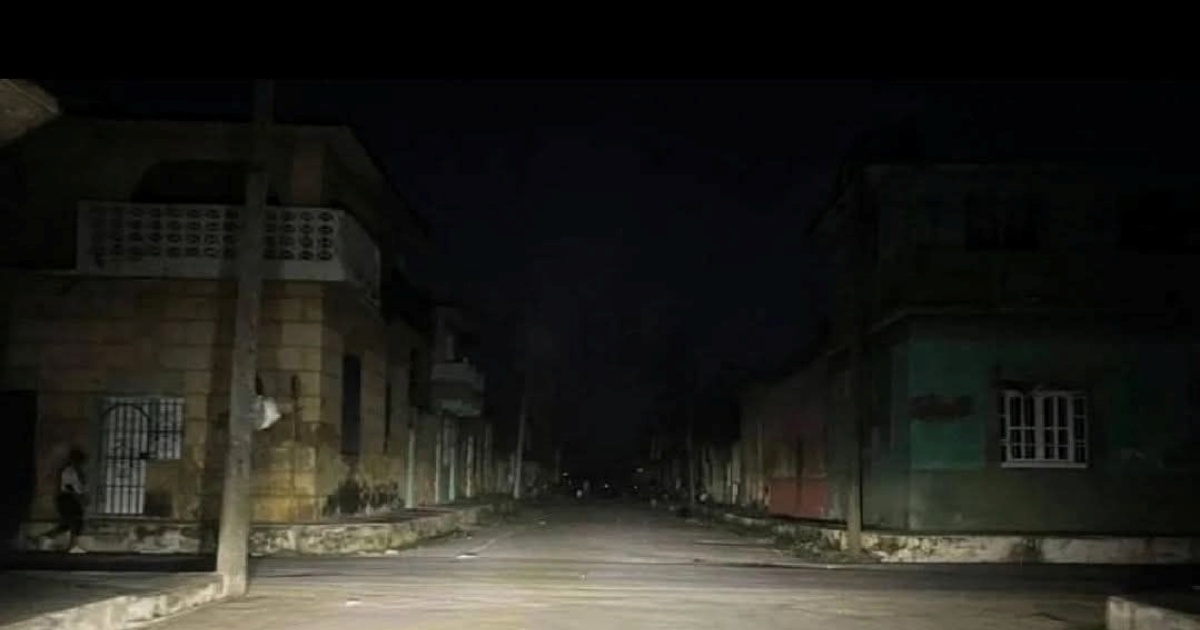
In the early hours of Thursday, the Havana Electric Company (EELH) provided an update on the progress of restoring electricity in the capital following a massive blackout. This outage was caused by the unexpected shutdown of the Antonio Guiteras thermal power plant, the largest in Cuba.
According to the latest report from the company, by 5:28 a.m., 20 substations and 98 distribution circuits had been restored. This allowed power to be returned to 296,467 customers in the city.
The company noted that this recovery accounts for 146 MW of electricity, equating to 34% of Havana's total users having their power back.
During this reconnection process, essential services were prioritized. Among these, 37 hospitals and five water supply services had electricity restored at the time of the report.
“The restoration will proceed gradually as the conditions of the National Electric System (SEN) permit,” stated the Havana Electric Company, which also pledged to keep the public informed via their official channels and the 18888 phone service.
Progress in National Electric System Restoration
Authorities in the electric sector have reported ongoing progress in restoring the National Electric System (SEN). The latest official update indicates that the system has been interconnected from Guantánamo to Matanzas, while another subsystem operates from Mayabeque to Pinar del Río.
The Electric Union (UNE) and the Electric Company of Matanzas have stated that efforts are underway to gradually increase available power as new generation units are incorporated.
In Matanzas province, authorities reported the restoration of several critical circuits, including one serving the Pediatric Hospital. Circuits powering various communities and strategic services, such as circuit 4073 supplying Batey Luisa, Peralta, San Carlos, and San José de Marcos, have also been energized.
Additionally, circuit MI1452, which powers the Epidemiology Laboratory, Telecenter, and Los Mangos area, and circuit MI1456, covering areas from San Luis Road to Maceo Park and La Jaiba, have been restored.
Authorities mentioned that work continues on the gradual reconnection of other circuits linked to the 110 kV Cocal substation. However, they warned of potential temporary instability in service as the microsystem consolidation process continues.
“As the microsystem consolidation progresses, there may be temporary instability, causing electricity to come and go in those circuits that have already received service,” they stated in an official report.
Electric companies reaffirmed their commitment to progressively restoring service in affected areas.
The Outage Trigger
The blackout occurred on Wednesday due to a malfunction at the Antonio Guiteras thermal plant in Matanzas. The Electric Union reported that the plant unexpectedly went offline at 12:41 p.m. because of a "leak in the boiler," leading to a widespread disconnection across much of the country.
“There was a disconnection of the National Electric System from Camagüey to Pinar del Río,” noted the entity in its initial report.
Lázaro Guerra Hernández, General Director of Electricity at the Ministry of Energy and Mines, explained that the outage affected power service from the western region of Las Tunas to Pinar del Río, while the system remained connected from the eastern part of Las Tunas to Guantánamo.
The malfunction also caused temporary interruptions to radio and television signals in various parts of the country, according to the official.
Structural Crisis in the Electric System
The National Electric System has been experiencing a structural crisis for years, characterized by frequent breakdowns in thermal power plants, fuel shortages, and extended maintenance periods, resulting in daily blackouts in many parts of the country.
In previous instances, technical failures in key plants have led to prolonged widespread outages, system instability, and impacts on strategic sectors of the economy.
Jorge Piñón, an energy expert and researcher at the Texas Energy Institute, explained to CiberCuba that such massive blackouts often occur due to a domino effect within the electrical system.
“The electrical system operates like a chain of dominoes: when one falls, they all fall,” he remarked.
Piñón dismissed the notion that the blackout resulted from the country reaching the so-called “zero option,” which would imply a total shutdown due to lack of fuel.
“In situations like this, it was a technical failure (Guiteras) that triggered the system's collapse, like a chain of dominoes... One falls, and they all fall. It's not about fuel shortages,” he stated.
The specialist further explained that Cuban thermal power plants face an additional issue due to the fuel used.
According to his analysis, the use of heavy domestic crude oil, high in sulfur and metals like vanadium, accelerates corrosion in plant components.
“Using national crude oil is a vicious circle: they repair the damaged component, and a few months later, it breaks down again,” he warned.
In his view, the fundamental problem of the Cuban electric system cannot be resolved with temporary solutions.
“The challenge for thermal power plants is money and time; only a long-term solution will work, not more ‘patch’ solutions,” he concluded.
Insights into Cuba's Power Crisis
What caused the recent blackout in Havana?
The blackout was caused by an unexpected failure at the Antonio Guiteras thermal power plant due to a boiler leak.
How does the electric system in Cuba operate?
Cuba's electric system operates like a chain of dominoes, where a failure in one area can lead to widespread outages due to interconnectedness.
What challenges do Cuban thermal power plants face?
Cuban thermal power plants face issues from using heavy domestic crude oil, which accelerates corrosion in plant components, requiring frequent repairs.