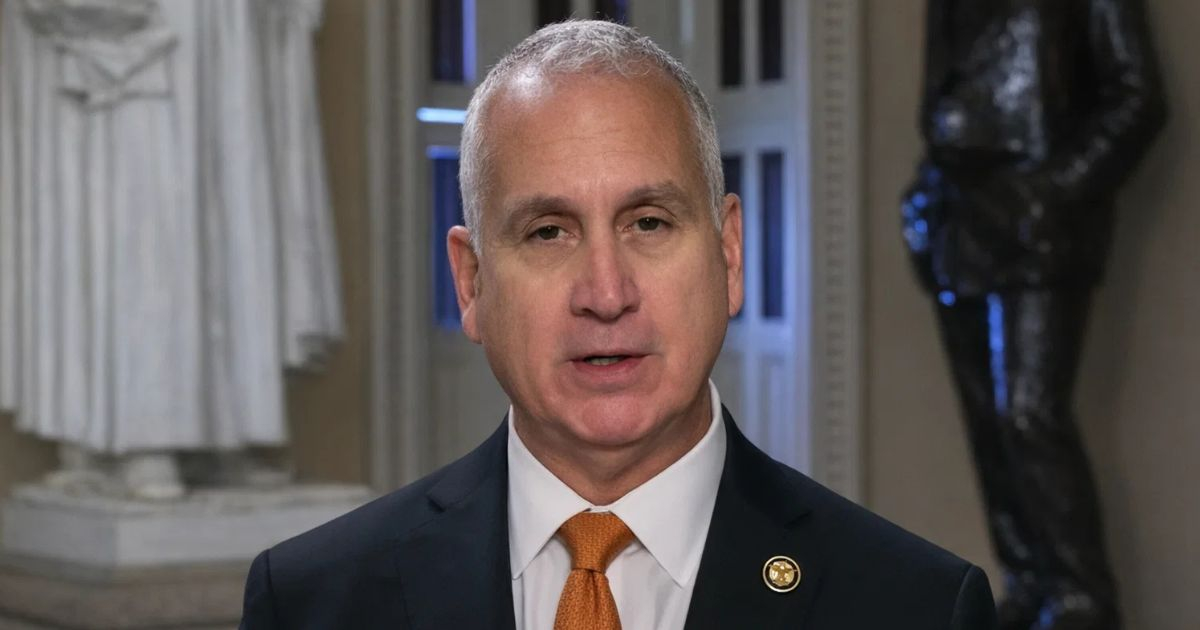
Cuban-American Congressman Mario Díaz-Balart has issued a stern warning to the Cuban regime, suggesting they have failed to grasp the shift in U.S. policy toward the island under President Donald Trump's leadership.
In a message shared on the social media platform X, Díaz-Balart criticized Cuban authorities for behaving as though they are still dealing with previous U.S. administrations.
"The regime in Cuba doesn't seem to realize that the President of the United States is no longer Joe Biden, Barack Obama, Bill Clinton, or Jimmy Carter," he stated on his official account.
He emphasized that the current U.S. stance towards Cuba is heavily influenced by Trump's administration, with Secretary of State Marco Rubio playing a key role.
"President Trump, alongside Secretary Marco Rubio, who has a deep understanding of this hemisphere and the Cuban dictatorship's patterns of repression and manipulation, is at the helm," he expressed in the post.
"President Trump will not be blackmailed," Díaz-Balart concluded.
The congressman included a clip from an interview with journalist Alejandro Cao, during which he discussed the arrest of ten Panamanian citizens in Cuba on charges of displaying "subversive signs."
In the interview, Díaz-Balart mocked the notion used by Cuban authorities to justify the arrests.
"I have to laugh because the concept of subversive signs, only in a dictatorship, only in a dictatorship would signs be considered a matter of subversion," he remarked.
During the discussion, the congressman insisted that the Cuban regime might be attempting to manipulate or confuse Washington, but emphasized that the current U.S. administration will not succumb to such tactics.
"The President of the United States is not Joe Biden, not Obama, not Clinton, not Carter; it's Donald Trump, with a secretary named Marco Rubio, who understands this hemisphere well and the circumstances of this dictatorship, and who will not be confused or blackmailed," he declared.
He also stated that there are no ongoing negotiations with Havana, despite reports of possible talks, "reports of conversations, those are not negotiations," he clarified.
These statements come amid increasing political pressure from Washington on the Cuban regime. Díaz-Balart has repeatedly emphasized that the current U.S. administration will not tolerate a dictatorship just miles from American shores, and he pointed to the presence of U.S. military forces in the Caribbean following the capture of Nicolás Maduro in Venezuela, as he discussed Trump's policy towards Cuba and the military presence in the region.
The congressman further warned that if violent repression occurs against mass protests in Cuba, the U.S. President will not accept it, as he noted when discussing potential protests and Washington's response to a possible massacre of civilians on the island.
In other recent remarks, Díaz-Balart asserted that the Cuban regime is experiencing one of its weakest moments and advocated for sustained political, economic, and diplomatic pressure to instigate systemic change, aligning with his belief that "the regime in Cuba has never been this weak."
Understanding U.S. Policy Towards Cuba
How has U.S. policy towards Cuba changed under Trump's administration?
Under Trump's administration, U.S. policy towards Cuba has become more stringent, emphasizing political pressure and rejecting diplomatic negotiations with the Cuban regime.
What role does Marco Rubio play in U.S. policy towards Cuba?
Marco Rubio, as Secretary of State, plays a significant role in shaping U.S. policy towards Cuba, leveraging his understanding of the region and emphasizing a firm stance against the Cuban dictatorship.
Why is the Cuban regime considered weak according to Díaz-Balart?
Díaz-Balart considers the Cuban regime weak due to internal struggles, external pressures, and the lack of support from a firm U.S. policy that refuses to negotiate with the dictatorship.