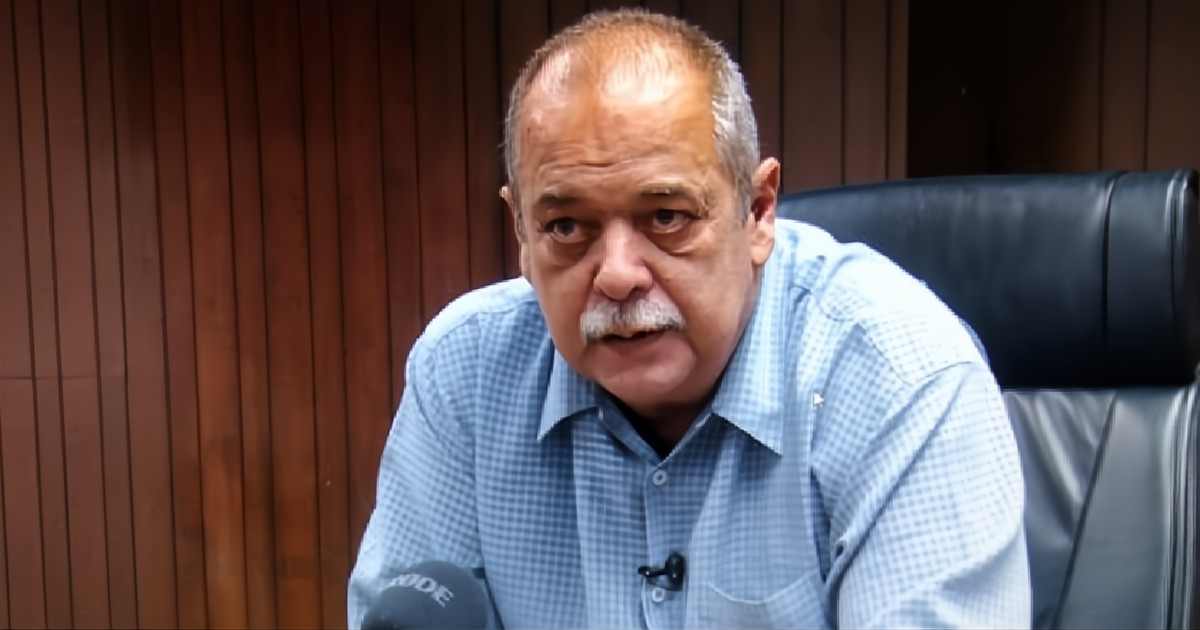
In the midst of a prolonged and severe power crisis affecting the island, Cuba's Minister of Energy and Mines, Vicente de la O Levy, has called on municipalities to craft their own energy transition strategies, relying solely on "their own resources."
During the latest session of the Council of Ministers, the Villa Clara Electric Company reported via social media that de la O Levy identified the sluggish progress of local authorities in creating comprehensive plans for shifting their energy matrix.
While acknowledging initiatives such as distributing solar panels to doctors, teachers, and children reliant on electricity, de la O Levy emphasized the necessity for each municipality to develop its own energy sustainability plan.
“Each municipality must have a sustainability strategy using its own resources,” the minister stated, a remark that seems disconnected from the harsh realities faced by the Cuban people.
Municipal Challenges and Unrealistic Expectations
As of now, only nine out of the 168 municipalities have formulated a developed strategy amidst one of Cuba's worst energy crises. This highlights the inadequacy in timely planning.
The minister also urged an inventory of all renewable energy sources installed in both state and private sectors within the regions.
Among the proposed actions are the installation of two-kilowatt photovoltaic solar systems in clinics, maternity homes, and ATM locations, as well as the restoration of windmills, all contributing to the municipal energy strategy.
Public Reaction and Skepticism
The minister's statements have sparked a wave of reactions on social media. Felipe Vega Vargas sarcastically remarked that "storytelling skills have reached their peak." Meanwhile, María Sarah expressed skepticism over the focus on panels and coal in 2026 when the public desires stable basic services, lamenting, "I've been hearing the same story for 53 years, and it only gets worse."
Luis Saborit jokingly suggested that his municipality could "build a hydroelectric plant with water leaks," and Yaquelin Álvarez voiced concern over the normalization of power outages.
Roberto Chaviano Gómez critiqued the blame-shifting to municipalities, highlighting the lack of resources and personnel, while Yasel Miguel Sarduy questioned the direct benefits of solar parks and generators in Cruces, Cienfuegos. José Miguel Borroto Molina summed up the sentiment by stating that power outages are now "the municipalities' responsibility."
Concerns Over the Approaching Summer
As the summer nears, anxiety grows. Ivette Elena Paz Sarduy warned that life without electricity is grueling, especially in the heat, and Milagros Fernández asserted that the situation is worse than during the Special Period.
The minister's remarks come amid severe energy limitations, including extended blackouts, fuel shortages, and a deteriorating national electrical system. While the government promotes decentralization and renewable energy, many doubt the feasibility of municipalities, with limited resources, bearing the brunt of this electrical crisis.
Amidst this backdrop, the Cuban Postal Service's Sancti Spíritus branch announced the prices of solar panel kits now on sale during the country's deepening electrical crisis. The costs exceed two and a half million Cuban pesos for the least powerful models, an unattainable sum for state employees.
Challenges Faced by Cuban Municipalities in Energy Transition
Why are municipalities in Cuba being urged to develop their own energy strategies?
Municipalities are being urged to create their own energy strategies to address the prolonged power crisis by relying on local resources and increasing energy sustainability independently.
What has been the public's reaction to the minister's statements?
The public reacted with skepticism and sarcasm, questioning the practicality and fairness of placing the responsibility on municipalities with limited resources to address the energy crisis.
What renewable energy initiatives have been proposed for Cuban municipalities?
Proposed initiatives include installing two-kilowatt solar systems in clinics and ATMs, restoring windmills, and inventorying renewable sources in both state and private sectors.