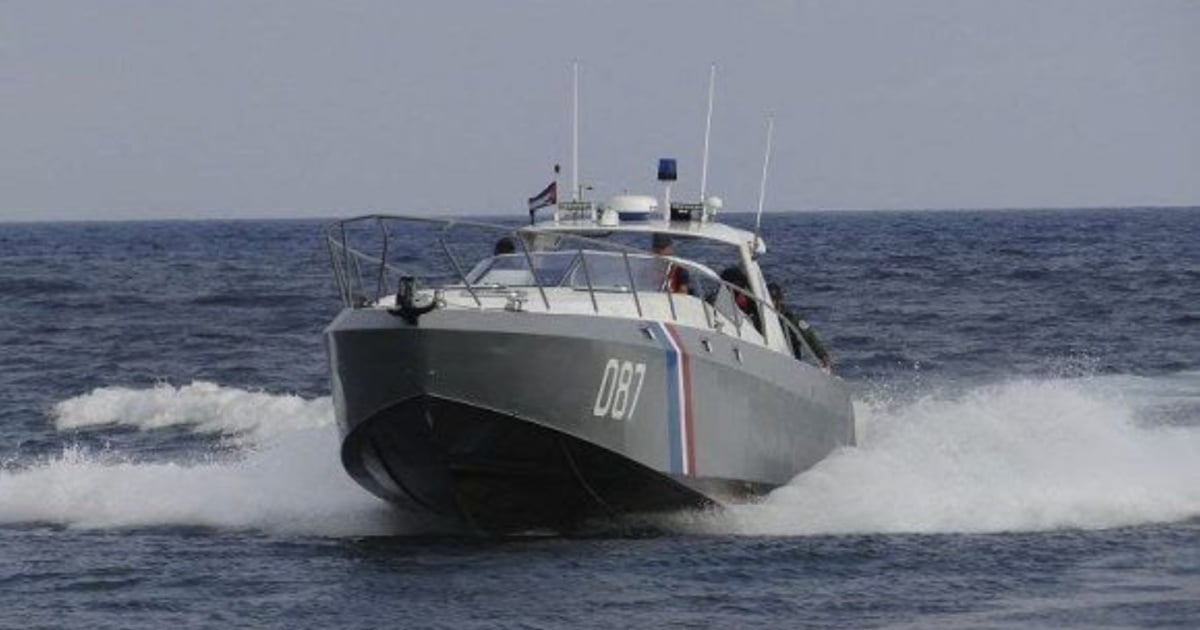
The Office of the Attorney General of the Republic has issued a concise official statement, announcing that six individuals have been charged with terrorism-related offenses following an alleged infiltration attempt on the morning of February 25th in the northern region of Villa Clara province.
The brief announcement indicates that the criminal proceedings are being managed by the Ministry of the Interior’s Specialized Criminal Investigation Body for Crimes Against State Security. They are probing what has been described as an incursion intended to carry out terrorist acts within the nation.
According to the scant details provided, the six accused individuals face charges under the terrorism laws outlined in the Penal Code. The prosecution has mandated provisional detention as a precautionary measure while investigations continue.
The Attorney General's Office has pledged to ensure due process is upheld and has stated that it will make appropriate legal decisions based on current laws once the investigations are completed.
Previously, the Cuban regime disclosed the identities of ten individuals allegedly involved in an attempted armed infiltration from the United States to the island, utilizing a boat registered in Florida.
As reported on the Ministry of Foreign Affairs’ official site, Deputy Minister Carlos Fernández de Cossío identified the participants as Cristian Ernesto Acosta Guevara, Conrado Galindo Serrior, José Manuel Rodríguez Castelló, Leordán Cruz Gómez, Amijail Sánchez González, and Roberto Álvarez Ávila.
The list also includes Pavel Alling Peña, Michael Ortega Casanova, Ledián Padrón Guevara, and Héctor Duani Cruz Correa, the latter four reportedly killed during the confrontation.
The official version claims that items found on the vessel included assault rifles, sniper rifles, pistols, Molotov cocktails, night vision gear, bulletproof vests, bayonets, camouflage clothing, various munitions, communication equipment, and insignia of counterrevolutionary and terrorist organizations.
The Deputy Minister noted that two of the suspects, Amijail Sánchez González and Leordán Enrique Cruz Gómez, were listed in a national registry of individuals and entities linked to criminal investigations for alleged terrorism shared with the United States in 2023 and 2025.
Severe Penalties for Terrorism Under Cuban Law
The current Cuban Penal Code, Law 151/2022, specifies terrorism offenses under a distinct title that outlines their scope and stipulates harsh penalties.
Article 149.1 penalizes acts that, due to their execution, means, and methods, aim to intimidate or coerce a government or international organization into action or inaction, incite fear or terror in the public, endanger lives or significantly important properties, the environment, international peace, or the security of the Cuban State.
Meanwhile, Article 151.1 states that manufacturing, facilitating, selling, transporting, importing, or possessing weapons, ammunition, flammable, toxic, or explosive substances, chemical or biological agents, or similar devices can result in sentences ranging from ten to thirty years, life imprisonment, or death.
Under Article 151.2, similar severity applies to those who threaten the use of nuclear materials or radioactive substances to inflict harm or compel individuals, entities, or international organizations to act or refrain from acting.
Additionally, Article 168 addresses the use of digital means to aid terrorist acts, including the interference, alteration, or destruction of public service or national security information and communication systems, with penalties ranging from ten to twenty years in prison.
Finally, Article 169.1 prescribes ten to thirty years, life imprisonment, or death for those, in an armed conflict scenario, committing acts intended to cause death or serious injury to intimidate a population or coerce a State or international organization into action or inaction.
Understanding Cuba's Terrorism Charges
What charges are being faced by the six individuals accused in Cuba?
They are facing charges related to terrorism as outlined in Cuba's Penal Code, which includes severe penalties such as life imprisonment or death.
What was reportedly found on the boat used in the alleged infiltration?
The boat was said to contain assault rifles, sniper rifles, pistols, Molotov cocktails, night vision equipment, bulletproof vests, and insignia of counterrevolutionary organizations.